Match List-I with List-II:
| List-I Major Developments in Harappan Archeology | List-II Year | ||
| (A) | Daya Ram Sahni begins excavations at Harappa | (I) | 1960 |
| (B) | S.R. Rao begins excavations at Lothal | (II) | 1921 |
| (C) | B.B. Lal and B.K. Thapar begin excavations at Kalibangan | (III) | 1974 |
| (D) | M.R. Mughal begins excavations at Bahawalpur | (IV) | 1955 |
Choose the correct answer from the options given below:
Answer & explanation
Correct answer: option 2
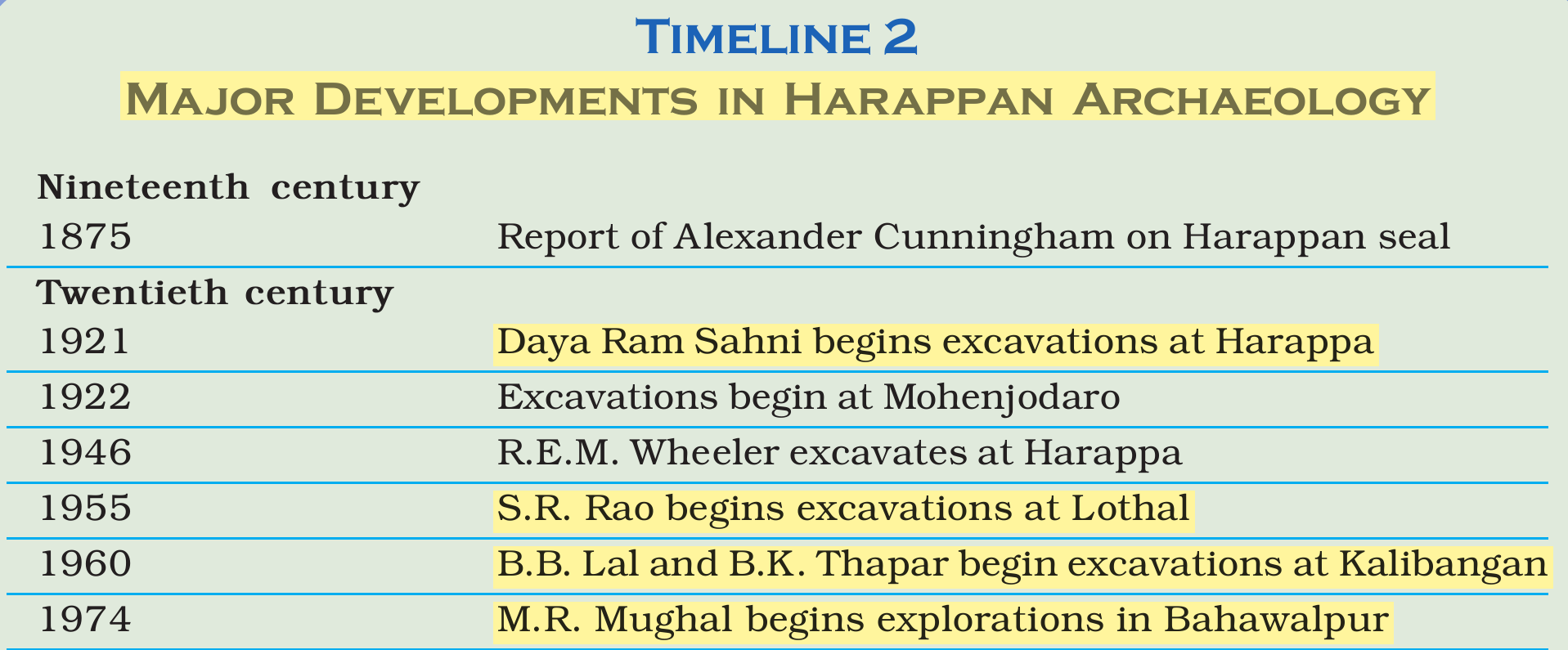
The correct answer is Option (2) → (A)-(II), (B)-(IV), (C)-(I), (D)-(III)
(A) Daya Ram Sahni begins excavations at Harappa — this matches (II) 1921. Harappa was the first Harappan site to be discovered; Daya Ram Sahni was among the archaeologists who found seals there in the early decades of the twentieth century.
(B) S.R. Rao begins excavations at Lothal — this matches (IV) 1955. Lothal was the Harappan settlement near the sources of carnelian, steatite and metal.
(C) B.B. Lal and B.K. Thapar begin excavations at Kalibangan — this matches (I) 1960. Kalibangan in Rajasthan is the site where evidence of a ploughed field was found.
(D) M.R. Mughal begins excavations at Bahawalpur — this matches (III) 1974. The chapter timeline records that in 1974 M.R. Mughal began explorations in Bahawalpur.
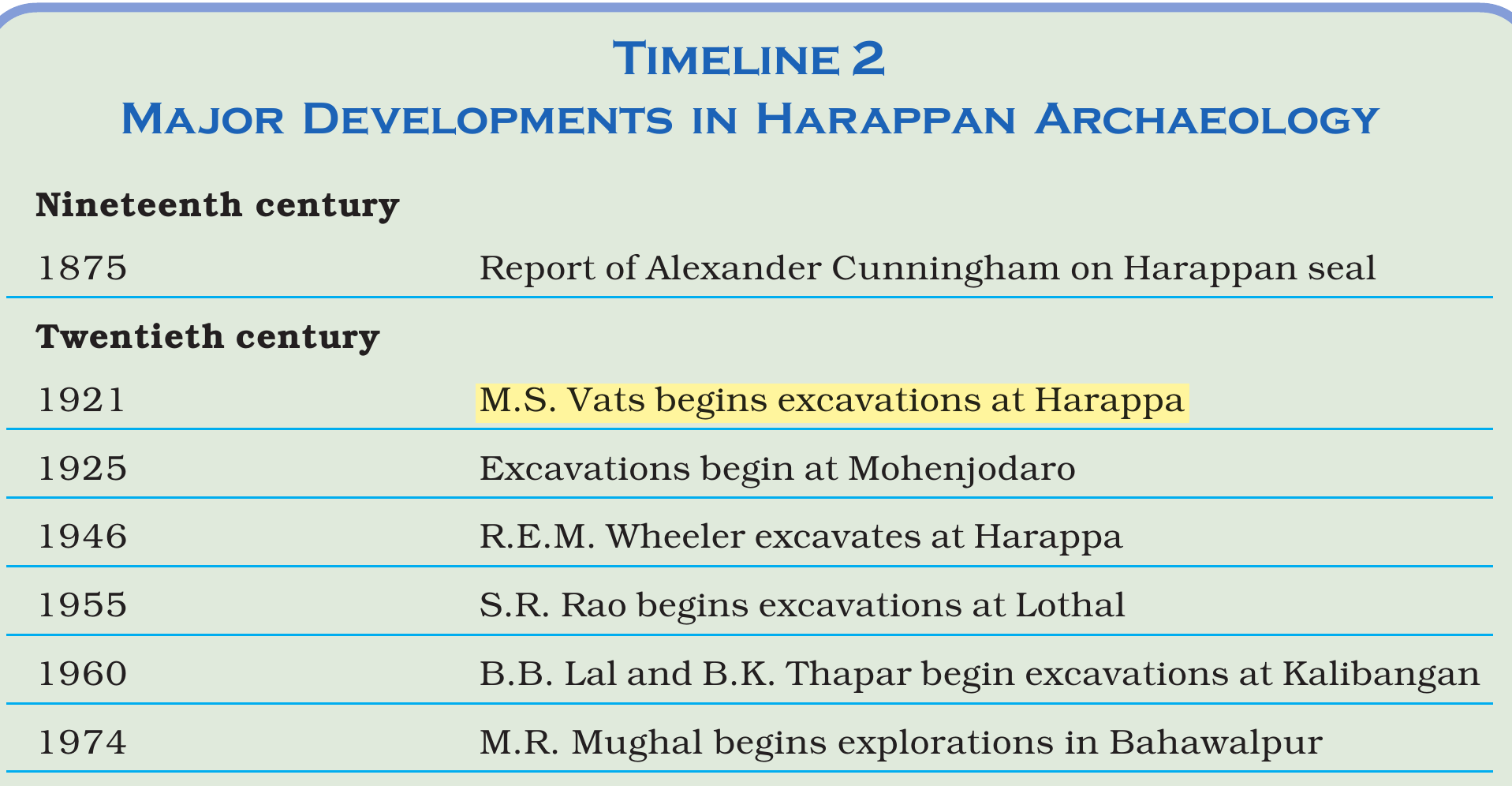
Note: The 2023-24 NCERT timeline names M.S. Vats as the one who began excavations at Harappa in 1921, while the NCERT book (2025-26) names Daya Ram Sahni. The year, 1921, is the same in both books, so the answer does not change.
NCERT: Themes in Indian History Part I — Chapter 1: Bricks, Beads and Bones (2025-26)
NCERT (2023-24): Timeline 2, ‘Major Developments in Harappan Archaeology’, chapter ‘Bricks, Beads and Bones’ — 1921 M.S. Vats begins excavations at Harappa |