Match List-I with List-II
|
List-I |
List-II |
|
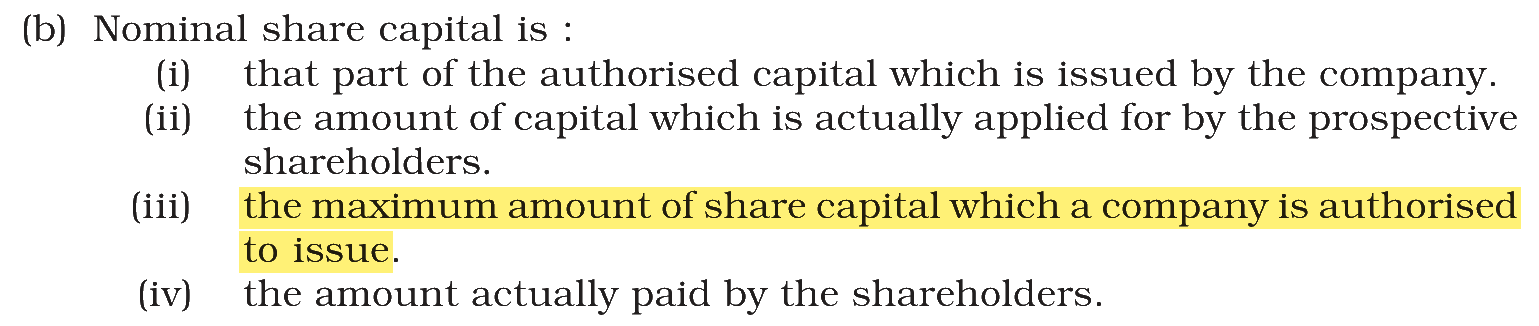
(A)The maximum amount of share capital which a company is authorized to issue is known as: |
(I) Capital reserve |
|
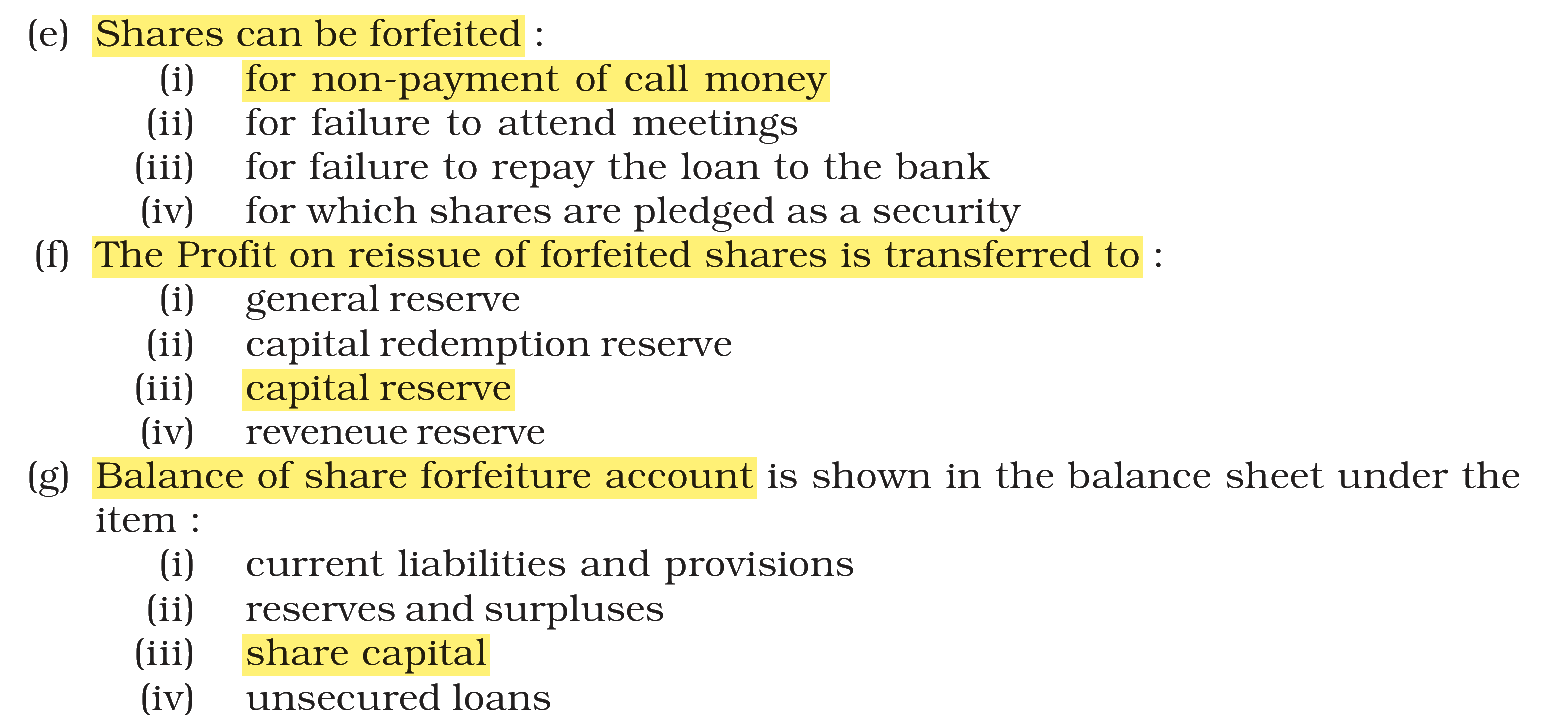
(B) Shares can be forfeited for: |
(II) Share capital |
|
(C) The profit on the reissue of forfeited shares is transferred to: |
(III) Nominal share capital |
|
(D) Balance of share forfeiture account is shown in the balance sheet under the item: |
(IV) Non-payment of call money |
Choose the correct answer from the options given below:
Answer & explanation
Correct answer: option 4
The correct answer is Option (4) → (A)-(III), (B)-(IV), (C)-(I), (D)-(II)
The items follow share capital from its upper limit to the forfeiture and reissue of shares.
(A) The maximum amount of share capital which a company is authorized to issue is known as: — this matches (III) Nominal share capital. Authorised capital, the ceiling fixed by the Memorandum, is also called nominal or registered capital.
(B) Shares can be forfeited for: — this matches (IV) Non-payment of call money. A shareholder who fails to pay allotment or call money may have his shares forfeited, if the Articles allow it.
(C) The profit on the reissue of forfeited shares is transferred to: — this matches (I) Capital reserve. The balance left in the Share Forfeiture Account after reissue is a capital profit, so it goes to Capital Reserve.
(D) Balance of share forfeiture account is shown in the balance sheet under the item: — this matches (II) Share capital. The balance not yet transferred is added to the paid up capital under Share Capital.
NCERT (2026-27 edition): NCERT (2026-27 edition):
|