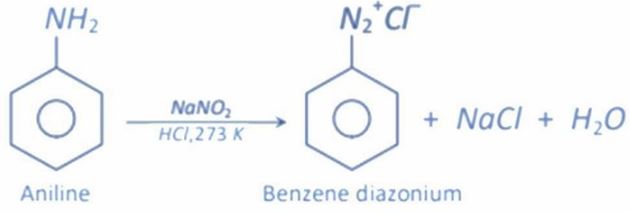
Match List-I with List-II
|
List-I |
List-II |
|
(A) Coupling reaction |
(I) Primary amines |
|
(B) Hofmann's degradation |
(II) Aromatic amines |
|
(C) Isocyanide test |
(III) Phenols and aromatic amines |
|
(D) Diazonium salts |
(IV) Amide to amine |
Choose the correct answer from the options given below:
Answer & explanation
Correct answer: option 3
The correct answer is Option (3) → (A) - (III), (B) - (IV), (C) - (I), (D) - (II)
Different name reactions and tests are specific to functional groups and transformations in amine chemistry.
Correct Matching
|
List-I |
List-II |
|
(A) Coupling reaction |
(III) Phenols and aromatic amines |
|
(B) Hofmann's degradation |
(IV) Amide to amine |
|
(C) Isocyanide test |
(I) Primary amines |
|
(D) Diazonium salts |
(II) Aromatic amines |
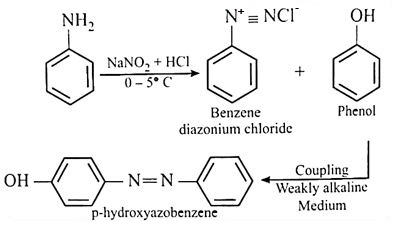
(A) Coupling reaction → (III) Phenols and aromatic amines
Azo coupling occurs between diazonium salts and activated aromatic compounds such as phenols or aromatic amines. This forms azo dyes, making these compounds essential for coupling reactions.
(B) Hofmann's degradation → (IV) Amide to amine
Hofmann bromamide reaction converts an amide into a primary amine with one carbon less. This reaction is specifically used for transforming amides into amines.

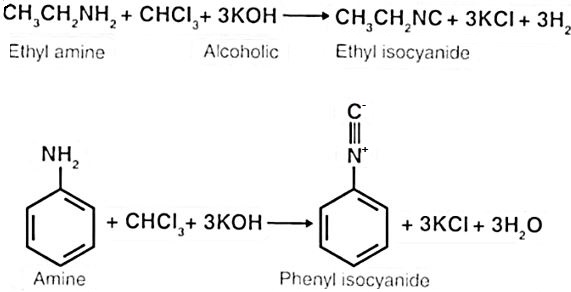
(C) Isocyanide test → (I) Primary amines
The isocyanide test, or carbylamine reaction, is a chemical test used to identify primary amines (both aliphatic and aromatic) by heating them with chloroform ($CHCl_3$) and alcoholic potassium hydroxide (KOH).A positive result is indicated by the production of a foul-smelling isocyanide (carbylamine), distinguishing primary amines from secondary and tertiary amines.
(D) Diazonium salts → (II) Aromatic amines
Diazonium salts are a group of highly versatile organic compounds with the general formula R-N2+X-(where R is an aryl or alkyl group and X is an inorganic/organic anion), commonly used in organic synthesis to introduce functional groups, such as in the creation of azo dyes. Aryl diazonium salts are typically prepared by diazotizing primary aromatic amines with sodium nitrite (NaNO2) and a strong acid at temperatures below due to their instability at higher temperatures.