Match List-I with List-II
|
List-I (Events) |
List-II (Result.) |
|
(A) Termination of business. |
(I) Not possible in the dissolution of partnership. |
|
(B) Continuation of business |
(II) Not possible in the dissolution of a firm. |
|
(C) Intervention of court. |
(III) Dissolution of firm. |
|
(D) Continuation of books of accounts. |
(IV) Dissolution of partnership. |
Choose the correct answer from the options given below:
Answer & explanation
Correct answer: option 4
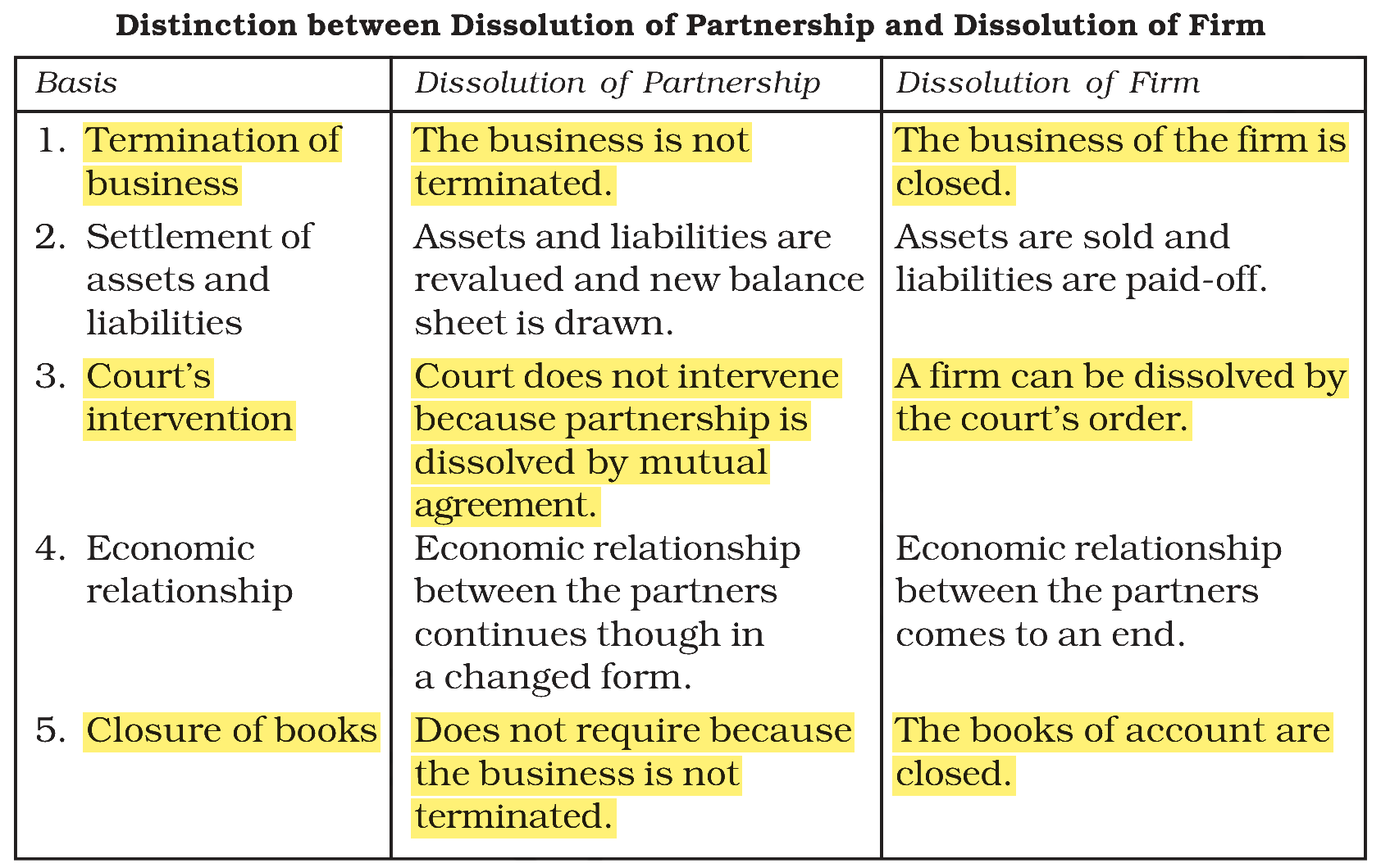
The correct answer is Option (4) → (A)-(III), (B)-(IV), (C)-(I), (D)-(II)
In a dissolution of partnership only the agreement among the partners changes and the business goes on; in a dissolution of the firm the business itself ends.
(A) Termination of business — this matches (III) Dissolution of firm. When the firm is dissolved its business is closed, assets are sold and liabilities paid off.
(B) Continuation of business — this matches (IV) Dissolution of partnership. On admission, retirement or a change of ratio, the old agreement ends but the firm carries on.
(C) Intervention of court — this matches (I) Not possible in the dissolution of partnership. A court can order a firm to be dissolved, but a change in the partnership happens by mutual agreement, without the court.
(D) Continuation of books of accounts — this matches (II) Not possible in the dissolution of a firm. When the firm is dissolved its books are closed; they continue only when the partnership alone is dissolved.
NCERT (2026-27 edition):
|