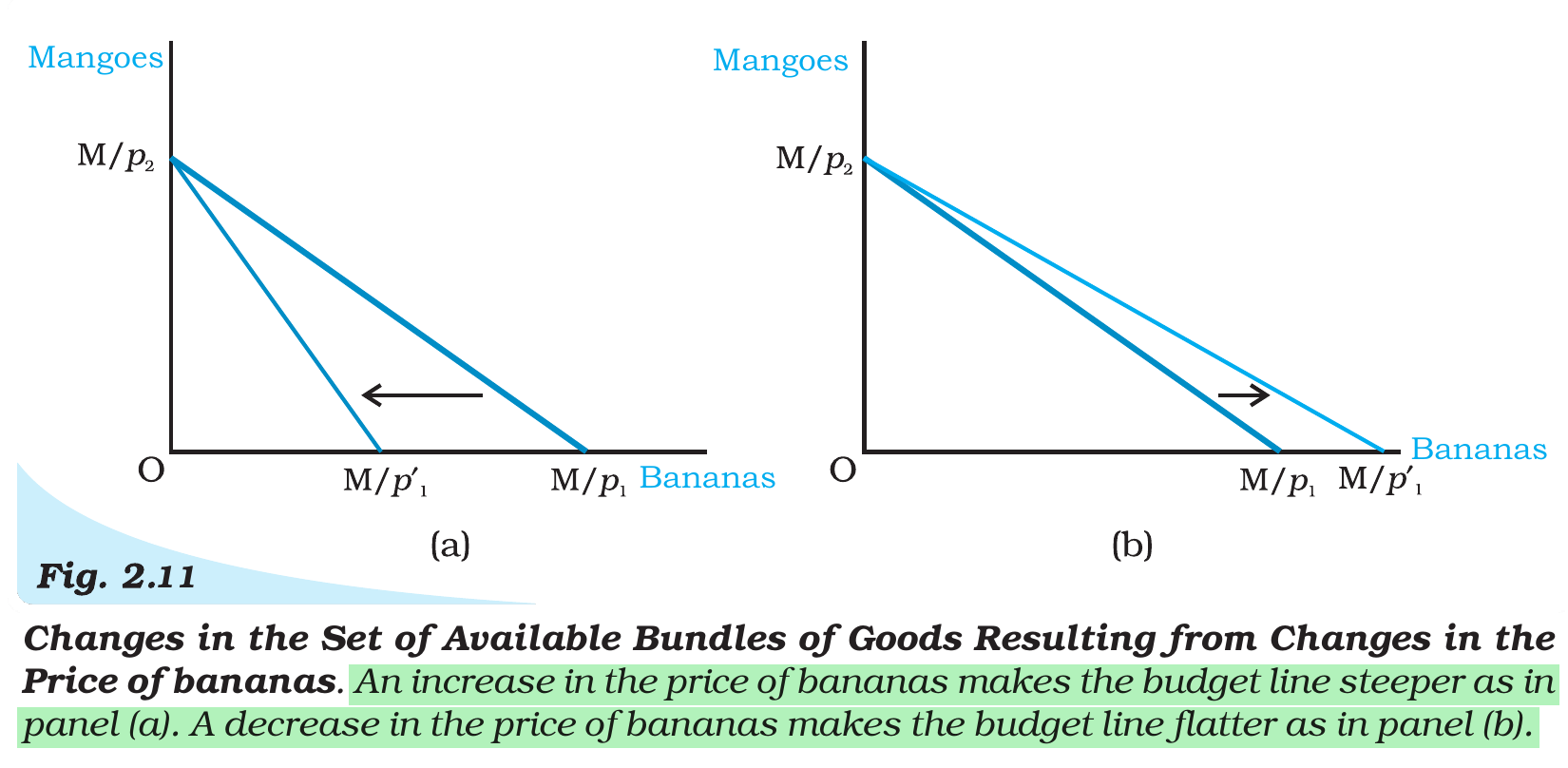
Match List-I with List-II
| List-I | List-II | ||
| (A) | Decrease in consumer's income | (I) | Budget line becomes steeper |
| (B) | Increase in price of Good X | (II) | Parallel and leftward shift in the budget line |
| (C) | Equal reduction in price of both goods X and Y | (III) | Budget line becomes flatter |
| (D) | Increase in price of Good Y | (IV) | No change in the slope of the budget line |
Choose the correct answer from the options given below:
Answer & explanation
Correct answer: option 3
The correct answer is Option (3) → (A)-(II), (B)-(I), (C)-(IV), (D)-(III)
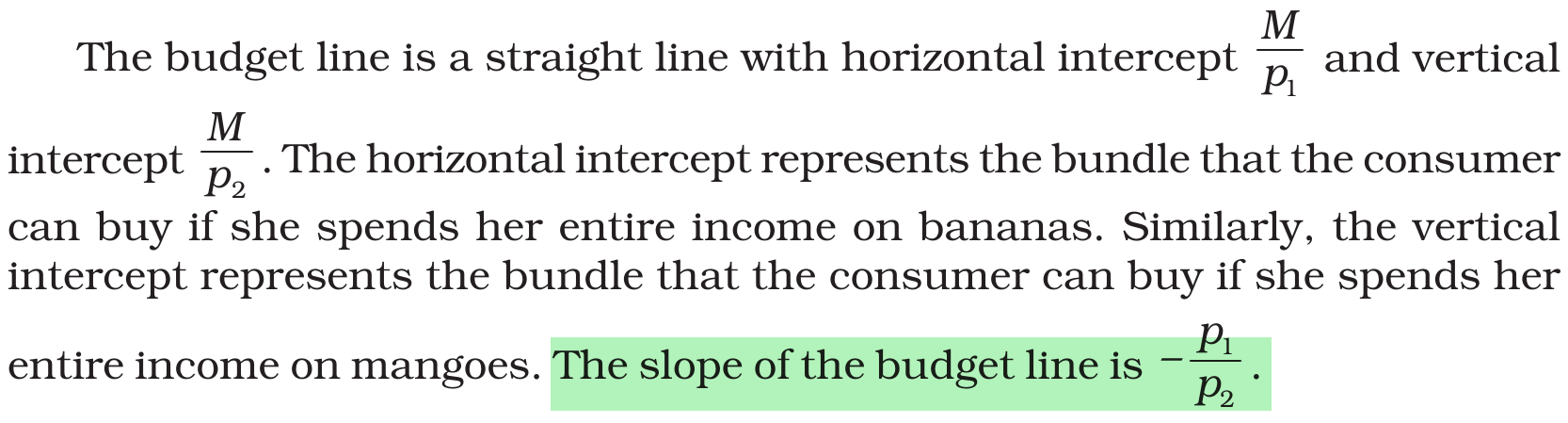
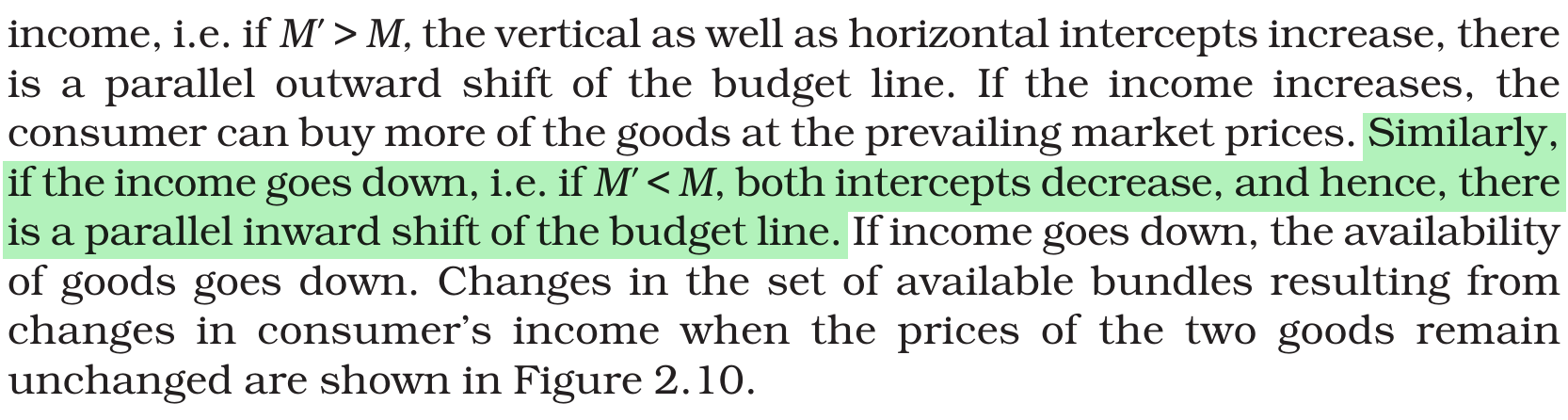
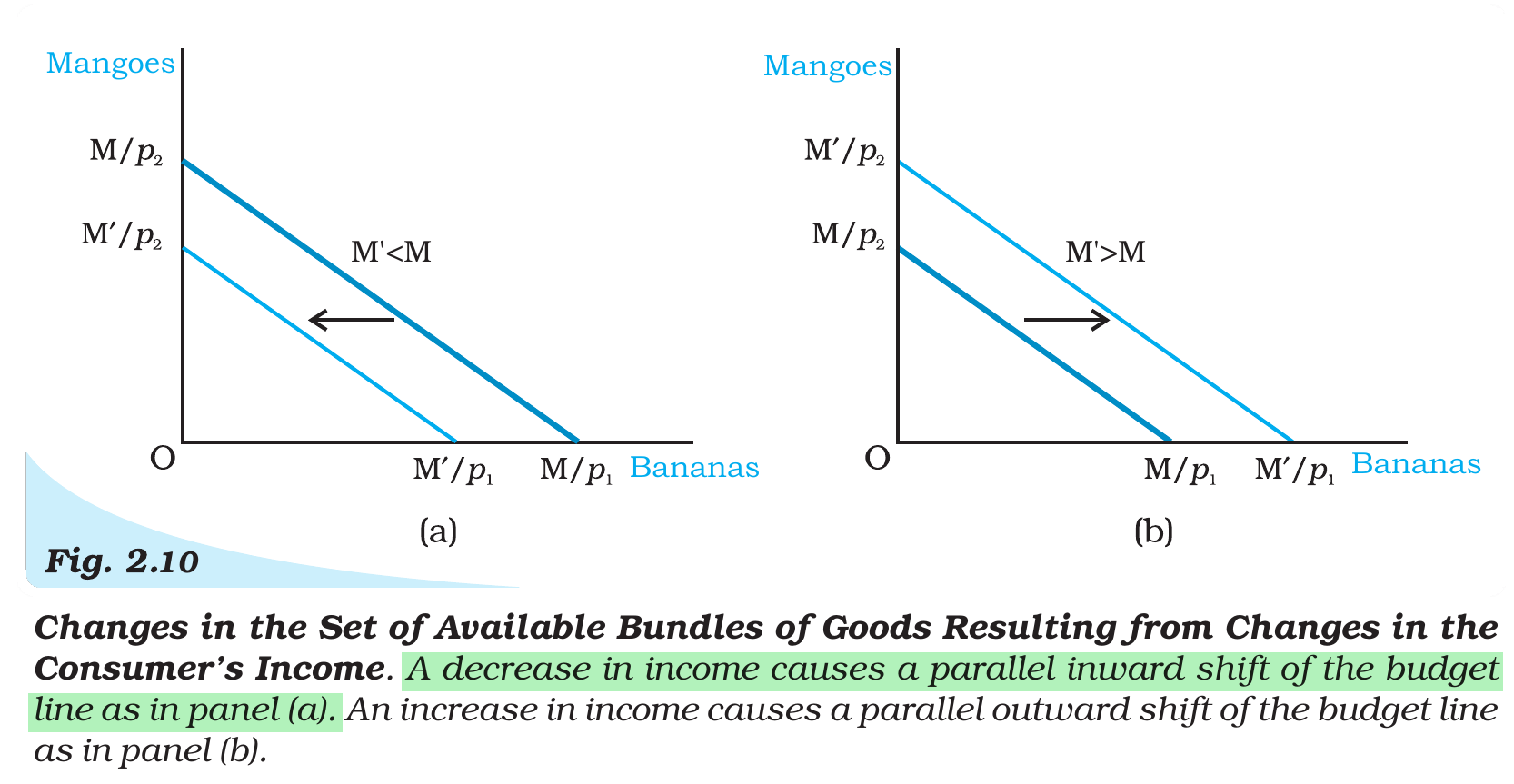
The budget line shows the bundles of two goods that cost the consumer her entire income. With Good X on the horizontal axis, its slope depends on the price ratio Px ÷ Py (price of X divided by price of Y). A change in income moves the line without changing this ratio. A change in one price changes the ratio, so the line becomes steeper or flatter.
| List-I | List-II | Reason |
|---|---|---|
| (A) Decrease in consumer’s income | (II) Parallel and leftward shift in the budget line | Prices are unchanged, so the slope stays the same. With less income, the consumer can buy less of both goods. |
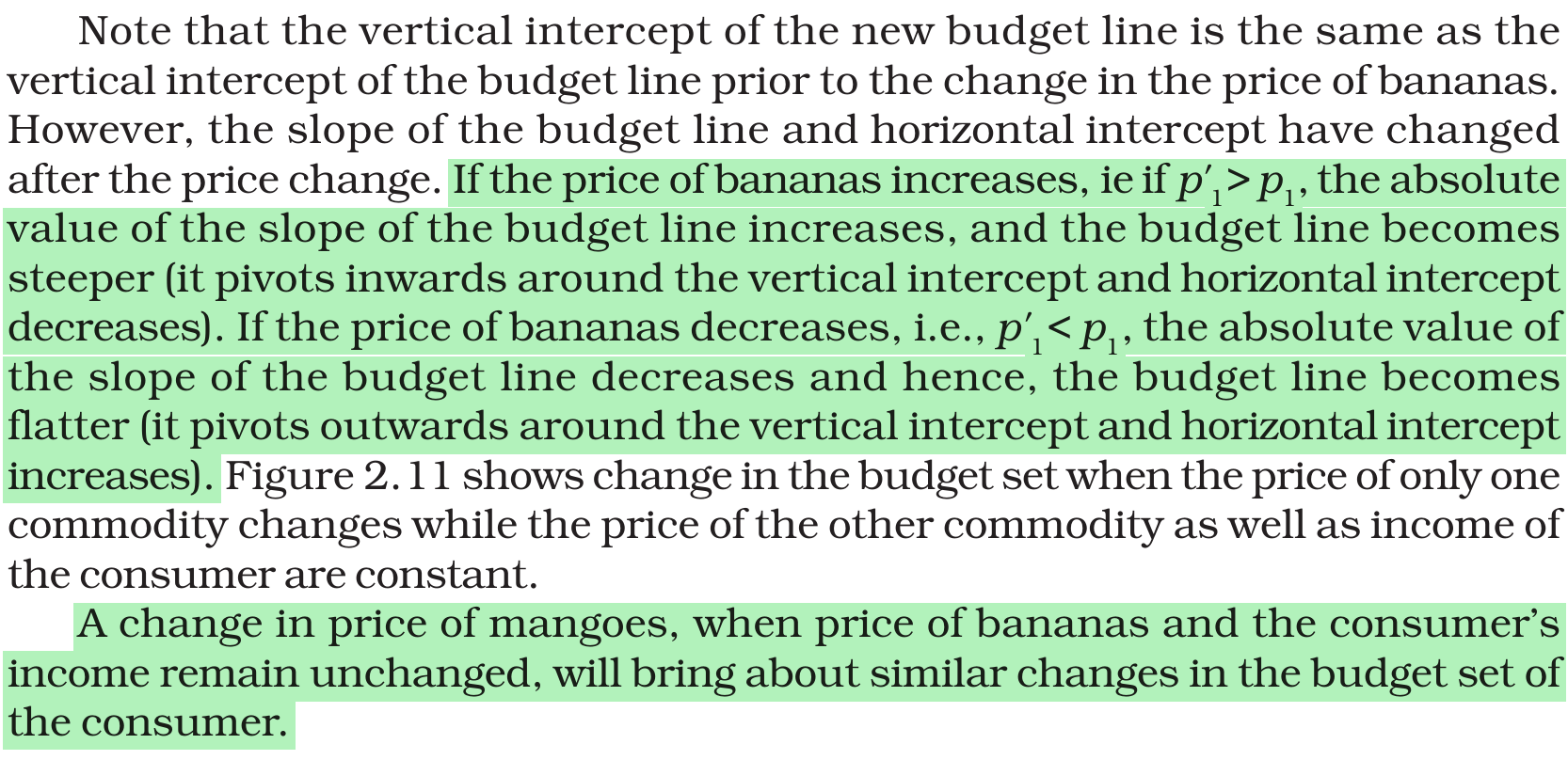
| (B) Increase in price of Good X | (I) Budget line becomes steeper | Px ÷ Py rises, so the absolute value of the slope rises. |
| (C) Equal reduction in price of both goods X and Y | (IV) No change in the slope of the budget line | Both prices fall in the same proportion, so Px ÷ Py stays the same. |
| (D) Increase in price of Good Y | (III) Budget line becomes flatter | Px ÷ Py falls, so the absolute value of the slope falls. |
Note: ‘Equal reduction’ in item (C) is taken as a fall in the same proportion. An equal cut in rupees would change the slope unless the two prices were already equal.
NCERT (2026-27): Introductory Microeconomics — Chapter 2: Theory of Consumer Behaviour
|