
The synthesis of alkyl fluoride is best achieved through
Answer & explanation
Correct answer: option 1
The correct answer is Option (1) → Swartz reaction
Alkyl fluorides are difficult to prepare directly because fluorine is extremely reactive. Direct fluorination often leads to uncontrolled reactions and multiple substitutions.
Therefore, alkyl fluorides are generally prepared through halogen exchange reactions.
One of the most important methods is the Swartz reaction.
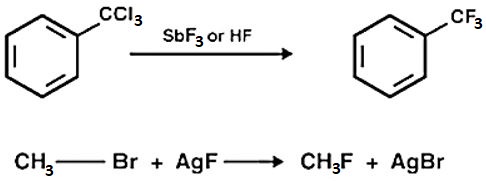
In the Swartz reaction, an alkyl chloride or alkyl bromide reacts with metallic fluorides such as:
AgF, Hg₂F₂, SbF₃, or CoF₂
General reaction:
R–Cl / R–Br + AgF → R–F + AgCl / AgBr
This reaction replaces chlorine or bromine with fluorine, producing alkyl fluoride efficiently.
Option-wise Explanation
Option 1: Swartz reaction
The Swartz reaction specifically involves halogen exchange where chlorine or bromine is replaced by fluorine using metal fluorides. It is a standard laboratory method for preparing alkyl fluorides. Therefore this option is correct.
Option 2: Finkelstein reaction
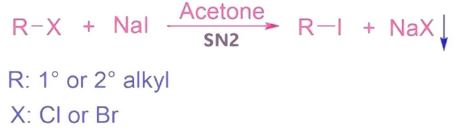
The Finkelstein reaction is used for preparing alkyl iodides from alkyl chlorides or bromides using sodium iodide in acetone. It does not produce alkyl fluorides. Hence this option is incorrect.
Option 3: Free radical fluorination
Direct free radical fluorination using fluorine gas is extremely violent and difficult to control, often producing mixtures of products. Therefore it is not considered the best method for synthesizing alkyl fluorides.

Option 4: Hydrogen fluoride
Hydrogen fluoride alone is generally not effective for direct preparation of alkyl fluorides from alkyl halides. Hence this option is incorrect.