CUETMOCK
  • Pricing
  • Mentors
Log inStart freeStart free mocks→

First test, then trust

Try a free CUET mock test.

Join 5,00,000+ students who rehearsed exam day on the exact NTA screen before sitting CUET. On the web and on Android.

Start free mocks →Get the Android app
CUETMOCK

India's #1 CUET Mock Test Platform. Original NCERT-based questions on the exact NTA exam screen — trusted by 5,00,000+ students since CUET 2022.

Get it onGoogle PlayScan to download the CUETMOCK app

Mock tests

  • CUET mock test series
  • Browse all papers
  • Commerce mocks
  • Humanities (Arts) mocks
  • Science mocks
  • Languages & GAT mocks
  • Free practice questions
  • Pricing

Resources

  • CUET exam guide
  • CUET syllabus
  • Universities accepting CUET
  • Expert blogs
  • News & notifications
  • Webinars & counselling
  • CUET score calculator
  • How we estimate your rank
  • FAQs

Company

  • About us
  • Our leadership & team
  • Our toppers
  • Mentors
  • For schools
  • Contact us
  • Terms
  • Privacy
  • Refund policy

Talk to us

+91 7696 6630 56info@cuetmock.comWhatsApp us

Our other platforms

  • JEE Mock — For IIT-JEE aspirants
  • NEET Mock — For NEET aspirants

Newsletter

Exam updates, study material and offers — no spam.

© 2026 NYC Ventures Pvt. Ltd.

701-702, Royal Business Park, Zirakpur, Punjab - 140603

  • Terms of use
  • Privacy policy
  • Refund policy
  • Contact us

iCUETMOCK is an independent preparation platform, not affiliated with the National Testing Agency (NTA). Always check exam details on the official NTA website.

  • Home
  • Mock tests
  • CUET guide
  • Pricing
  • Log in
Home/Practice questions/History
HistoryModern India: Colonialism and the Countryside

Who was the leader of the Santhal Rebellion of 1855-56?

Who was the leader of the Santhal Rebellion of 1855-56?

Answer & explanation+

Correct answer: option 1

The correct answer is Option (1) → Sidhu Manjhi

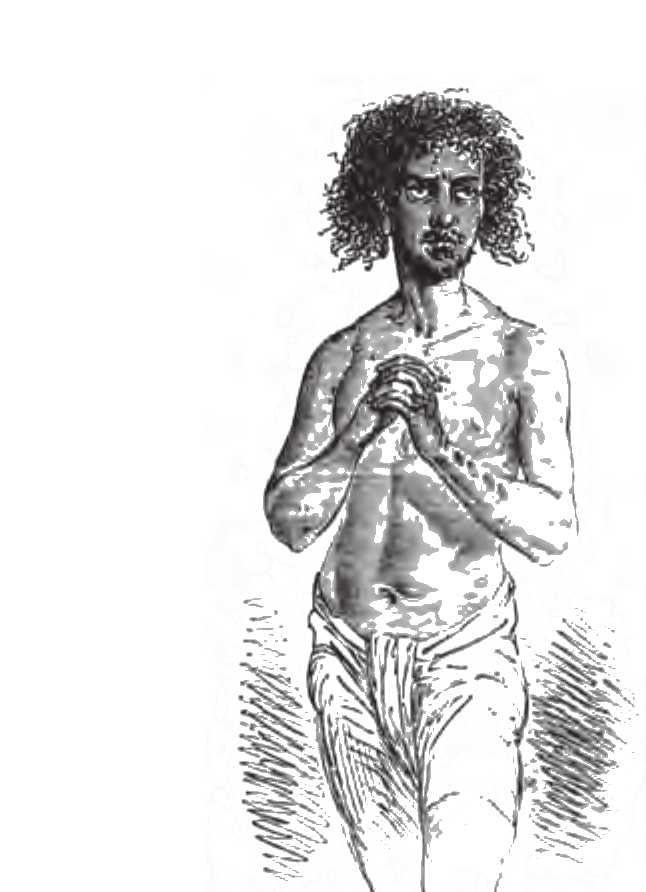
Sidhu Manjhi was the leader of the Santhal rebellion; the Santhals rose against zamindars, moneylenders and the colonial state in the Santhal Revolt (1855-56).

Note: A same/similar question was asked in CUET (UG) in the papers below.

20262025202420232022
–30-05 S1*18-05 S1*27-05 S1*
02-06 S3*
05-06 S2
06-06 S1*
09-06 S3
–

* A similar question.


NCERT (2026-27): “2.2 The Santhals: Pioneer settlers … The Santhals, however, soon found that the land they had brought under cultivation was slipping away from their hands. The state was levying heavy taxes on the land that the Santhals had cleared, moneylenders (dikus) were charging them high rates of interest and taking over the land when debts remained unpaid, and zamindars were asserting control over the Damin area. By the 1850s, the Santhals felt that the time had come to rebel against zamindars, moneylenders and the colonial state, in order to create an ideal world for themselves where they would rule. It was after the Santhal Revolt (1855-56 ) that the Santhal Pargana was created, carving out 5,500 square miles from the districts of Bhagalpur and Birbhum. The colonial state hoped that by creating a new territory for the Santhals and imposing some special laws within it, the Santhals could be conciliated.”

NCERT extract

Fig. 9.11 Sidhu Manjhi, the leader of the Santhal rebellion

Advertisement

Practise more on Modern India: Colonialism and the Countryside

Chapter-wise mocks on the real NTA exam screen, with solutions and your rank. Your first mocks are free.

Start free mocks →

Advertisement

Next questions

  1. Chemistry · Organic: Alcohols, Phenols and Ethers
  2. Identify the Interrogative sentence:English · Kinds of Sentence
  3. In India, palm, coconut, keora, agar are the common trees of which of the following forests?General Aptitude Test · General Knowledge
  4. Suggi is a famous folk dance form of ____ state of India.General Aptitude Test · General Knowledge
  5. Choose the incorrect statements from the given options in the context of Human Development Report of 2023-24?Geography · Fundamentals of Human Geography: Human Development
  6. Match List I with List II:List IList II(A) Lapis Lazuli(I) South India(B) Carnelian(II) Afghanistan(C) Gold(III) Gujarat(D) Haja-bird(IV) M…History · Ancient India: Bricks, Beads and Bones
  7. The significance of a mode of transport depends on which of the following ?Geography · Fundamentals of Human Geography: Tertiary and Quaternary Activities
  8. Invention of ________ revolutionised the transport systems in eighteenth century.Geography · Fundamentals of Human Geography: Transport and Communication
  9. The mean radius of the earth is R, its angular speed about its own axis ω and the acceleration due to gravity at the earth surface is g. Th…Physics · Gravitation
  10. Arrange the following copper mines in North to South direction: (A) Alwar(B) Bhilwara(C) Khetri(D) Udaipur Choose the correct answer from t…Geography · India-People and Economy: Mineral and Energy resources