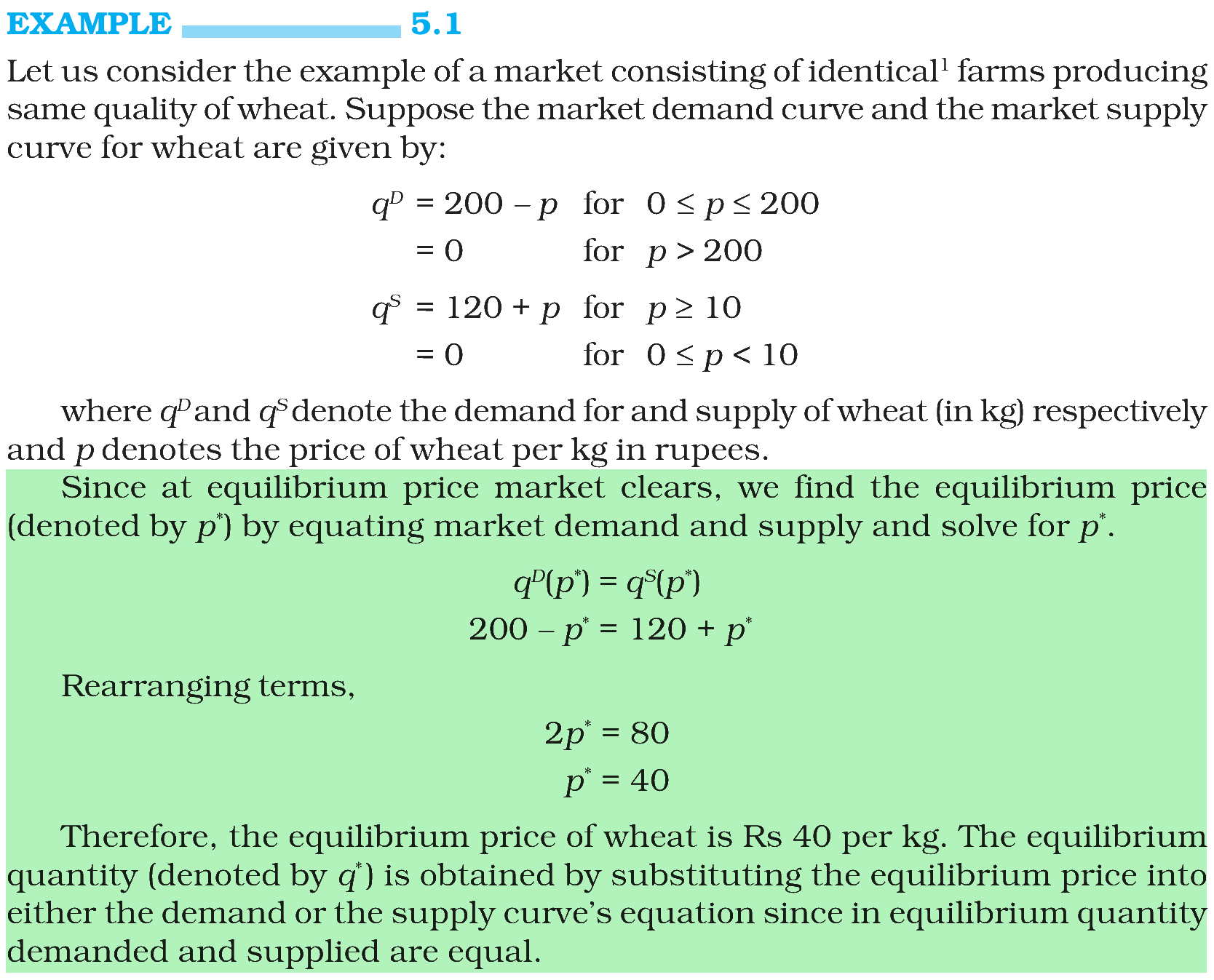
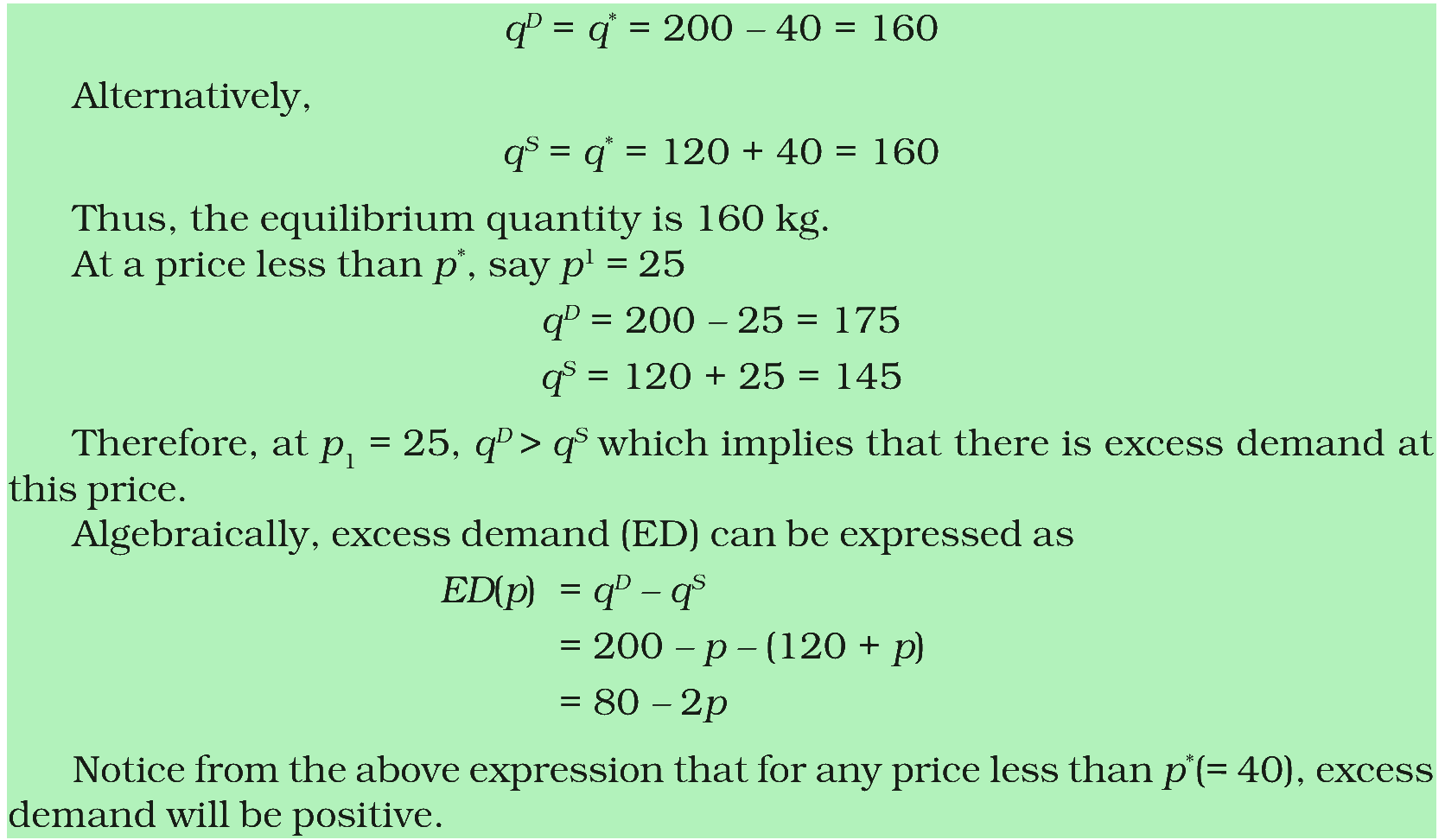
For the wheat market qD = 200 – p and qS = 120 + p (p in rupees per kg, q in kg), match List-I with List-II:
| List-I | List-II | ||
|---|---|---|---|
| (A) | Quantity demanded at a price of Rs 35 | (I) | 160 kg |
| (B) | Quantity supplied at a price of Rs 35 | (II) | 165 kg |
| (C) | Excess demand at a price of Rs 35 | (III) | 155 kg |
| (D) | Equilibrium quantity | (IV) | 10 kg |
Choose the correct answer from the options given below:
Answer & explanation
Correct answer: option 4
The correct answer is Option (4) → (A) - (II), (B) - (III), (C) - (IV), (D) - (I)
Put p = 35 into each curve. Excess demand is quantity demanded minus quantity supplied, and the equilibrium quantity is where the two curves meet.
| List-I | List-II | Reason |
|---|---|---|
| (A) Quantity demanded at a price of Rs 35 | (II) 165 kg | qD = 200 − 35 = 165 kg. |
| (B) Quantity supplied at a price of Rs 35 | (III) 155 kg | qS = 120 + 35 = 155 kg. |
| (C) Excess demand at a price of Rs 35 | (IV) 10 kg | 165 − 155 = 10 kg. Rs 35 is below the equilibrium price, so demand is more than supply. |
| (D) Equilibrium quantity | (I) 160 kg | 200 − p = 120 + p gives p* = 40, so q* = 200 − 40 = 160 kg. |
NCERT (2026-27):
|