Match List I with List II
| LIST I | LIST II |
| A. MPC | I. \( \displaystyle\frac{1}{1-MPC} \) |
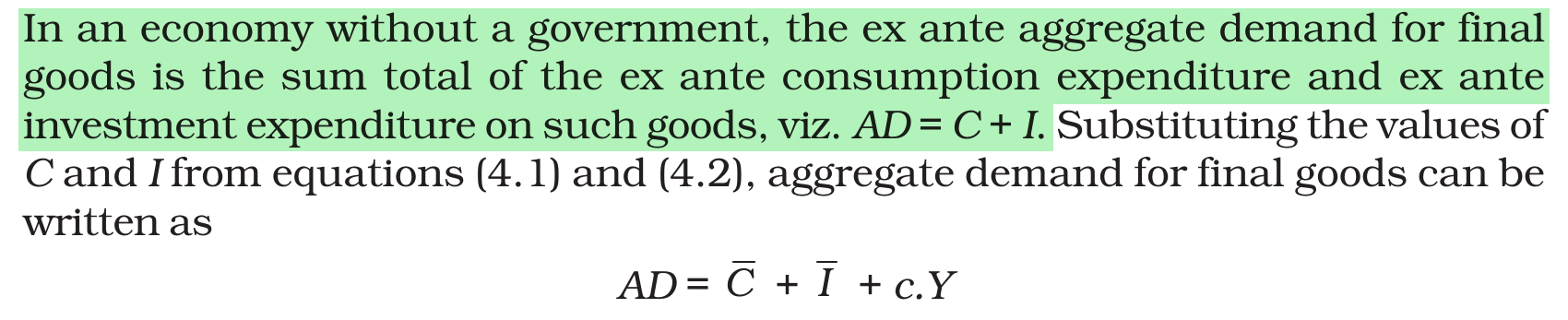
| B. AD | II. \( \displaystyle\frac{\Delta c}{\Delta y} \) |
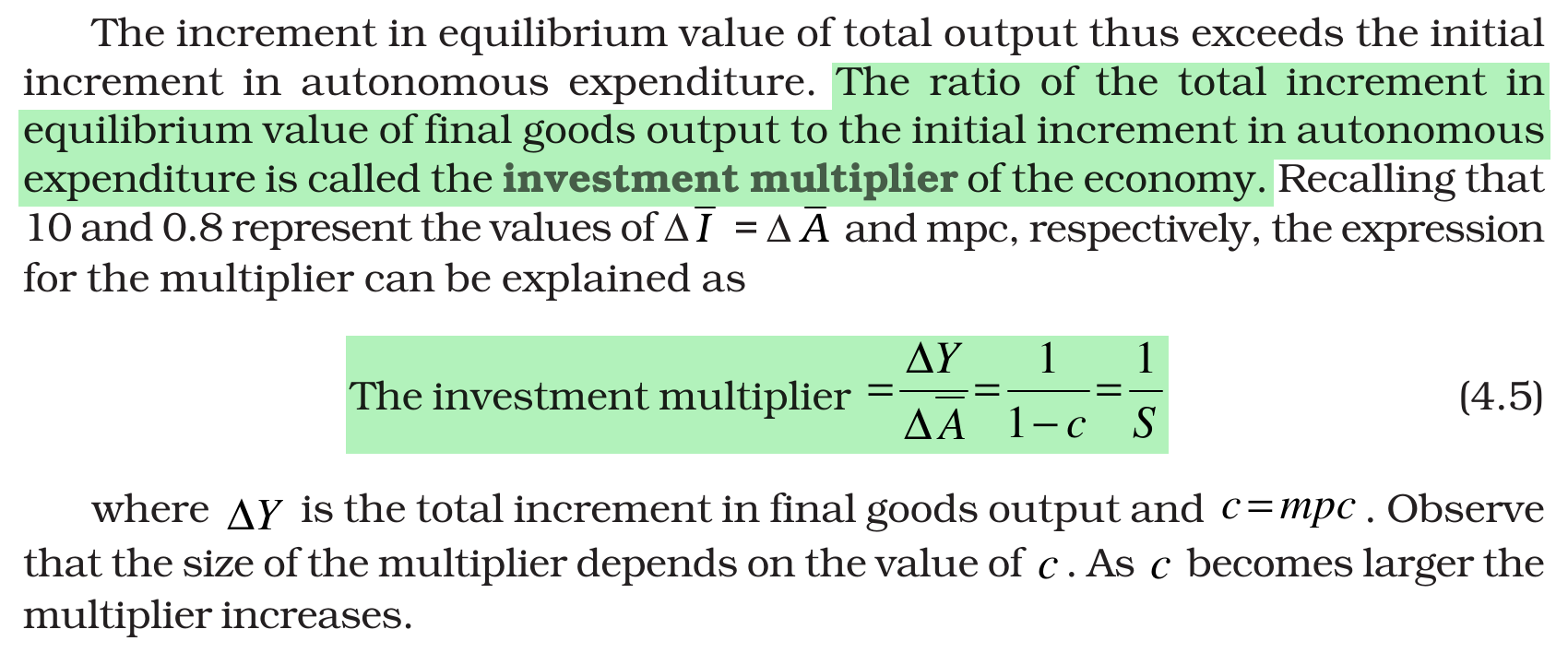
| C. K | III. C + I |
| D. If MPC = 0 | IV. K = 1 |
Choose the correct answer from the options given below:
Answer & explanation
Correct answer: option 4
The correct answer is Option (4) → A-II, B-III, C-I, D-IV
In the simple model of income determination, consumption depends on income. The multiplier depends on how much of each extra rupee of income is spent.
| List-I | List-II | Reason |
|---|---|---|
| (A) MPC | (II) \( \displaystyle\frac{\Delta c}{\Delta y} \) | The marginal propensity to consume (MPC) is the change in consumption per unit change in income. |
| (B) AD | (III) \( C + I \) | Aggregate demand (AD) is the total planned spending: consumption demand plus investment demand. |
| (C) K | (I) \( \displaystyle\frac{1}{1-MPC} \) | The investment multiplier (K) is the total rise in income divided by the first rise in investment. It equals 1 divided by (1 − MPC). |
| (D) If MPC = 0 | (IV) \( K = 1 \) | Put MPC = 0 in the formula: \( K = \displaystyle\frac{1}{1-0} = 1 \) No part of the extra income is spent again, so income rises only by the first rise in investment. |
NCERT (2026-27): Introductory Macroeconomics — Chapter 4: Determination of Income and Employment
|