Match the LIST-I with LIST-II:
| LIST-I Years | LIST-II Discovery and Conservation of Vijayanagara | ||
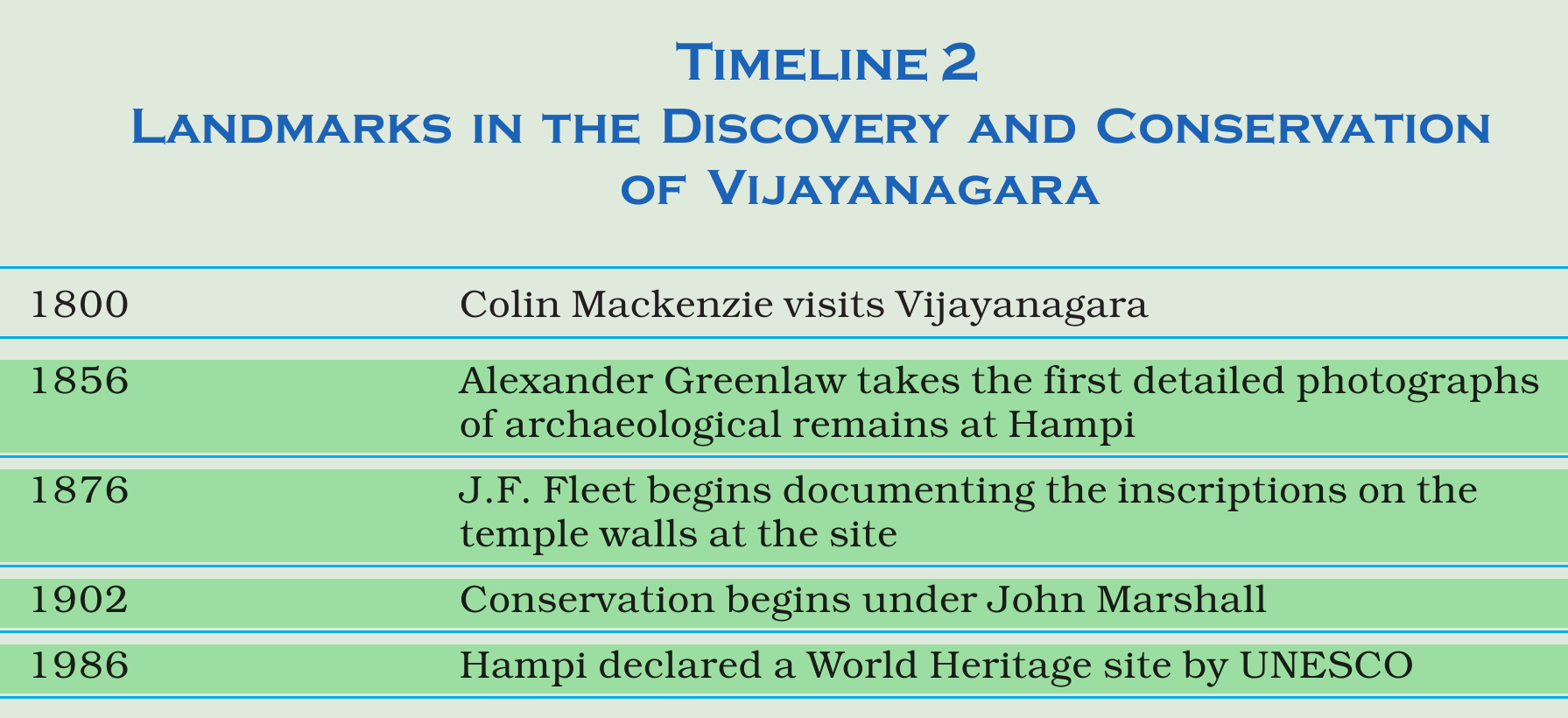
| A. | 1856 | I. | Alexander Greenlaw takes first detailed photographs of archaeological remains at Hampi |
| B. | 1876 | II. | J.F. Fleet begins documenting the inscriptions on the temple walls at the site |
| C. | 1902 | III. | Hampi declared a World Heritage site by UNESCO |
| D. | 1986 | IV. | Conservation begins under John Marshall |
Choose the correct answer from the options given below:
Answer & explanation
Correct answer: option 3
The correct answer is Option (3) → A - I, B - II, C - IV, D - III
(A) 1856 — this matches (I) Alexander Greenlaw takes first detailed photographs of archaeological remains at Hampi. His photographs were the first detailed visual record of the site.
(B) 1876 — this matches (II) J.F. Fleet begins documenting the inscriptions on the temple walls at the site. The inscriptions became one of the main sources for rebuilding the history of the empire.
(C) 1902 — this matches (IV) Conservation begins under John Marshall, then Director-General of the Archaeological Survey of India.
(D) 1986 — this matches (III) Hampi declared a World Heritage site by UNESCO.
NCERT (2025-26): “1. The Discovery of Hampi … Subsequently, from 1856, photographers began to record the monuments which enabled scholars to study them. As early as 1836 epigraphists began collecting several dozen inscriptions found at this and other temples at Hampi.…”
|