
Match List-I with List-II :
| List-I (Compound) | List-II (Property) |
| (A) COCl2 | (I) To distinguish between primary, secondary and tertiary amines |
(B) 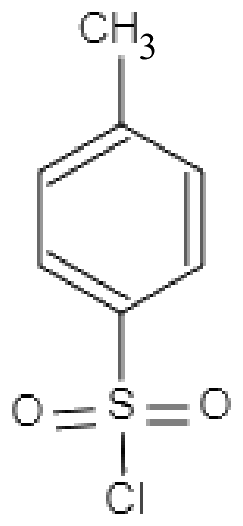 | (II) Poisonous gas |
(C) 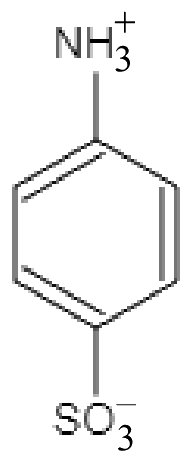 | (III) Synthesis of primary amines |
(D) 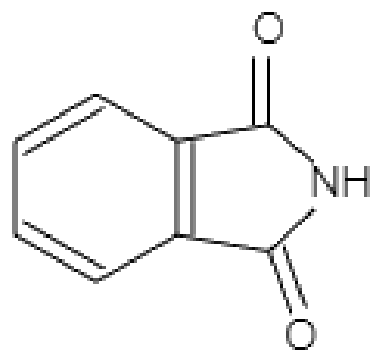 | (IV) Zwitter ion |
Choose the correct answer from the options given below :
Answer & explanation
Correct answer: option 1
The correct answer is Option (1) → (A) - (II), (B) - (I), (C) - (IV), (D) - (III)
Each compound is identified from its structure and its best-known use or property.
(A) \( \ce{COCl2} \) — This matches (II) Poisonous gas. Carbonyl chloride (phosgene) is an extremely poisonous gas; it forms when chloroform is oxidised by air in light.
\( \displaystyle \ce{2CHCl3 + O2} \xrightarrow{\text{light}} \ce{2COCl2 + 2HCl} \)
(B) 4-methylbenzenesulphonyl chloride — This matches (I) To distinguish between primary, secondary and tertiary amines. Like benzenesulphonyl chloride (Hinsberg’s reagent), an arylsulphonyl chloride gives an alkali-soluble sulphonamide with a primary amine, an alkali-insoluble one with a secondary amine, and no reaction with a tertiary amine.
\( \displaystyle \ce{ArSO2Cl + H2N-R -> ArSO2NHR + HCl} \)
(C) sulphanilic acid as its zwitter ion — This matches (IV) Zwitter ion. In sulphanilic acid (4-aminobenzenesulphonic acid) the acidic –\( \ce{SO3H} \) group gives its proton to the basic –\( \ce{NH2} \) group, so the molecule carries both a positive (–\( \ce{NH3^{+}} \)) and a negative (–\( \ce{SO3^{-}} \)) charge.
(D) phthalimide — This matches (III) Synthesis of primary amines. It is the starting material of the Gabriel phthalimide synthesis: its potassium salt is alkylated with R–X and the product is hydrolysed to give \( \ce{R-NH2} \).
Shortcut: (A)–(II) appears in Options (1) and (2), and (C)–(IV) then leaves only Option (1).