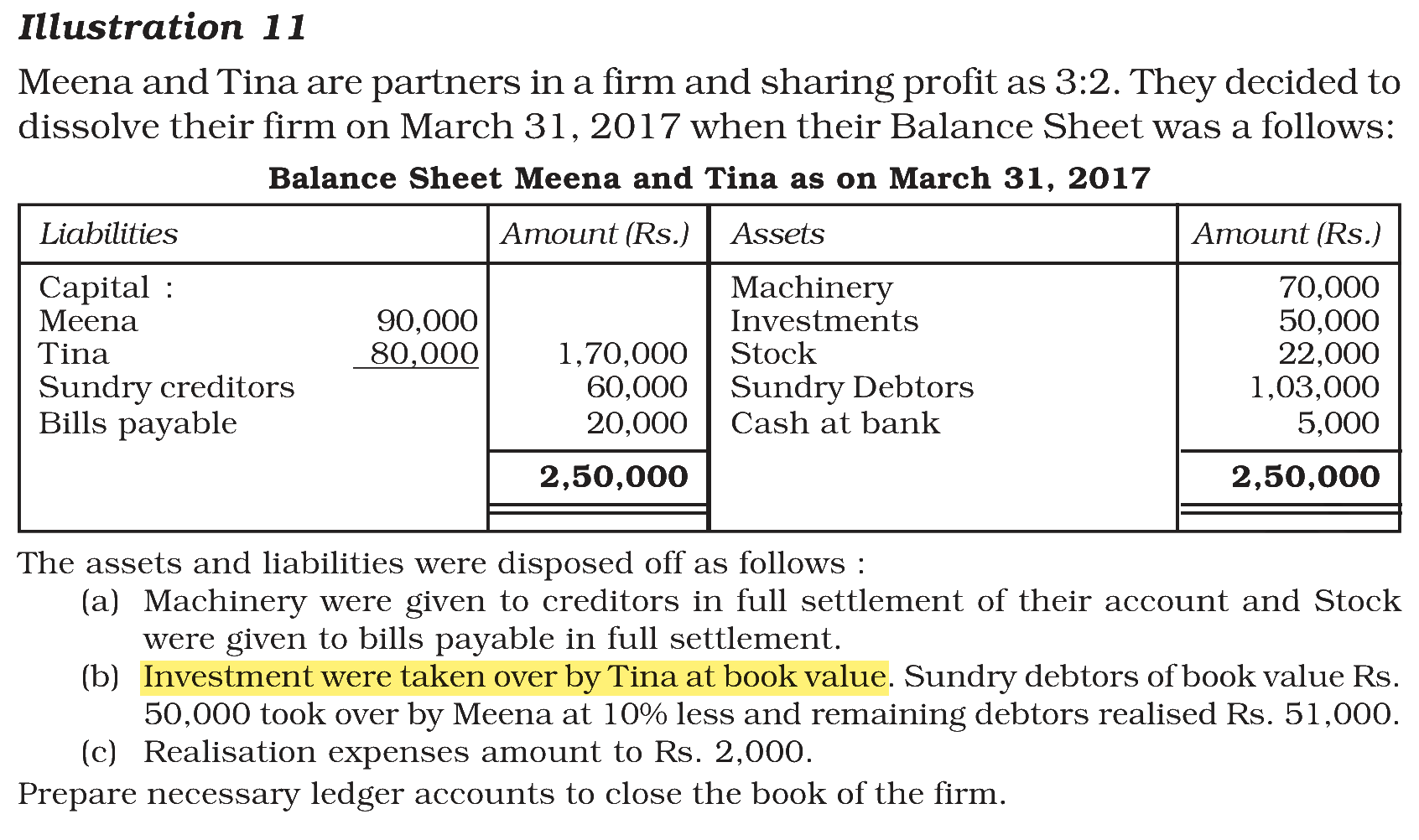
Meena and Tina are partners in a firm and share profit as 3:2. They decided to dissolve their firm on March 31, 2017, when their Balance Sheet was as follows:
Balance Sheet Meena and Tina as of March 31,2017
| Liabilities | Amount (₹) | Assets | Amount (₹) |
| Capital: | Machinery | 70,000 | |
| Meena 90,000 | Investments | 50,000 | |
| Tina 80,000 | 1,70,000 | Stock | 22,000 |
| Sundry creditors | 60,000 | Sundry Debtors | 1,03,000 |
| Bills payable | 20,000 | Cash at bank | 5,000 |
| 2,50,000 | 2,50,000 |
The assets and liabilities were disposed off as follows:
a) Machinery were given to creditors in full settlement of their account and stock were given bills payable in full settlement.
b) Investment were took over by Tina at book value. Sundry debtors of book value ₹50,000 took over by Meena at 10% less and remaining debtors realised ₹51,000.
c) Realisation expenses amount to ₹2,000.
State Journal entry for realisation of investment.
Answer & explanation
Correct answer: option 1
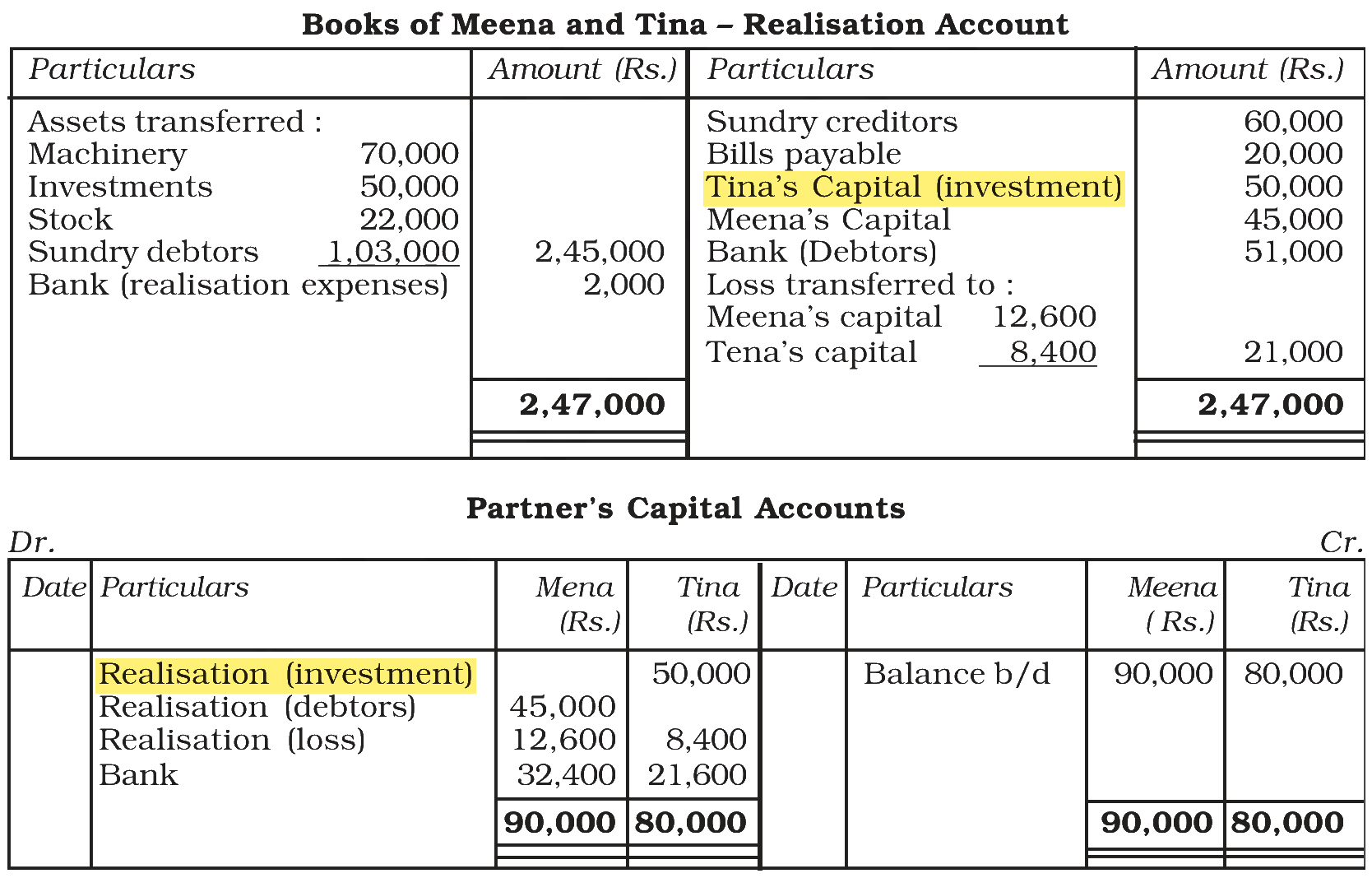
The correct answer is Option (1) → Tina’s capital A/c Dr. ₹50,000 To Realisation A/c ₹50,000
When a partner takes over an asset of the firm on dissolution, he pays for it by giving up that much of his capital. So his capital account is debited and the Realisation Account is credited with the agreed value.
Investments taken over by Tina at book value = ₹50,000
Tina’s Capital A/c Dr. ₹50,000
To Realisation A/c ₹50,000
Only Tina takes the investments, so Meena’s capital is not touched, and the asset goes out of the firm, so Realisation is credited, not debited.
NCERT (2026-27 edition):
|