Match List-I with List-II
| List-I | List-II |
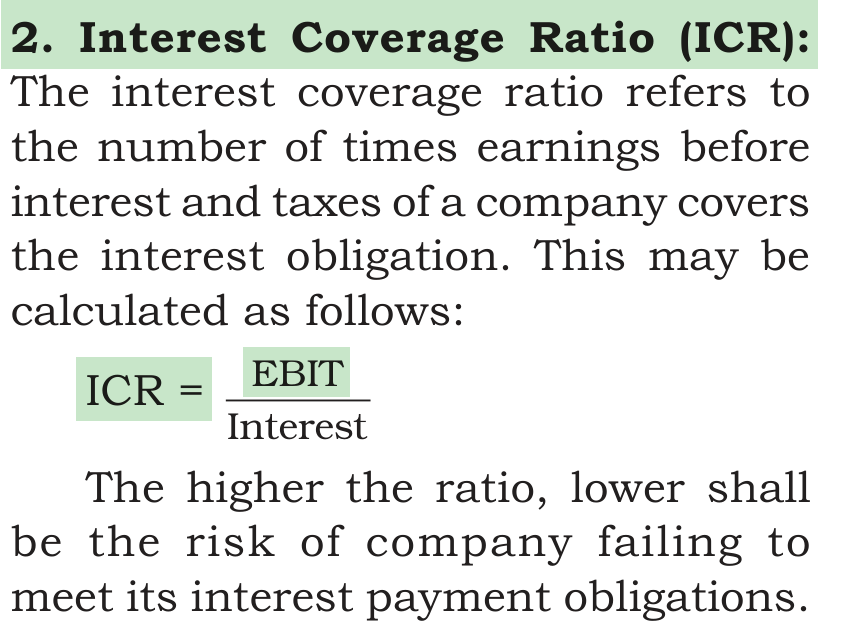
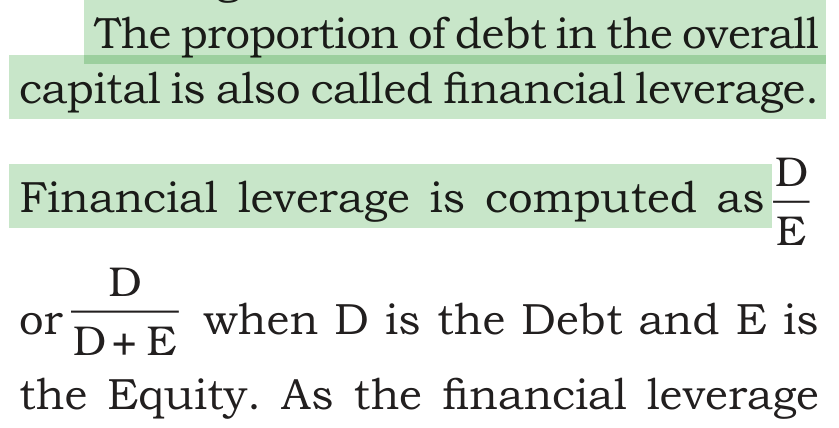
| (A) Interest Coverage Ratio | (I) Debt (D)/Equity(E) or D/D+E |
| (B) Financial Leverage | (II) Current Assets - Current Liabilities |
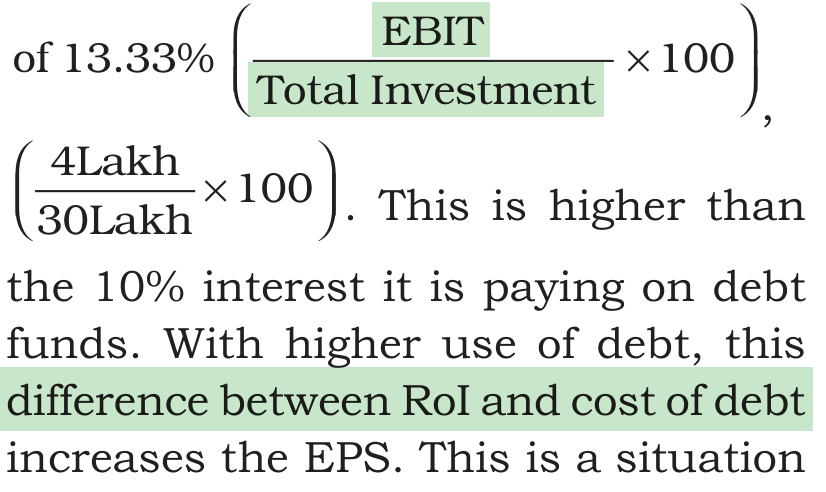
| (C) Return on Investment | (III) EBIT/Interest |
| (D) Net Working Capital | (IV) (EBIT/Total Investment)*100 |
Choose the correct answer from the options given below:
Answer & explanation
Correct answer: option 3
The correct answer is Option (3) → (A) - (III), (B) - (I), (C) - (IV), (D) -(II)
(A) Interest Coverage Ratio — this matches (III) EBIT/Interest. It shows how many times the profit before interest and tax covers the interest the firm must pay. The higher the ratio, the more safely the firm can borrow.
(B) Financial Leverage — this matches (I) Debt (D)/Equity(E) or D/D+E. Financial leverage is the proportion of debt in the capital. It can be measured against equity or against total capital.
(C) Return on Investment — this matches (IV) (EBIT/Total Investment)*100. It is the return the firm earns on all the funds invested in it. Borrowing raises the owners’ earnings only when this return is higher than the cost of debt.
(D) Net Working Capital — this matches (II) Current Assets - Current Liabilities. It is what is left of the current assets after paying off the current liabilities, the cushion for day-to-day operations.
NCERT (2026-27 Edition): “…Thus, NWC = CA – CL (i.e. Current Assets - Current Liabilities.) Thus, net working capital may be defined as the excess of current assets over current liabilities.”
|