Match List-I with List-II
| List-I | List-II |
|---|---|
| (A) Sum of the product/ Total weights | (I) Normal Profit |
| (B) Firm Capital X Rate of return/100 | (II) Weighted Average Profit |
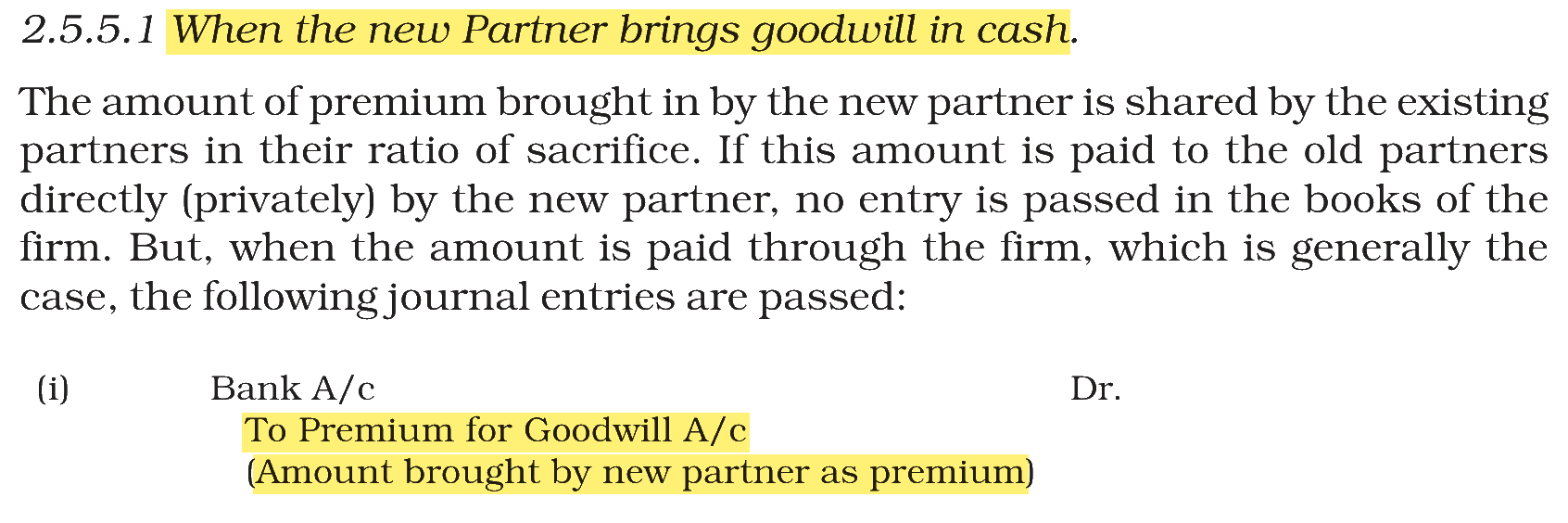
| (C) Bank A/c Dr. To Premium for Goodwill A/c | (III) Amount of goodwill withdrawn by sacrificing partners |
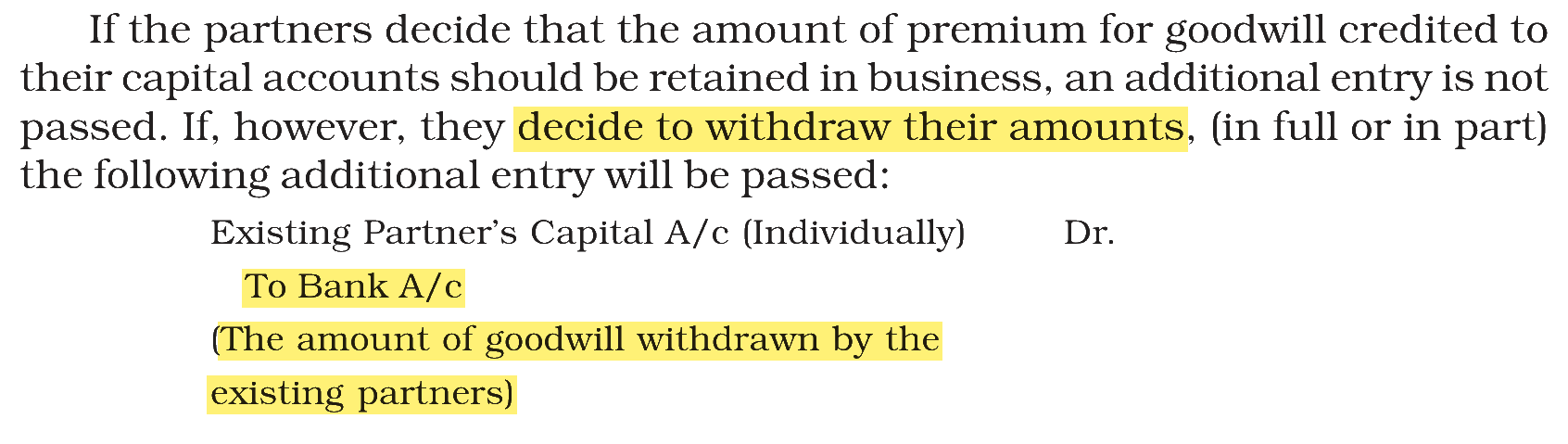
| (D) Sacrificing Partners' Capital A/c Dr. To Bank A/c | (IV) Amount brought by new partner as his share of goodwill |
Choose the correct answer from the options given below:
Answer & explanation
Correct answer: option 3
The correct answer is Option (3) → (A) - (II), (B) - (I), (C) - (IV), (D) - (III)
Two items are formulas used in valuing goodwill, and two are journal entries for the premium a new partner brings.
(A) Sum of the product/ Total weights — this matches (II) Weighted Average Profit. Each year’s profit is multiplied by its weight, and the total of these products is divided by the total of the weights, so recent years count for more.
(B) Firm Capital X Rate of return/100 — this matches (I) Normal Profit. It is the profit a firm with this capital is expected to earn at the normal rate of return in the industry.
(C) Bank A/c Dr. To Premium for Goodwill A/c — this matches (IV) Amount brought by new partner as his share of goodwill. The new partner pays in cash, so Bank is debited and Premium for Goodwill A/c is credited.
(D) Sacrificing Partners’ Capital A/c Dr. To Bank A/c — this matches (III) Amount of goodwill withdrawn by sacrificing partners. After the premium is credited to them, the sacrificing partners take it out in cash, so their capital accounts are debited.
NCERT (2026-27 edition): NCERT (2026-27 edition):
NCERT (2026-27 edition):
|