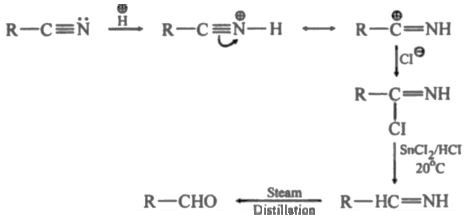
Select the correct name for the following reaction:

Answer & explanation
Correct answer: option 2
The correct answer is Option (2) → Wolff-Kishner Reduction
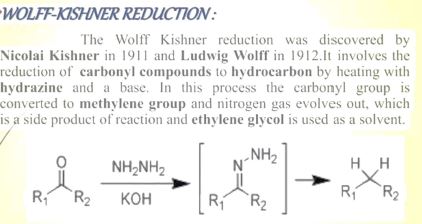
In the given reaction, a carbonyl compound (aldehyde or ketone) reacts with hydrazine (NH₂NH₂) to form a hydrazone intermediate.
Step 1: Formation of hydrazone
R₂C=O + NH₂NH₂ → R₂C=NNH₂ + H₂O
Step 2: On heating with strong base (KOH) in ethylene glycol, the hydrazone decomposes, releasing nitrogen gas (N₂) and converting the carbonyl group into a methylene group (–CH₂–).
R₂C=NNH₂ → (KOH, heat) → R₂CH₂ + N₂
Thus, the carbonyl group (C=O) is reduced to –CH₂–.
This reaction is called Wolff–Kishner reduction.
It is commonly used to convert aldehydes and ketones into alkanes under strongly basic conditions.
Option-wise Explanation
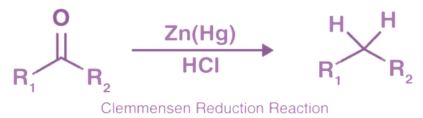
Option 1: Clemmensen Reduction
Incorrect. Clemmensen reduction also converts carbonyl compounds to alkanes but uses Zn–Hg amalgam with concentrated HCl (acidic medium), not hydrazine and KOH.
Option 2: Wolff–Kishner Reduction
Correct. This reaction uses hydrazine (NH₂NH₂) and KOH in ethylene glycol with heating to convert carbonyl compounds into alkanes.
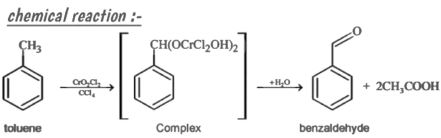
Option 3: Etard Reaction
Incorrect. Etard reaction converts toluene to benzaldehyde using chromyl chloride (CrO₂Cl₂).
Option 4: Stephen Reaction
Incorrect. Stephen reaction reduces nitriles to aldehydes using SnCl₂ and HCl.