Read the passage carefully and answer the questions based on the passage:
Macroeconomics: Economy as a whole
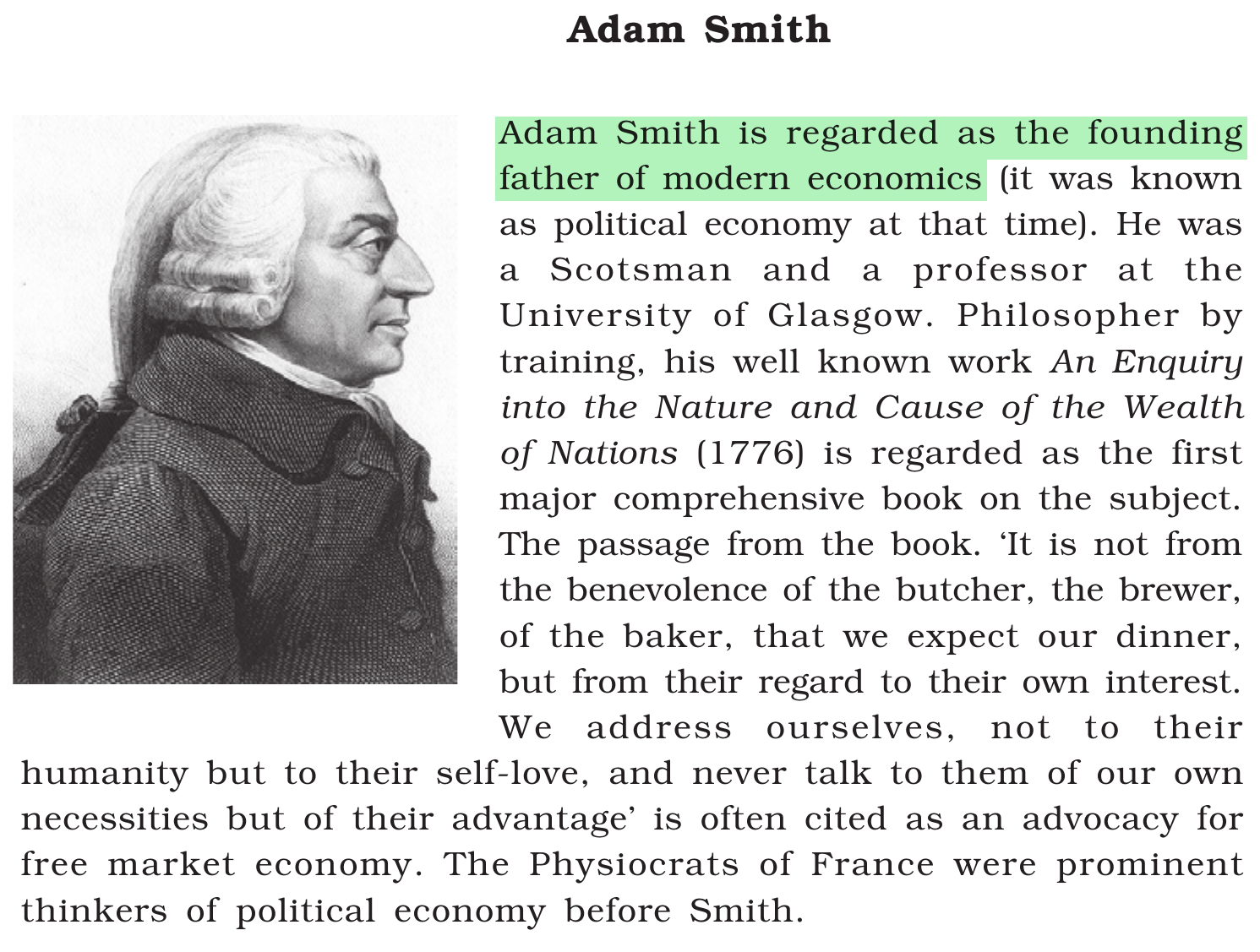
The founding father of modern economics, had suggested that if the buyers and sellers in each market take their decisions following only their own self-interest, economists will not need to think of the wealth and welfare of the country as a whole separately. For various purposes macroeconomists had to study the effects in the markets of taxation and other budgetary policies, and policies for bringing about changes in money supply, the rate of interest, wages, employment, and output. Macroeconomics has, therefore, deep roots in microeconomics because it has to study the aggregate effects of the forces of demand and supply in the markets.
In a simplified economy, the households may dispose off their earnings by spending their entire income on the goods and services produced by the domestic firms as other channels of disposing their income are closed. The factors of production use their remunerations to buy the goods and services which they assisted in producing. The aggregate consumption by the households of the economy is equal to the aggregate expenditure on goods and services produced by the firms in the economy.
Who among the following is called as the founding father of modern economics?
Answer & explanation
Correct answer: option 3
The correct answer is Option (3) → Adam Smith.
Adam Smith is called the founding father of modern economics.
He held that buyers and sellers in each market may follow only their own self-interest. Economists then need not think separately of the wealth and welfare of the country as a whole.
Note 1: The passage of this question comes from two chapters of the NCERT book (Introductory Macroeconomics): ‘Introduction’ and ‘National Income Accounting’. Read the descriptive pages of a chapter with care. They can come back as a passage in the exam.
Note 2: A same/similar question was asked in CUET (UG) in the papers below.
| 2026 | 2025 | 2024 | 2023 | 2022 |
| – | 22-05 S2 28-05 S1* | – | – | – |
* A similar question.
NCERT (2026-27): Introductory Macroeconomics — Chapter 1: Introduction
|