Arrange the following statement in the context of the effect of an autonomous change in aggregate demand on income and output.
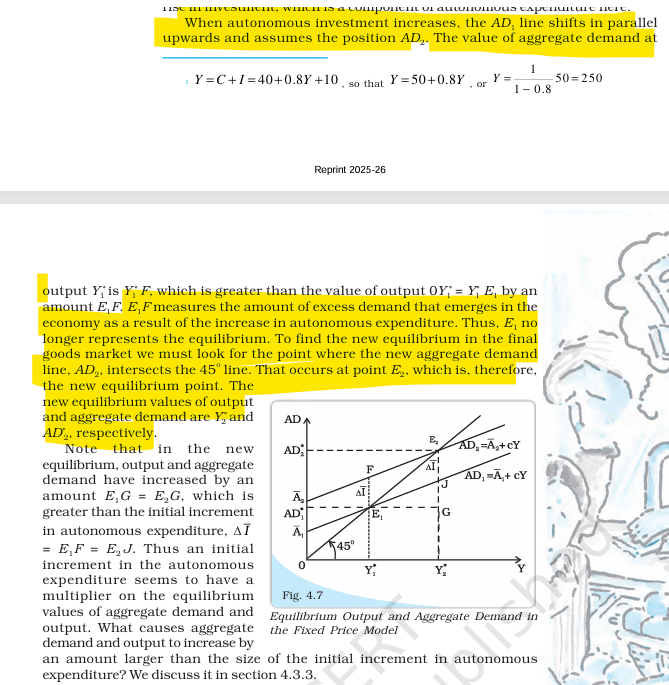
(A) When autonomous investment increases, the aggregate demand shifts in parallel upwards.
(B) Equilibrium level of income depends on aggregate demand.
(C) Excess demand emerges in the economy.
(D) The output will be greater than the original output.
Choose the correct answer from the options given below:
Answer & explanation
Correct answer: option 3
The correct answer is Option (3) → (B), (A), (D), (C)
Note: The given answer is per NTA answer sheet. But this appears to be wrong and not as per NCERT. The correct should have been Option 1: (B), (A), (C), (D) as explained below:
-
(B) Equilibrium level of income depends on aggregate demand. This is a foundational statement setting the context that changes in aggregate demand will affect income.
-
(A) When autonomous investment increases, the aggregate demand shifts in parallel upwards. This describes the initial shock or change in aggregate demand. Autonomous investment is a component of aggregate demand, and an increase in it shifts the aggregate demand curve up.
-
(C) Excess demand emerges in the economy. When aggregate demand shifts upwards, at the original equilibrium income level, the new (higher) aggregate demand exceeds the current output (aggregate supply). This creates a situation of excess demand.
-
(D) The output will be greater than the original output. In response to the excess demand, firms will increase production, leading to a new, higher equilibrium level of income and output. This also implies the multiplier effect where the final increase in output is greater than the initial autonomous investment increase.