
Which of the following structures is homologous to the wing of a bat?
Answer & explanation
Correct answer: option 2
The correct answer is Option (2) → Forelimb of a whale
Homologous structures have the same anatomical plan but may do different jobs. The forelimbs of whales, bats, cheetah and human all have humerus, radius, ulna, carpals, metacarpals and phalanges, though they are used for swimming, flying, running and holding.
Option (1) Dorsal fin of a shark — Incorrect. The dorsal fin of a shark is a fin on the back of a fish. It is not built on the forelimb bone plan seen in the bat wing.
Option (2) Forelimb of a whale — Correct. The forelimb (flipper) of a whale has the same bones as the wing of a bat, so the two are homologous, as shown in Figure 6.3(b).
Option (3) Wing of a moth — Incorrect. The wing of a moth only looks like a bat wing because both are used for flying. Like the wings of a butterfly and a bird, it is analogous, not homologous.
Option (4) Hind limb of a rabbit — Incorrect. The bat wing is a forelimb. The NCERT example of homology compares forelimbs with forelimbs, and the hind limb of a rabbit is not one of them.
NCERT Extract:
What are the Evidences for Evolution? – “… For example whales, bats, Cheetah and human (all mammals) share similarities in the pattern of bones of forelimbs (Figure 6.3b). Though these forelimbs perform different functions in these animals, they have similar anatomical structure – all of them have humerus, radius, ulna, carpals, metacarpals and phalanges in their forelimbs. Hence, in these animals, the same structure developed along different directions due to adaptations to different needs. This is divergent evolution and these structures are homologous.”
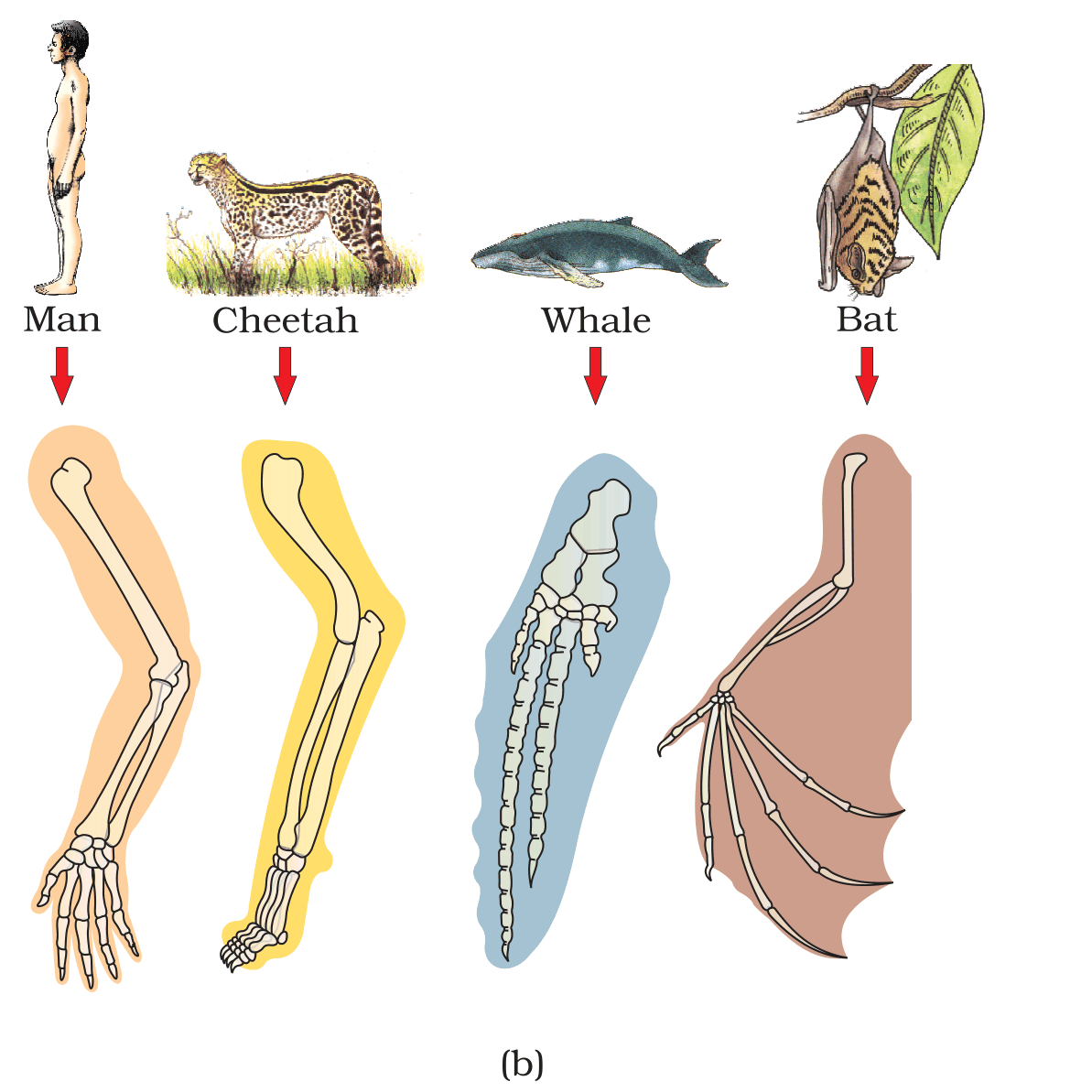
Figure 6.3 Example of homologous organs in (b) Animals