Read the passage carefully and answer the questions based on the passage:
Accounts in Balance of Payments
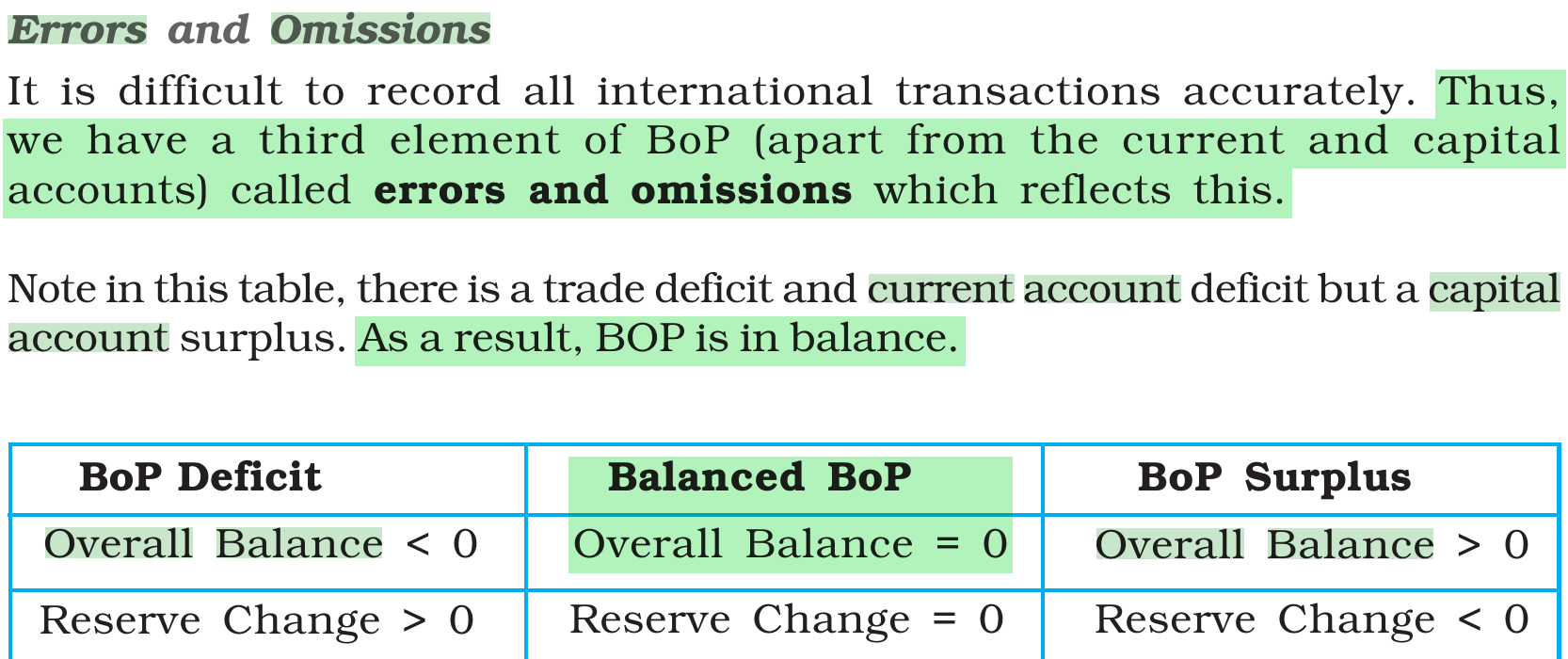
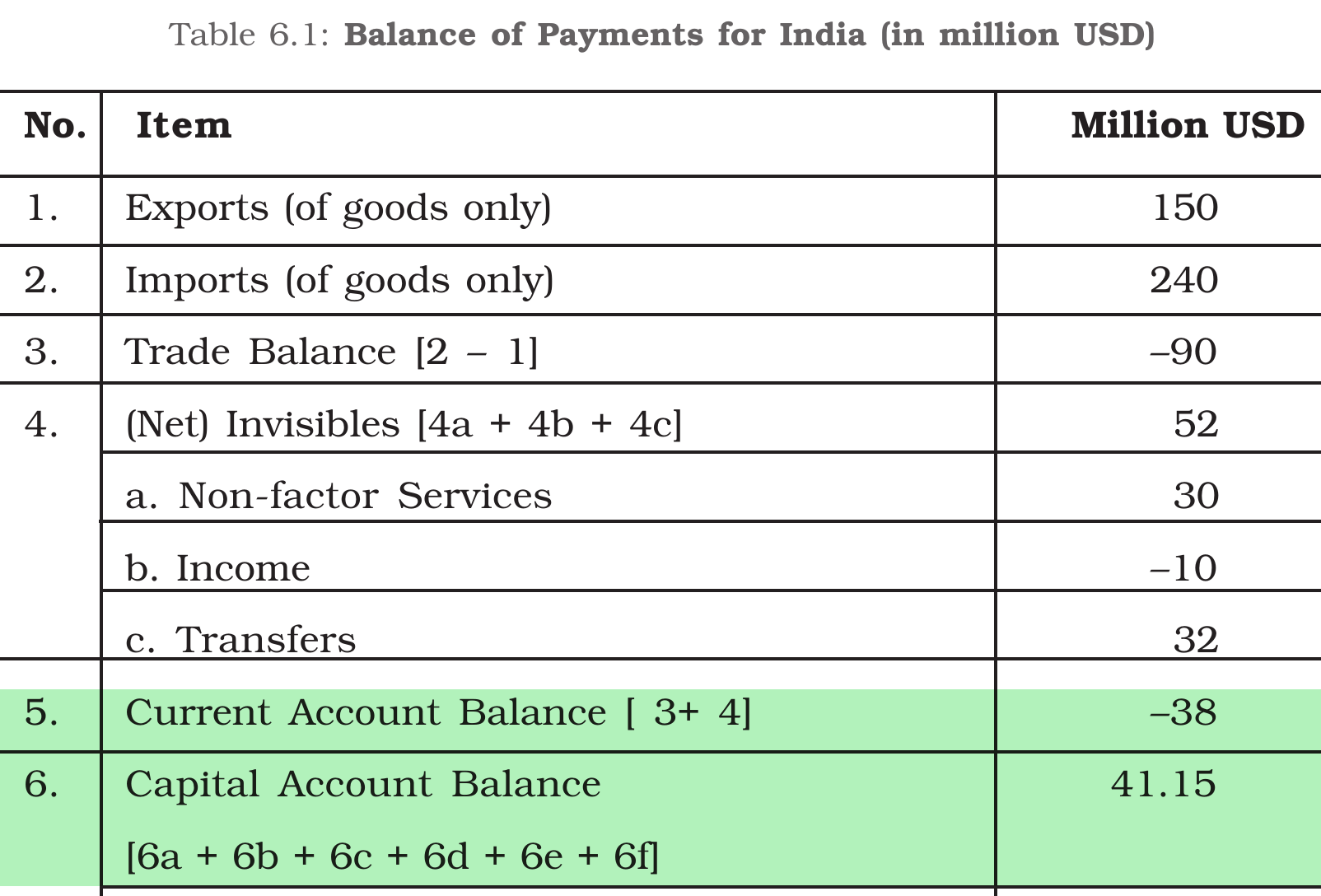
The current account is the record of trade in goods and services and transfer payments. Trade in goods includes exports and imports of goods. Trade in services includes factor income and non-factor income transactions. Transfer payments are the receipts which the residents of a country get for free, without having to provide any goods or services in return. They could be given by the government or by private citizens living abroad. Capital Account records all international transactions of assets. The capital account is in balance when capital inflows are equal to capital outflows. The essence of international payments is that just like an individual who spends more than her income must finance the difference by selling assets or by borrowing, a country that has a deficit in its current account must finance it by selling assets or by borrowing abroad. Thus, any current account deficit must be financed by a capital account surplus, that is, a net capital inflow. Apart from the current and capital accounts, there is a third element in the balance of payments called errors and omissions.
If India's current account balance is ₹-58 million and the capital account balance is ₹62.5 million. What will be the errors and omissions to have an overall balance in balance of payments?
Answer & explanation
Correct answer: option 4
The correct answer is Option (4) → ₹4.5 million.
Note 1: The given answer, Option (4), is as per the official NTA Answer Key. However, this answer appears to be wrong. The correct answer should be Option (3) → ₹-4.5 million, as explained below.
Given:
Current account balance = ₹−58 million
Capital account balance = ₹62.5 million
The balance of payments is in balance when the overall balance is zero. Errors and omissions cover the foreign deals that are missed.
Current account balance + Capital account balance + Errors and omissions = 0
−58 + 62.5 + Errors and omissions = 0
Errors and omissions = ₹−4.5 million
A positive ₹4.5 million would leave a surplus of ₹9 million.
Note 2: The NCERT book’s balance of payments table prints errors and omissions as 3.15, with an overall balance of 0. The figures add up to zero only if this is −3.15, so a minus sign is missing in the table, in every edition. It seems that NTA has carried this error into its answer. Go by the rule that the overall balance is zero.
Advice for the exam: In the real exam, mark the answer that is correct as per the NCERT book. If NTA’s provisional answer key marks a different option, challenge it during the answer-key challenge window, giving proper reasoning. NTA does revise its key when a challenge is well justified, so a sound challenge can raise your marks.
NCERT (2026-27): Introductory Macroeconomics — Chapter 6: Open Economy Macroeconomics
|