Match List I with List II:
| List I Sufi Teachers | List II Location | ||
| (A) | Khwaja Qutbuddin Bakhtiyar Kaki | (I) | Ajmer |
| (B) | Shaikh Muinuddin Sijzi | (II) | Ajodhan |
| (C) | Shaikh Salim Chishti | (III) | Fatehpur Sikri |
| (D) | Shaikh Fariduddin Ganj-i Shakhar | (IV) | Delhi |
Choose the correct answer from the options given below:
Answer & explanation
Correct answer: option 3
The correct answer is Option (3) → (A)-(IV), (B)-(I), (C)-(III), (D)-(II)
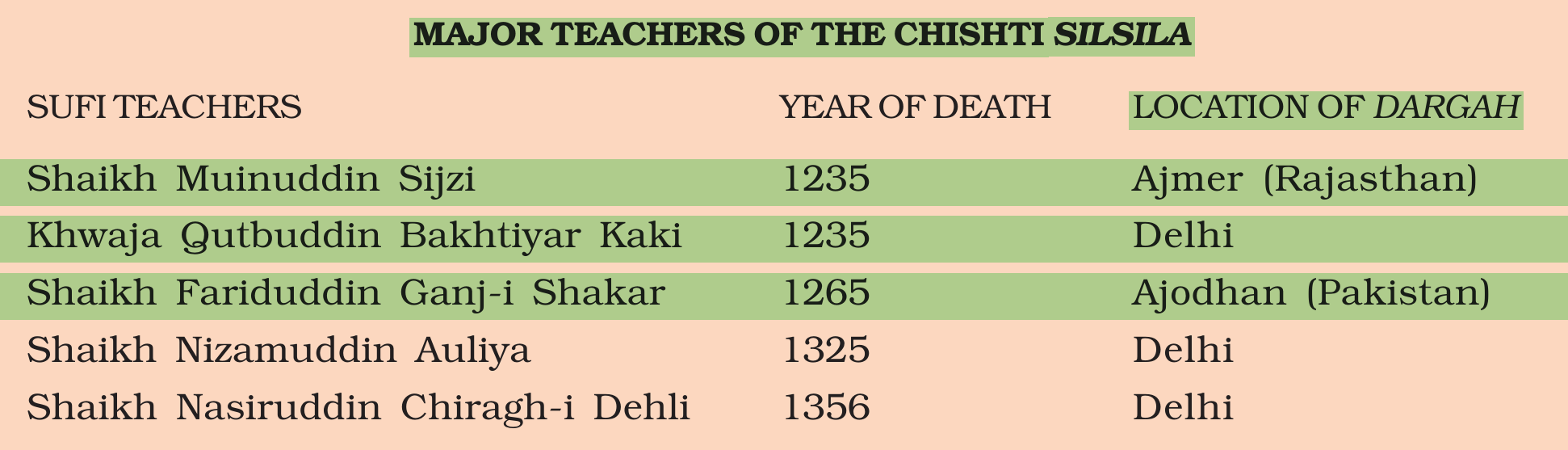
(A) Khwaja Qutbuddin Bakhtiyar Kaki — this matches (IV) Delhi. His dargah is in Delhi; he died in 1235.
(B) Shaikh Muinuddin Sijzi — this matches (I) Ajmer. His dargah is at Ajmer (Rajasthan); he too died in 1235.
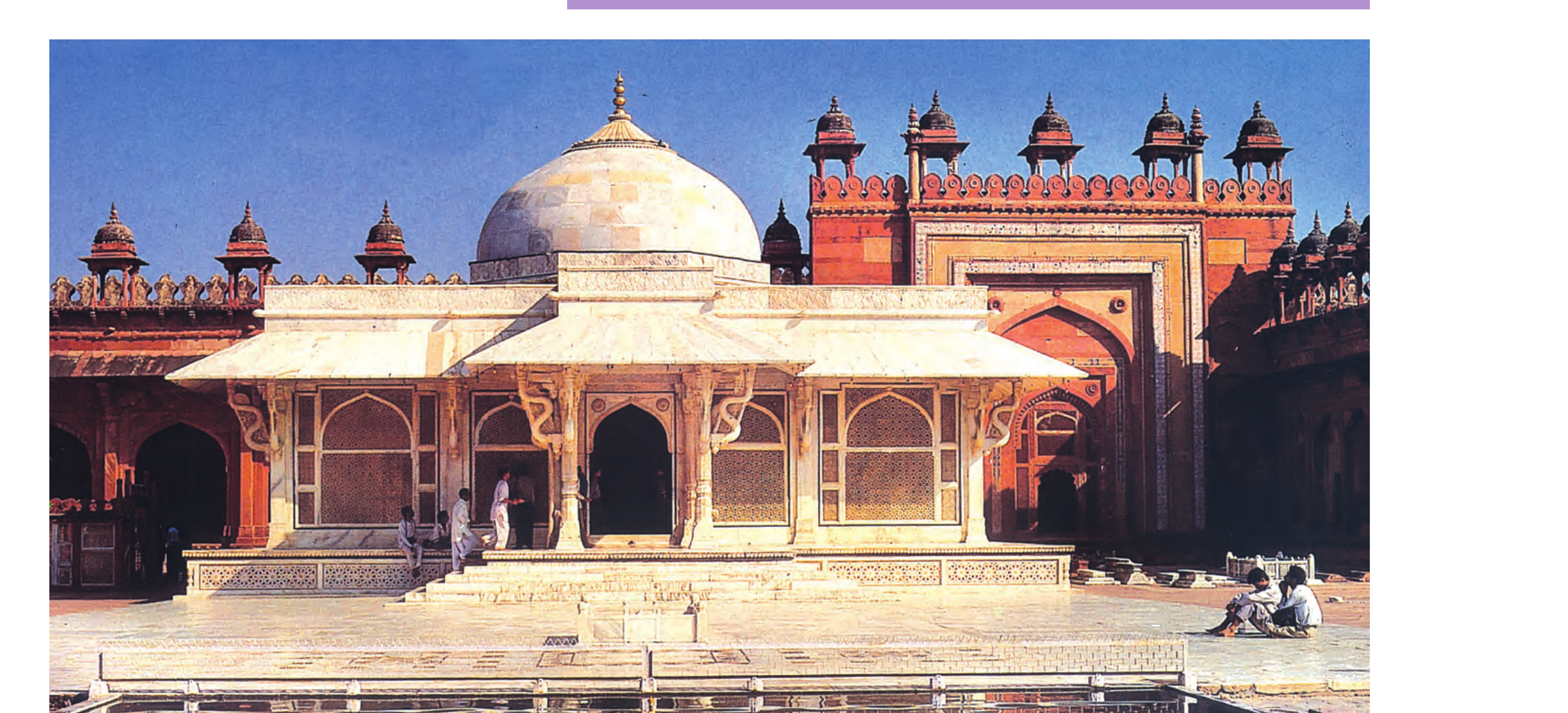
(C) Shaikh Salim Chishti — this matches (III) Fatehpur Sikri. The dargah of Shaikh Salim Chishti, a direct descendant of Baba Farid, was constructed in Fatehpur Sikri, Akbar’s capital, and symbolised the bond between the Chishtis and the Mughal state.
(D) Shaikh Fariduddin Ganj-i Shakhar — this matches (II) Ajodhan. The dargah of Shaikh Fariduddin Ganj-i Shakar is at Ajodhan (Pakistan); he died in 1265.
NCERT (2026-27): “7.2 Chishti devotionalism: ziyarat and qawwali … Pilgrimage, called ziyarat, to tombs of sufi saints is prevalent all over the Muslim world. This practice is an occasion for seeking the sufi’s spiritual grace (barakat). For more than seven centuries people of various creeds, classes and social backgrounds have expressed their devotion at the dargahs of the five great Chishti saints (see chart on p.154). Amongst these, the most revered shrine is that of Khwaja Muinuddin, popularly known as ‘Gharib Nawaz’ (comforter of the poor).…”
Fig. 6.15 The dargah of Shaikh Salim Chishti (a direct descendant of Baba Farid) constructed in Fatehpur Sikri, Akbar’s capital, symbolised the bond between the Chishtis and the Mughal state. |