Match List-I with List-II.
| LIST I | LIST II |
| (A) Shareholders fund | (I) Long-term loans and advances |
| (B) Non-current Liabilities | (II) Reserves and Surplus |
| (C) Current Liabilities | (III) Long term provisions |
| (D) Non-Current Assets | (IV) Trade payables |
Choose the correct answer from the options given below:
Answer & explanation
Correct answer: option 3
The correct answer is Option (3) → (A)-(II), (B)-(III), (C)-(IV), (D)-(I)
Schedule III groups every balance sheet item under a main head and a sub-head; each item in List-II is placed by asking whom the amount belongs to and how soon it is settled.
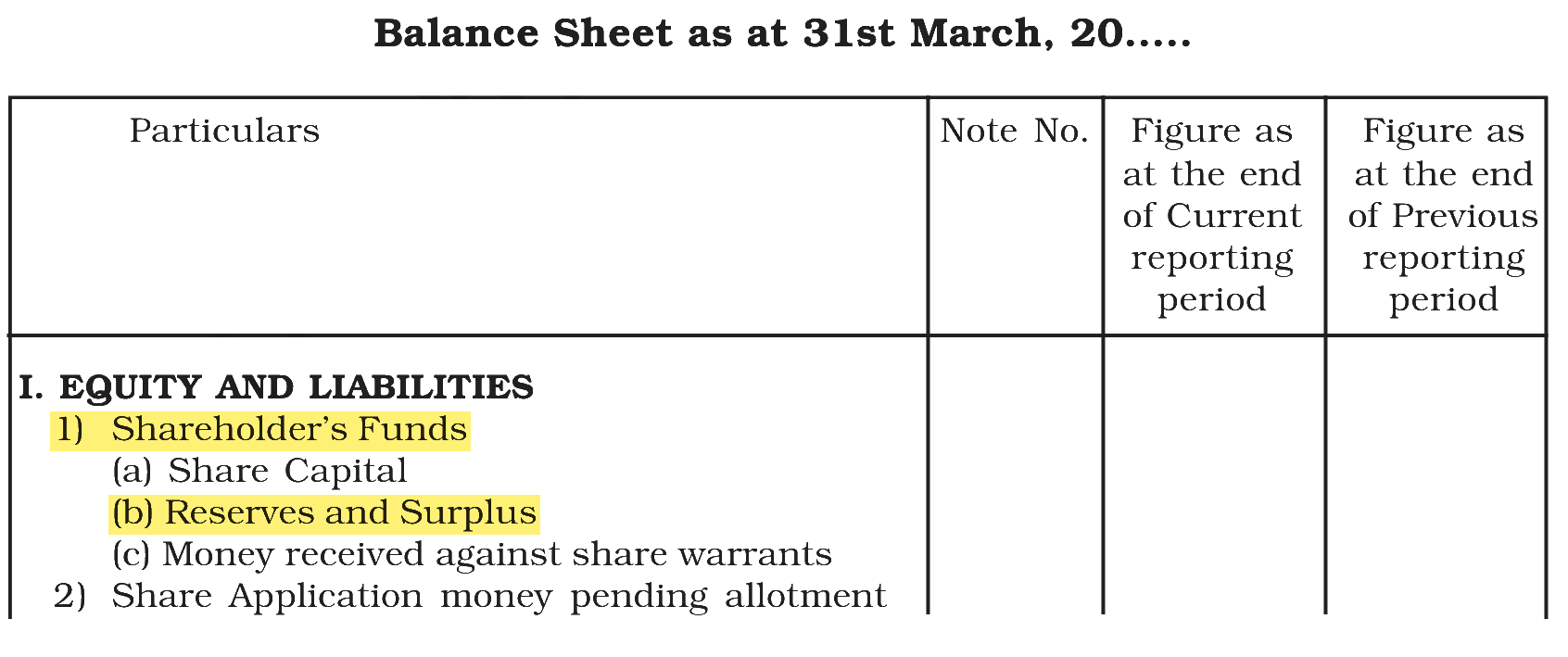
(A) Shareholders fund — this matches (II) Reserves and Surplus. Reserves are profits kept back in the business, so they belong to the shareholders along with share capital.
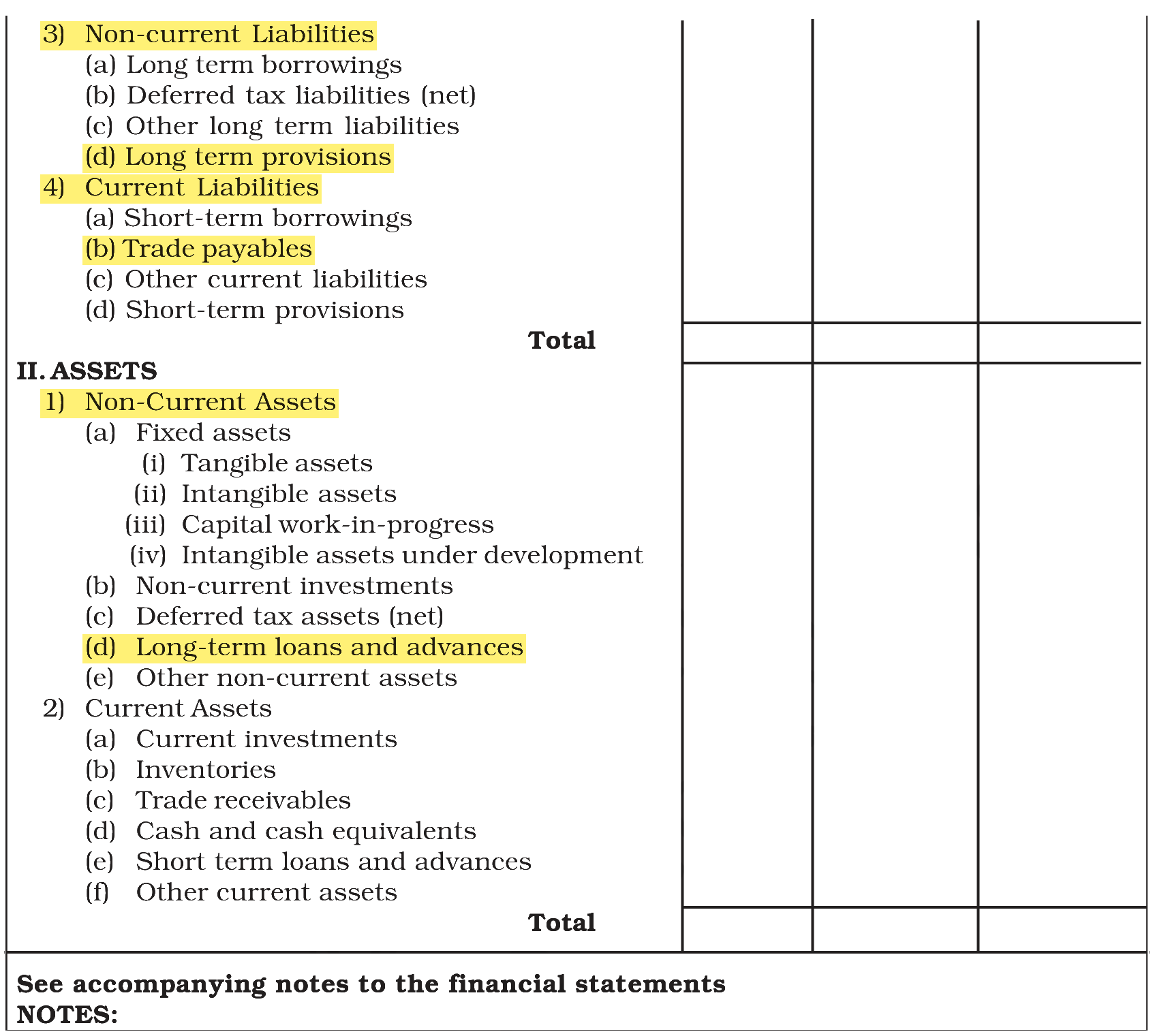
(B) Non-current Liabilities — this matches (III) Long term provisions. A provision that will be settled after more than twelve months (or the operating cycle) is a non-current liability.
(C) Current Liabilities — this matches (IV) Trade payables. Amounts owed to suppliers for goods and services are payable within the operating cycle.
(D) Non-Current Assets — this matches (I) Long-term loans and advances. Loans given by the company that are recoverable after more than twelve months are non-current assets.
NCERT (2026-27 edition):
|