
Study the picture carefully and answer the questions that follow:
Picture interpretation:
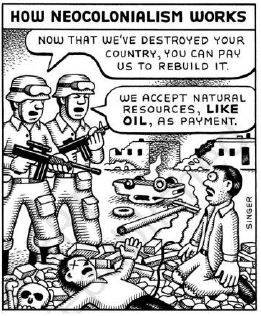
Throughout the Cold War, the industrialized countries of the North adopted a number of methods to ensure a steady flow of resources. Identify the method they did not adopt.
Answer & explanation
Correct answer: option 4
The correct answer is Option (4) → Explaining environmental and social-economic impacts and then getting their consent
The industrialized countries of the North did not adopt the method of explaining environmental and social-economic impacts and then getting their consent to ensure a steady flow of resources.
During the Cold War and the preceding era of colonialism, the primary objective of powerful nations was to secure and control resources without regard for the local population's well-being or the environmental consequences. The methods they did use were often coercive and aimed at maintaining political and economic dominance:
-
Military Force: They deployed military forces near key exploitation sites, particularly in the Middle East and Africa, to protect their interests and ensure the uninterrupted flow of resources like oil.
-
Stockpiling: Countries like the United States and the Soviet Union created massive stockpiles of strategic resources to mitigate the risk of supply disruptions due to conflicts or political instability.
-
Supporting Regimes and MNCs: They frequently propped up friendly, often authoritarian, governments and provided support to multinational corporations (MNCs) that were extracting resources. These governments would then grant favorable concessions and prevent nationalization of assets, ensuring the continued operation of foreign companies.