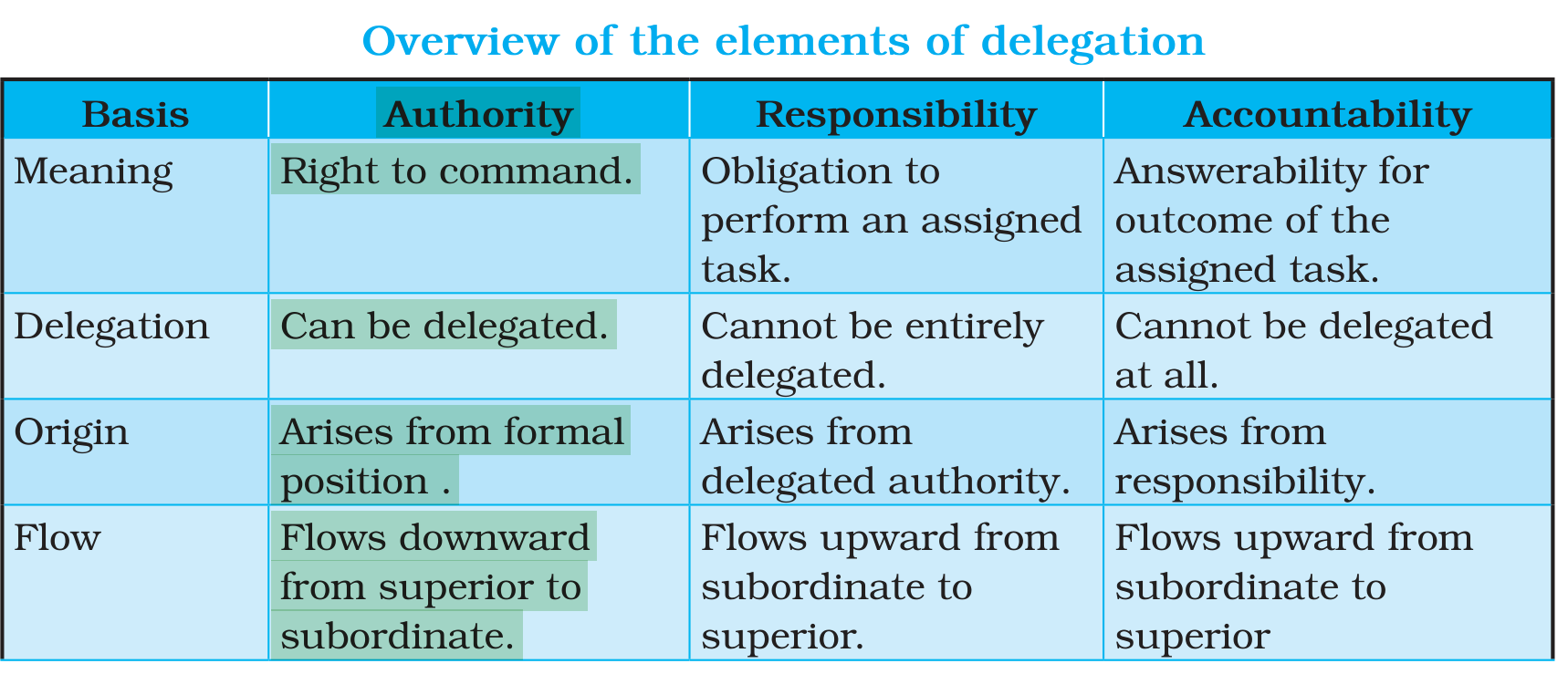
The correct statements related to authority are:
(A) Originates from formal position
(B) Flows downward from superior to subordinate
(C) Can't be delegated
(D) Right to command
Choose the correct answer from the options given below:
Answer & explanation
Correct answer: option 1
The correct answer is Option (1) → (A), (B) and (D) only
(A) Originates from formal position — Correct. In a formal organisation, authority comes from the position a person holds, not from the person himself. It is highest at the top and becomes less at each lower level.
(B) Flows downward from superior to subordinate — Correct. Authority flows from top to bottom. A superior has authority over his subordinates, never the other way round.
(C) Can’t be delegated — Incorrect. Authority can be delegated. A manager passes part of it to a subordinate so that the work gets done. What cannot be delegated is accountability: the manager stays answerable for the result.
(D) Right to command — Correct. Authority is the right of a person to command his subordinates and to take action within the scope of his position.
NCERT (2026-27 Edition): “Authority: Authority refers to the right of an individual to command his subordinates and to take action within the scope of his position. The concept of authority arises from the established scalar chain which links the various job positions and levels of an organisation. Authority also refers to the right to take decisions inherent in a managerial position to tell people what to do and expect them to do it. In the formal organisation authority originates by virtue of an individual’s position and the extent of authority is highest at the top management levels and reduces successively as we go down the corporate ladder. …”
|