The initial cash deposits in the banking system are Rs. 200 crore and the total credit created by the banking system with this initial deposit is Rs. 800 crores. The value of cash reserve ratio will be:
Answer & explanation
Correct answer: option 3
The correct answer is Option (3) → 25%
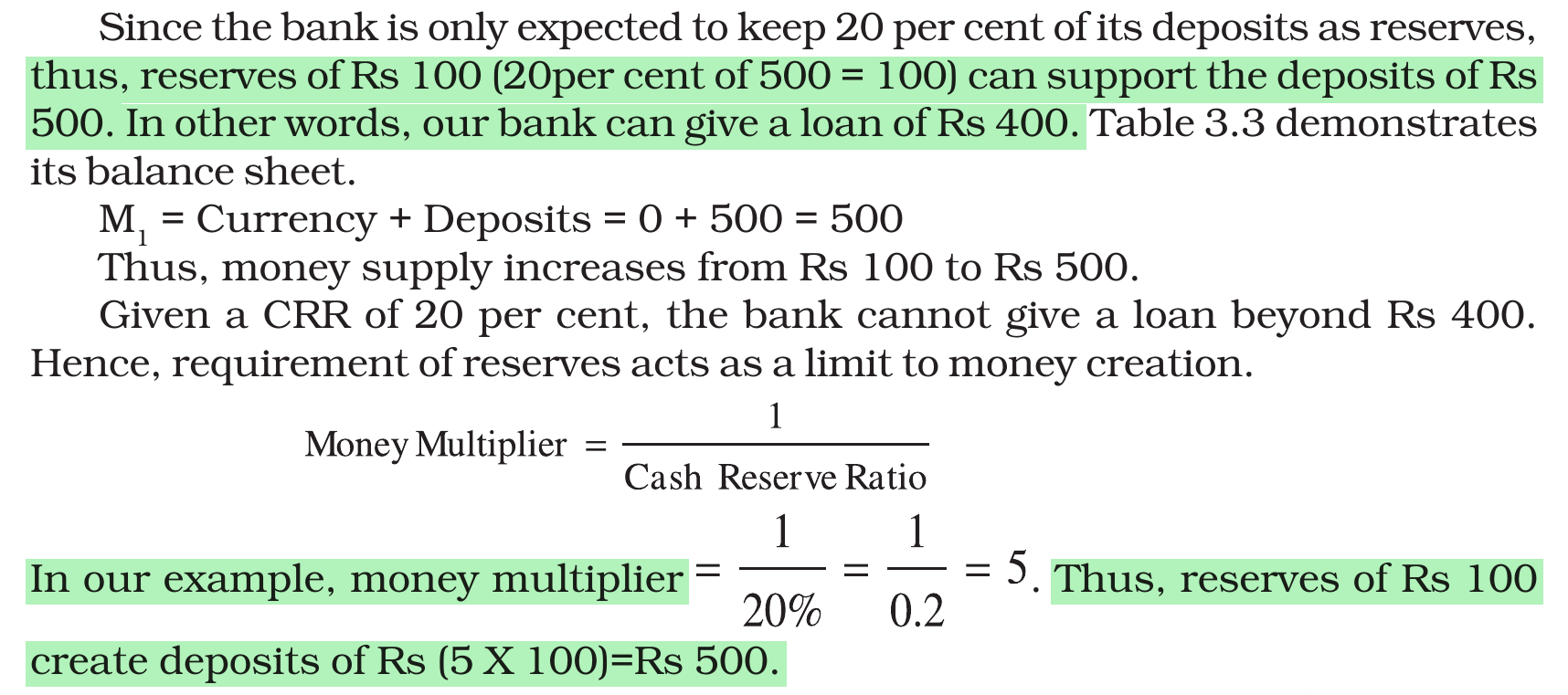
A bank keeps only the part of a deposit that the cash reserve ratio (CRR) requires as reserves and lends out the rest. The loan comes back as a fresh deposit, part of it is again kept and the rest lent, until the whole of the initial cash is held as required reserves. The total deposits created are therefore a multiple of the initial deposit, the money multiplier.
Given:
Initial cash deposit = Rs. 200 crore
Total credit created by the banking system = Rs. 800 crore
The two relations used:
Money multiplier = 1 / CRR
Total deposits created = Initial deposit × Money multiplier
Taking the total credit created as the total deposits that the banking system builds up from the initial deposit:
Money multiplier = 800 / 200 = 4
CRR = 1 / 4 = 0.25
CRR = 25 per cent, which is Option (3)
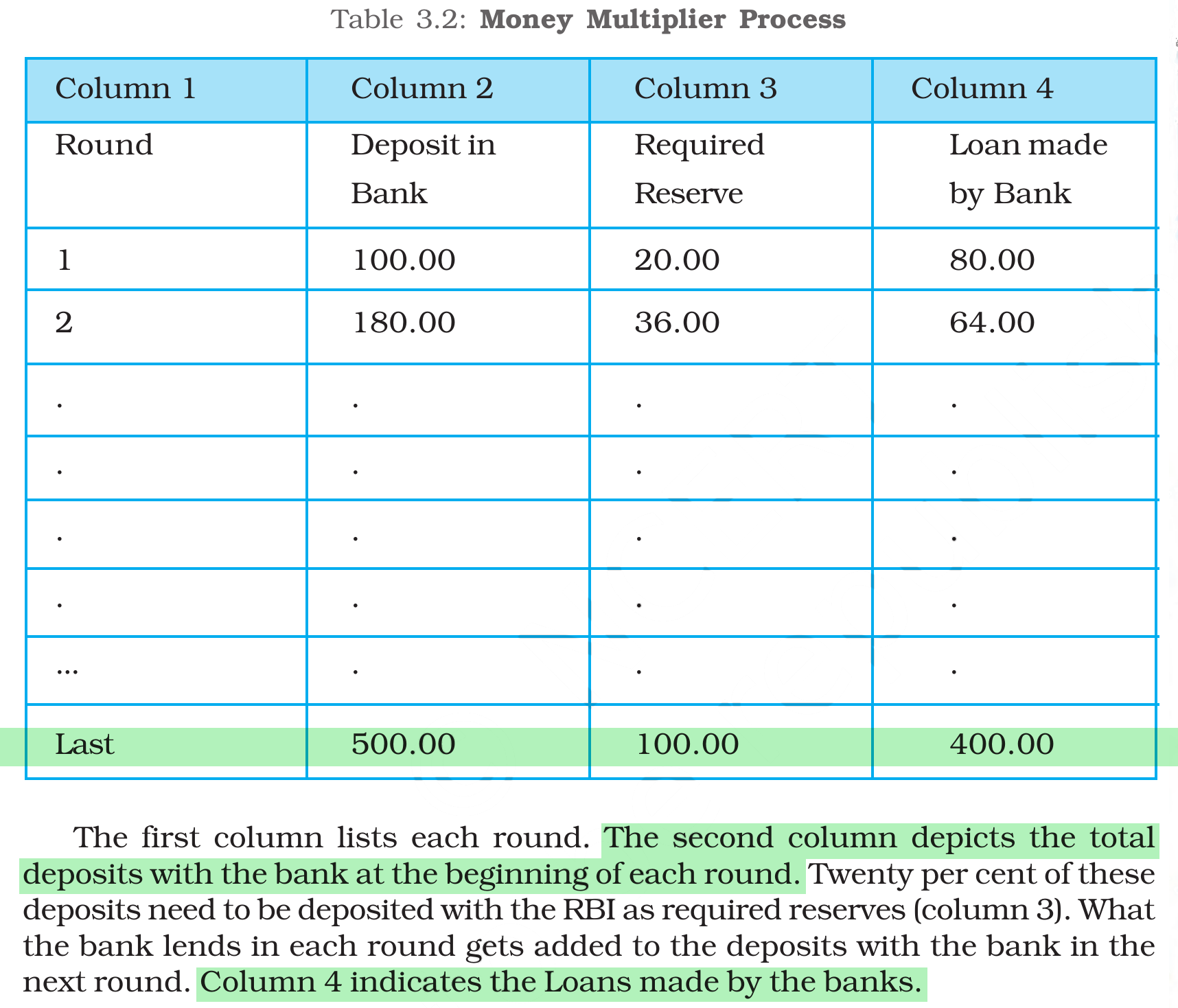
Note: One can take ‘total credit created’ to mean the total deposits that the banking system builds up from the initial deposit, and that gives 25 per cent. If credit is read strictly as the loans made by the banks, as in the ‘Loan made by Bank’ column of the NCERT table of the money multiplier process (Table 3.2, shown below), the loans of Rs. 800 crore stand beside reserves equal to the initial Rs. 200 crore. Total deposits would then be Rs. 1,000 crore, and the cash reserve ratio would be 200 / 1,000 = 20 per cent, which is Option (2). The official key gives the answer of the first reading.
NCERT: Introductory Macroeconomics — Chapter 3: Money and Banking (2025-26)
|