Read the passage and answer the questions:
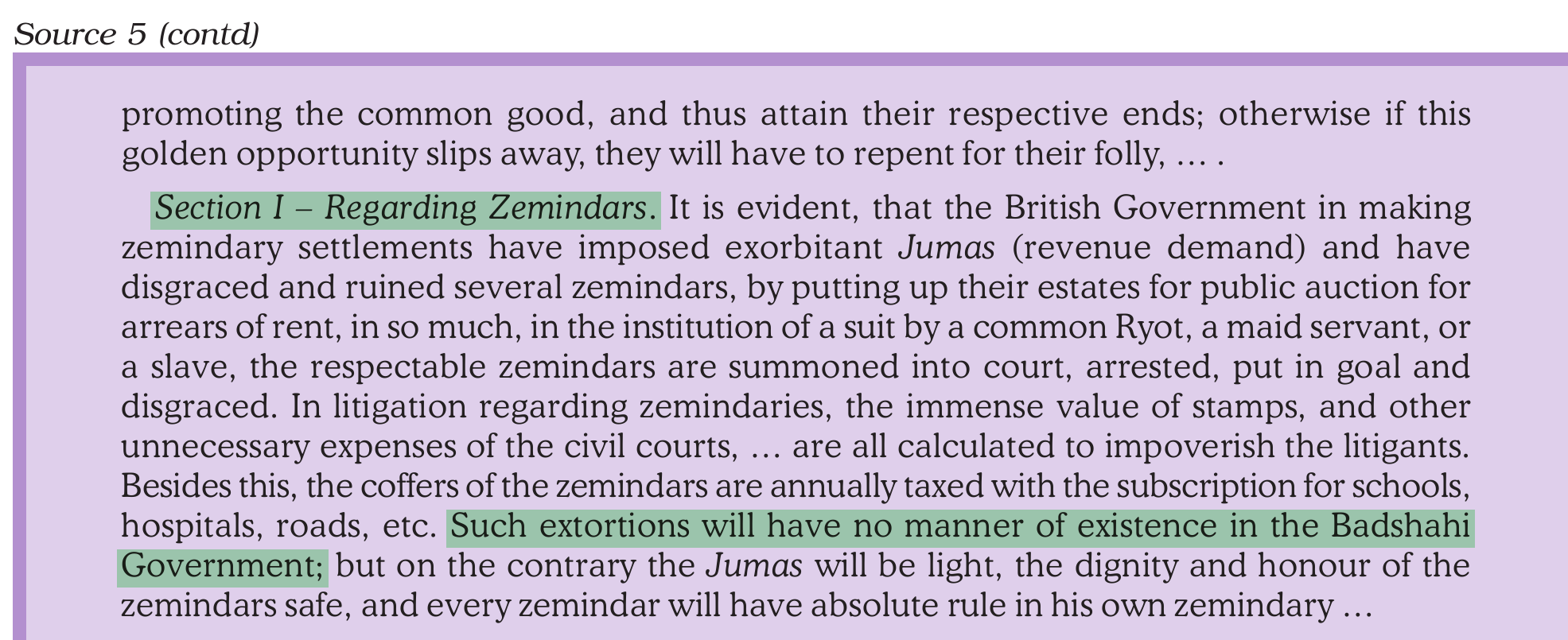
Section I - Regarding Zemindars. It is evident that the British Government in making zemindary settlement have imposed exorbitant Jumas (revenue demand) and have disgraced and ruined several Zemindars by putting up their estates for public auction for arrears of rent, in so much, in the institution of a suit by a common Ryot, a maid servant or a slave, the respectable Zemindars are summoned into court, arrested, put in goal and disgraced. In litigation regarding Zemindaries, the immense value of stamps, and other unnecessary expenses of the civil courts,... are all calculated to impoverish the litigants. Besides this, the coffers of the Zemindars are annually taxed with the subscription for schools, hospitals, roads, etc. Such extortions will have no manner of existence in the Badshahi Government; but on the contrary the Jumas will be light, the dignity and honour of the Zemindars safe, and every Zemindar will have absolute rule in his own Zemindary...
The alternative rule of 'Badshahi Government' proposed by the rebels in this proclamation refers to _______.
Answer & explanation
Correct answer: option 3
The correct answer is Option (3) → The rule of India’s traditional aristocratic class, such as of Bahadur Shah Zafar.
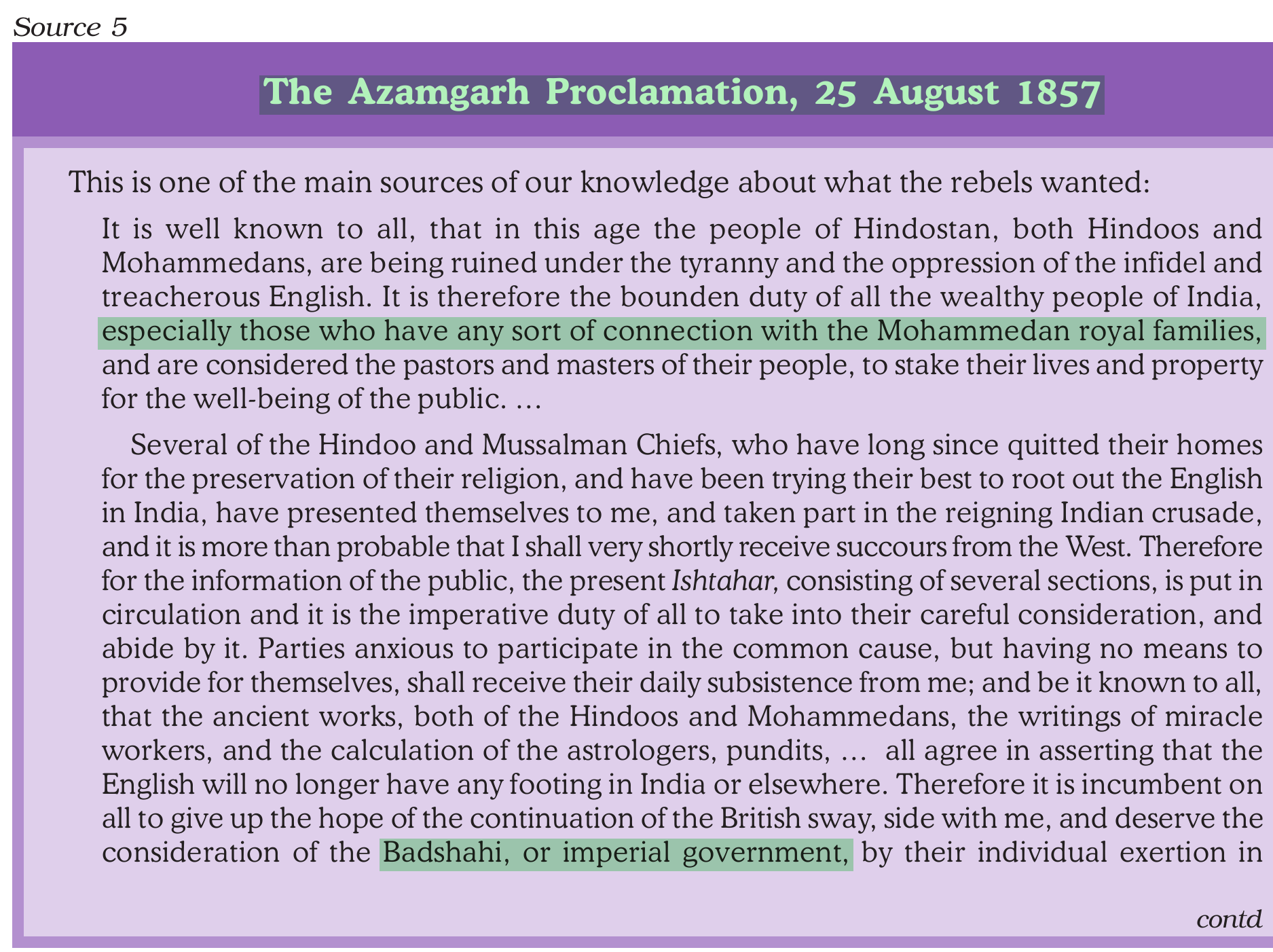
The proclamation calls the rule it promises the Badshahi, or imperial government, and appeals especially to those connected with the Mohammedan royal families. Under it, the passage says, the Jumas would be light and the dignity and honour of the zemindars safe. The rebel leadership wanted to restore the pre-British world of the eighteenth century and harked back to the Mughal world, whose emperor in 1857 was Bahadur Shah.
Hence, the answer is the rule of the traditional aristocratic class, such as that of Bahadur Shah Zafar.
NCERT (2026-27): “3.3 The search for alternative power … Once British rule had collapsed, the rebels in places like Delhi, Lucknow and Kanpur tried to establish some kind of structure of authority and administration. This was, of course, short-lived but the attempts show that the rebel leadership wanted to restore the pre-British world of the eighteenth century. The leaders went back to the culture of the court. Appointments were made to various posts, arrangements made for the collection of land revenue and the payment of troops, orders issued to stop loot and plunder. Side by side plans were made to fight battles against the British. Chains of command were laid down in the army. In all this the rebels harked back to the eighteenth-century Mughal world – a world that became a symbol of all that had been lost.…”
|