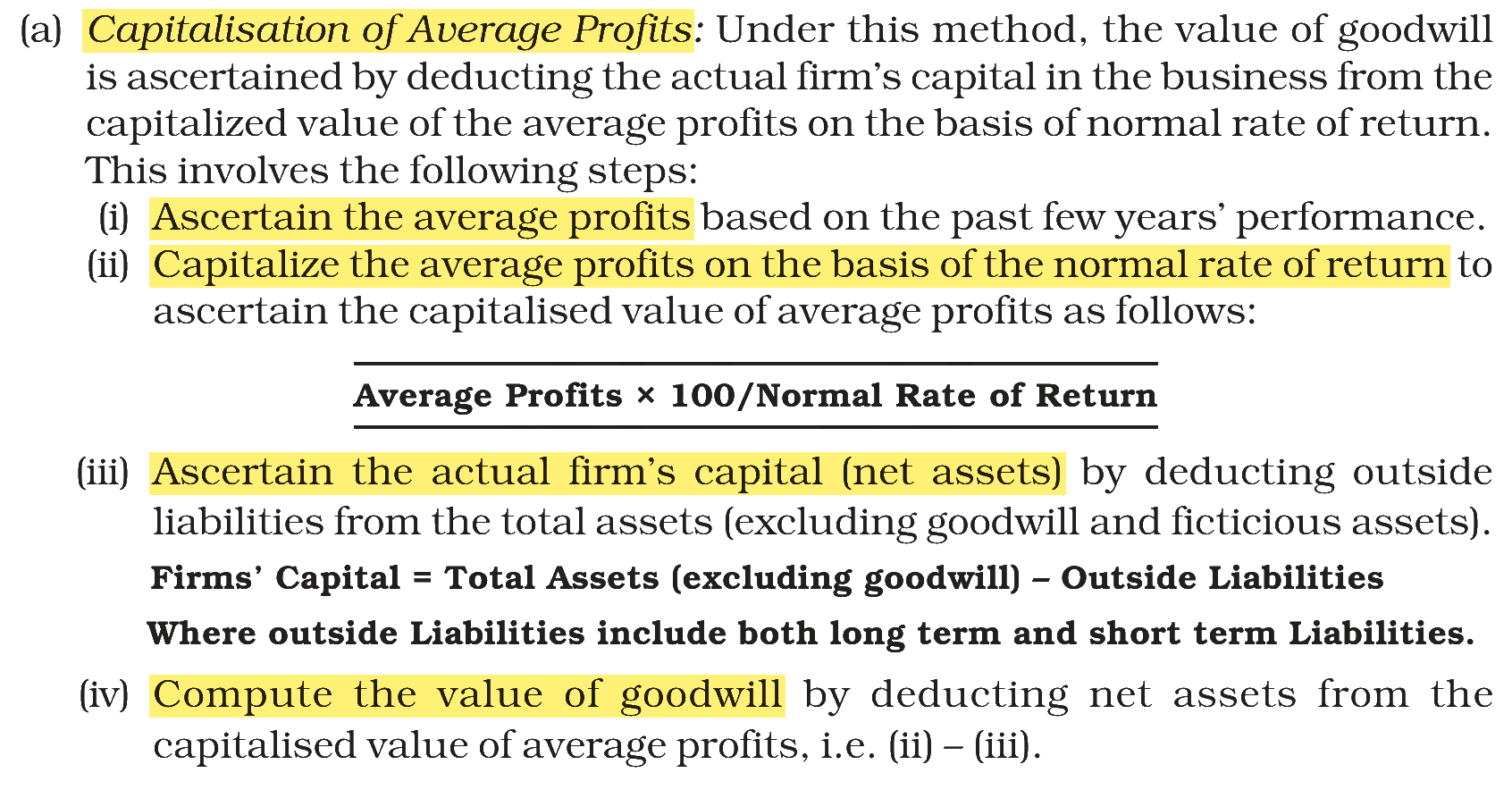
For computing Goodwill by capitalisation of Average Profit method, the following sequence would be followed:
A. Capitalise the average profit on the basis of Normal Rate of Return
B. Ascertain the firm's Capital= Total Assets - Outside Liabilities
C. Ascertain the average profits based on past years' performance
D. Compute the volume of Goodwill
Choose the correct answer from the options given below:
Answer & explanation
Correct answer: option 2
The correct answer is Option (2) → C, A, B, D
Under the capitalisation of average profits method, goodwill is the excess of the capitalised value of the average profits over the firm’s actual capital (net assets).
First, C. Ascertain the average profits based on past years’ performance — the average profit is the starting figure.
Then, A. Capitalise the average profit on the basis of Normal Rate of Return — average profit × 100 / normal rate of return gives the capitalised value.
Then, B. Ascertain the firm’s Capital= Total Assets - Outside Liabilities — the actual capital employed (net assets, excluding goodwill and fictitious assets).
Last, D. Compute the volume of Goodwill — capitalised value of average profits minus the firm’s capital.
Goodwill can be computed only after both the capitalised value and the net assets are known, so D is always the last step, and the average profit must be found before it can be capitalised.
NCERT (2026-27 edition):
|