Arrange the following to represent the order of events in consumer's behaviour due to a change in the price of a commodity.
(A) The quantity demanded of the commodity will increase to 10 units
(B) A consumer demands 2 units of a commodity priced at 20
(C) There is a fall in the price of the commodity to 10
(D) The price elasticity of demand will be above 1
Choose the correct answer from the options given below :
Answer & explanation
Correct answer: option 2
The correct answer is Option (2) → (B), (C), (A), (D)
(B) A consumer demands 2 units of a commodity priced at 20 — this is the starting point.
(C) There is a fall in the price of the commodity to 10 — the price changes.
(A) The quantity demanded of the commodity will increase to 10 units — the consumer responds to the lower price.
(D) The price elasticity of demand will be above 1 — this can be worked out only after the new quantity is known.
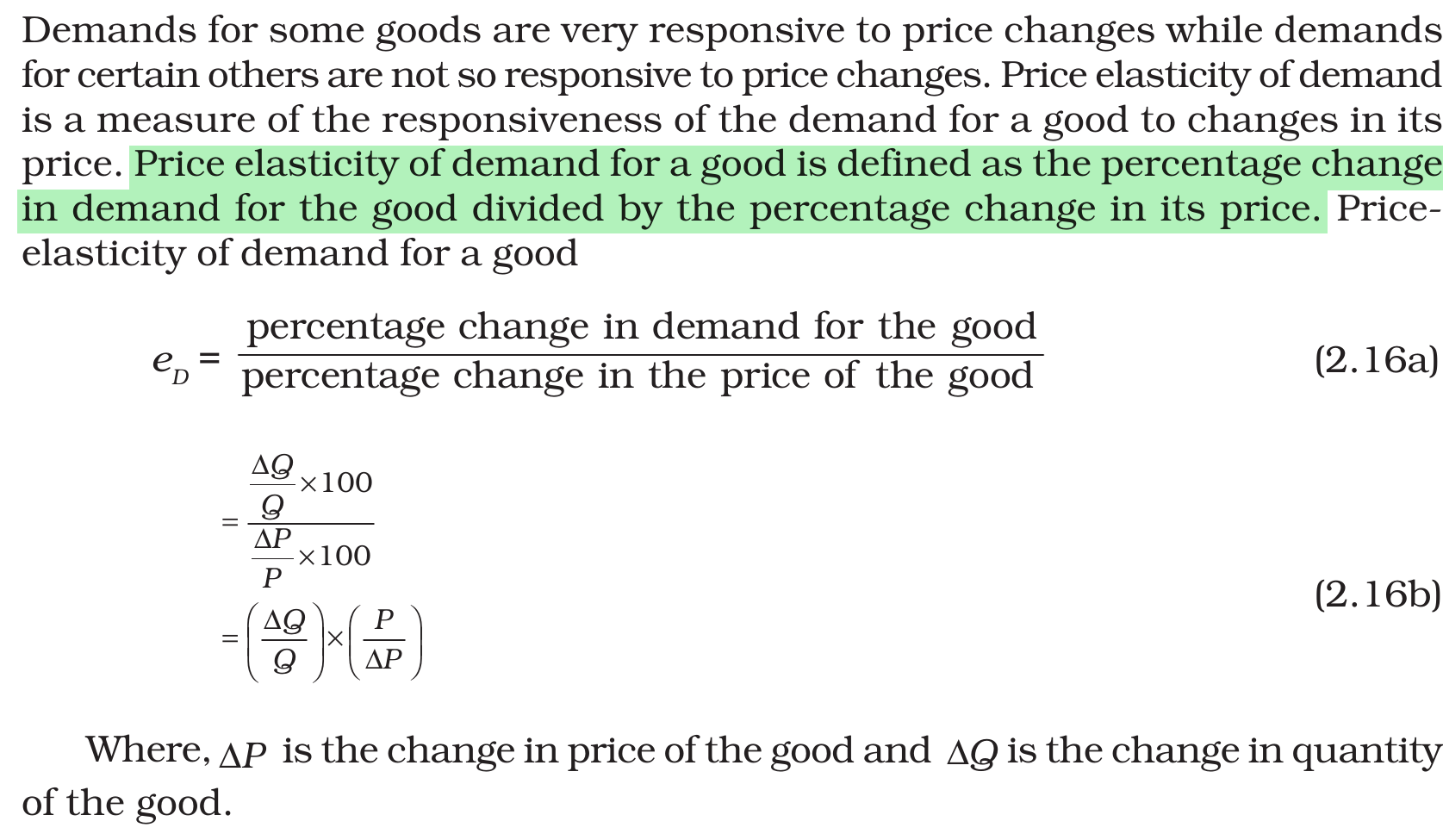
Price elasticity of demand is the percentage change in demand divided by the percentage change in price:
Change in demand = (10 − 2)/2 × 100 = 400 per cent
Change in price = (20 − 10)/20 × 100 = 50 per cent fall
Price elasticity of demand = 400/50 = 8, which is above 1
NCERT (2026-27): Introductory Microeconomics — Chapter 2: Theory of Consumer Behaviour
|