Which electronic configuration is not allowed for a neutral atom or an ion in ground state?
Answer & explanation
Correct answer: option 2
The correct answer is option 2. \(1s^2 2s^1 2p^6 3d^5\).
An atom which does not contain any charge and there is no loss of electrons or gain of electrons is called a neutral atom.
In a neutral atom, the number of electrons is equal to the number of protons in the atom i.e., the atomic number of the element.
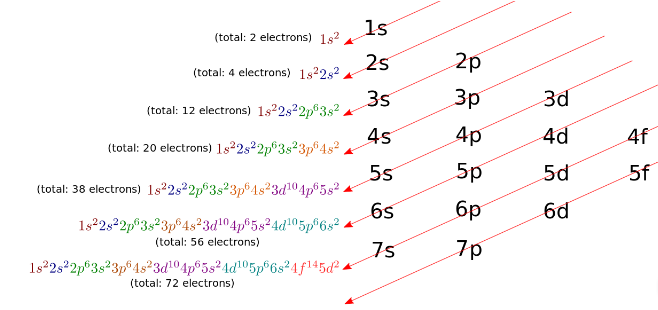
Now the electrons in an atom in the ground state are arranged in different shells and sub-shells the following sequence according to the diagonal rule.