
Thorn of Bougainvillea and tendril of Cucurbita are:
Answer & explanation
Correct answer: option 1
The correct answer is Option (1) → Homologous structures
The thorn of Bougainvillea protects the plant, and the tendril of Cucurbita helps it climb. Their jobs differ, but both develop from the axillary bud and are modified stems. Same origin with different jobs is homology.
Option (1) Homologous structures — Correct. The thorn of Bougainvillea and the tendril of Cucurbita have the same origin (both are modified stems) but do different jobs: protection and climbing. So they are homologous structures, from divergent evolution.
Option (2) Analogous structures — Incorrect. Analogous structures are different in origin but do the same job, like the wings of a butterfly and of a bird. They result from convergent evolution.
Option (3) Vestigial structures — Incorrect. Vestigial organs are reduced and without use. Thorns and tendrils are fully working organs.
Option (4) Developing structures — Incorrect. There is no such category in evolutionary biology.
NCERT Extract:
What Are the Evidences for Evolution? – “… Comparative anatomy and morphology shows similarities and differences among organisms of today and those that existed years ago. Such similarities can be interpreted to understand whether common ancestors were shared or not. For example whales, bats, Cheetah and human (all mammals) share similarities in the pattern of bones of forelimbs (Figure 6.3b). Though these forelimbs perform different functions in these animals, they have similar anatomical structure – all of them have humerus, radius, ulna, carpals, metacarpals and phalanges in their forelimbs. Hence, in these animals, the same structure developed along different directions due to adaptations to different needs. This is divergent evolution and these structures are homologous. Homology indicates common ancestry. Other examples are vertebrate hearts or brains. In plants also, the thorn and tendrils of Bougainvillea and Cucurbita represent homology (Figure 6.3a).”
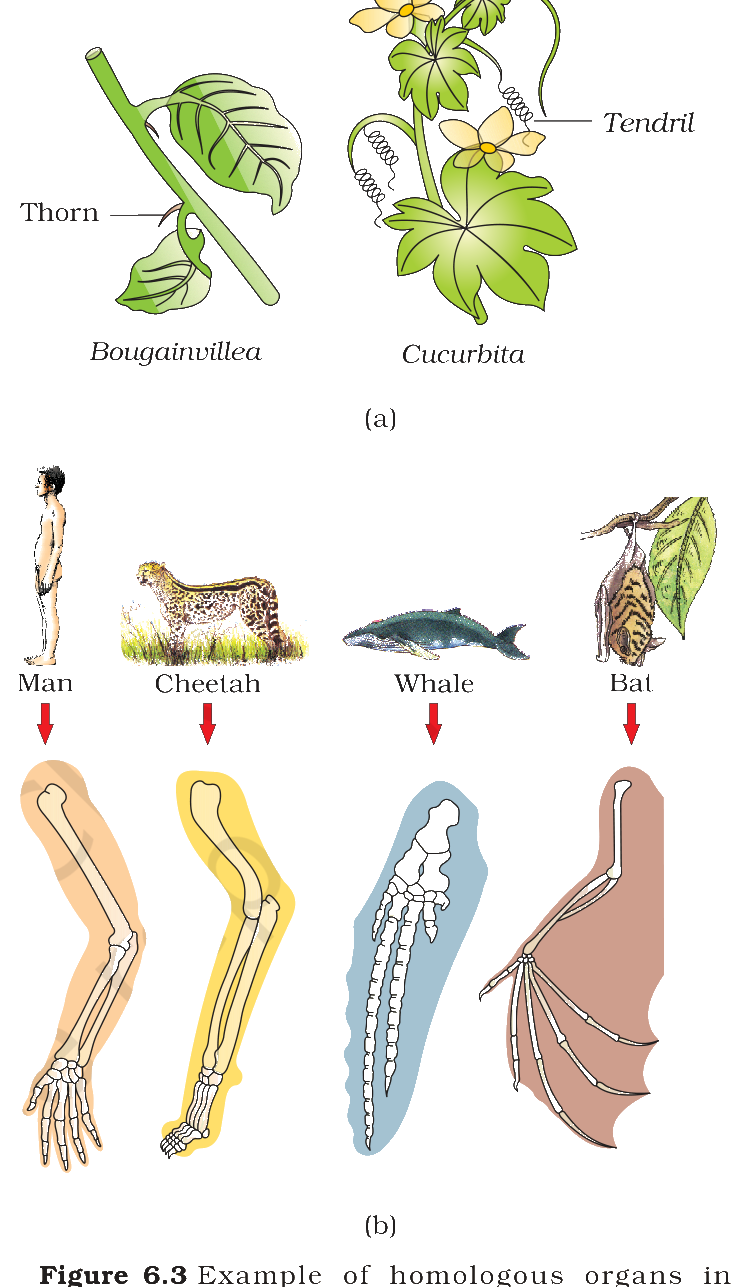
Figure 6.3 Example of homologous organs in (a) Plants and (b) Animals