Which of the following are the features of the "dominant caste"?
(A) Regional dominance, derived from numerical strength.
(B) Ritual dominance, as they belong to middle and higher ranking castes.
(C) Economic dominance, derived from working in high-paid jobs in the service sector.
(D) Political dominance, derived from economic and numerical dominance.
Choose the correct answer from the options given below:
Answer & explanation
Correct answer: option 1
The correct answer is Option (1) → (A), (B) and (D) only
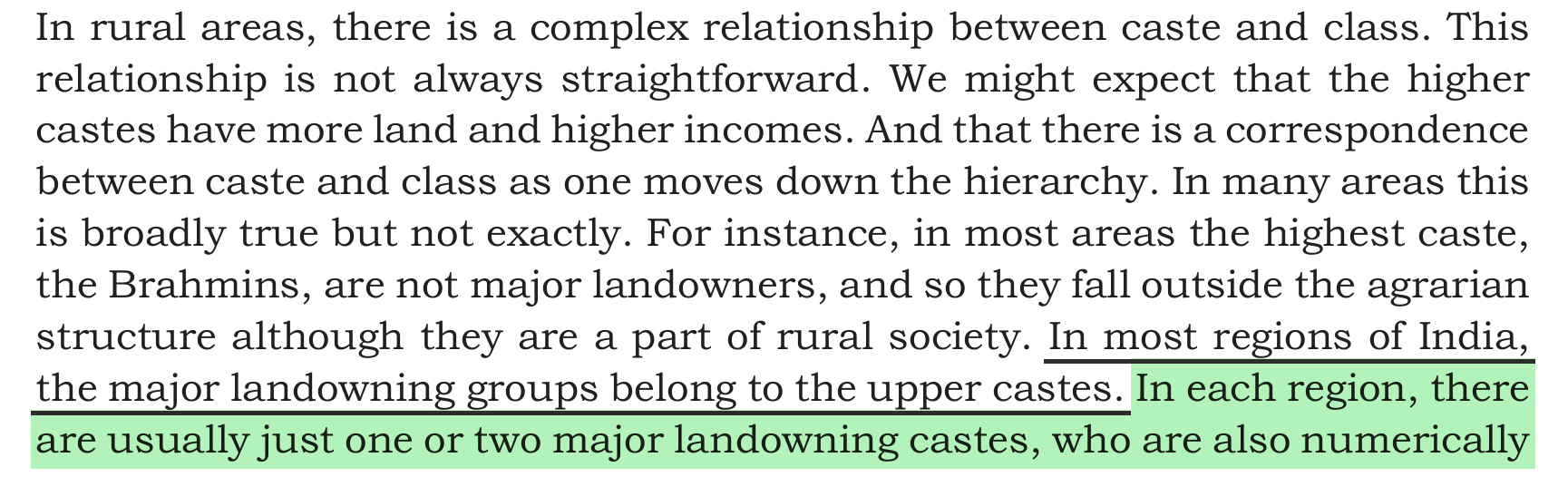
(A) Regional dominance, derived from numerical strength. Correct. In each region there are usually just one or two major landowning castes who are also numerically very important. M.N. Srinivas called such groups dominant castes; they dominate local society in their region.
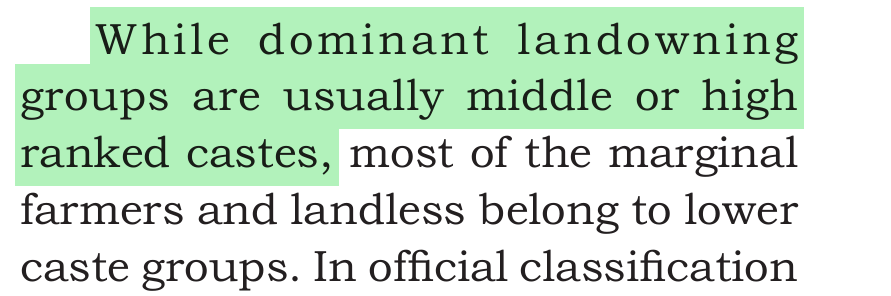
(B) Ritual dominance, as they belong to middle and higher ranking castes. Correct. Dominant landowning groups are usually middle or high ranked castes, so they stand well in the caste order too. Examples are the Jats and Rajputs of U.P., the Vokkaligas and Lingayats of Karnataka, the Kammas and Reddis of Andhra Pradesh and the Jat Sikhs of Punjab.
(C) Economic dominance, derived from working in high-paid jobs in the service sector. Incorrect. Their economic power comes from owning land: they are the major landowning groups of rural society. It does not come from jobs in the service sector.
(D) Political dominance, derived from economic and numerical dominance. Correct. Owning the land and being numerous, the dominant caste is the most powerful group, economically and politically, in its region.
NCERT: Social Change and Development in India — Chapter 4: Change and Development in Rural Society (2025-26)
|