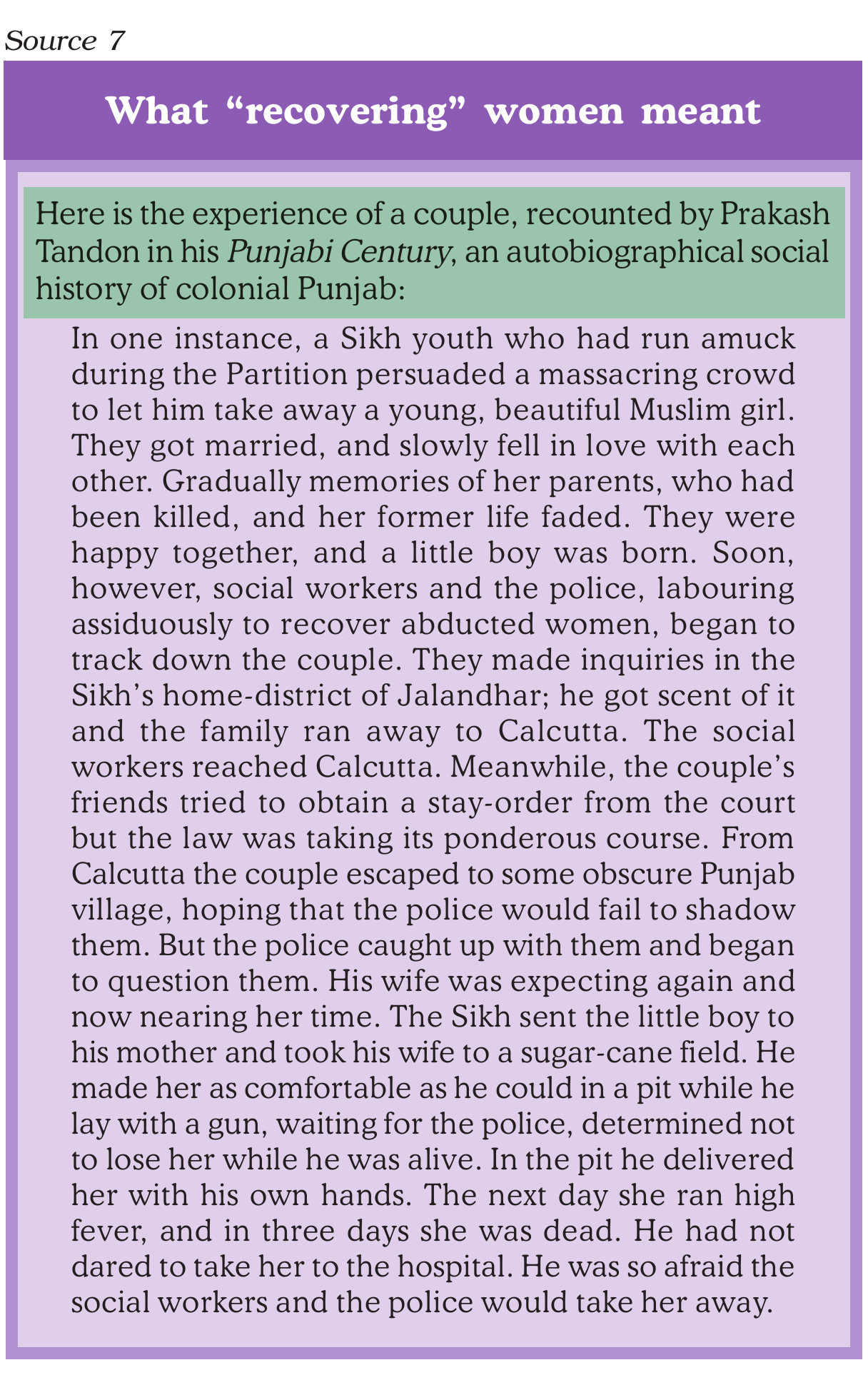
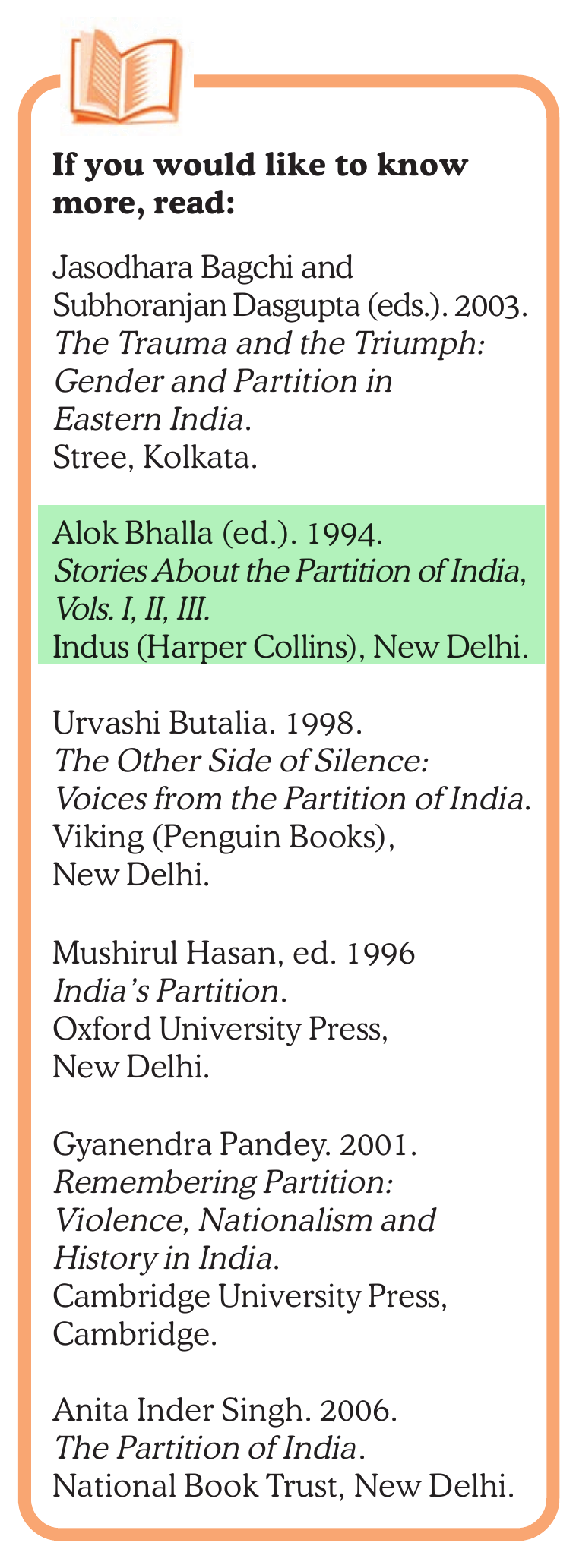
Match List I with List II:
| List I | List II | ||
| Authors | Partition Literature | ||
| (A) | Prakash Tandon | (I) | ‘Love is stronger than Hate: A remembrance of 1947’ |
| (B) | Urvashi Butalia | (II) | ‘Stories About the Partition of India’ |
| (C) | Khushdeva Singh | (III) | ‘The Other side of silence’ |
| (D) | Alok Bhalla (ed.) | (IV) | ‘Punjabi Century’ |
Choose the correct answer from the options given below:
Answer & explanation
Correct answer: option 3
The correct answer is Option (3) → (A)-(IV), (B)-(III), (C)-(I), (D)-(II)
(A) Prakash Tandon — this matches (IV) ‘Punjabi Century’. Prakash Tandon recounts the experience of a couple during Partition in his Punjabi Century, an autobiographical social history of colonial Punjab.
(B) Urvashi Butalia — this matches (III) ‘The Other side of silence’. In her book The Other Side of Silence, Urvashi Butalia narrates the gruesome incident in the village of Thoa Khalsa, Rawalpindi district.
(C) Khushdeva Singh — this matches (I) ‘Love is stronger than Hate: A remembrance of 1947’. We know about the gruelling relief work of this Sikh doctor from his memoir Love is Stronger than Hate: A Remembrance of 1947.
(D) Alok Bhalla (ed.) — this matches (II) ‘Stories About the Partition of India’. Alok Bhalla edited Stories About the Partition of India (1994), named among the books the chapter suggests for further reading.
Note: This question is taken from the chapter ‘Understanding Partition’ which was there in the pre-rationalised NCERT and has been deleted from subsequent editions of NCERT, including the NCERT book (2026-27).
NCERT (Pre-rationalised): “5.2 Preserving ‘honour’ … At times, therefore, when the men feared that ‘their’ women – wives, daughters, sisters – would be violated by the ‘enemy’, they killed the women themselves. Urvashi Butalia in her book, The Other Side of Silence, narrates one such gruesome incident in the village of Thoa Khalsa, Rawalpindi district.… …Consider, for instance, the work of Khushdeva Singh, a Sikh doctor specialising in the treatment of tuberculosis, posted at Dharampur in present-day Himachal Pradesh. Immersing himself in his work day and night, the doctor provided that rare healing touch, food, shelter, love and security to numerous migrants, Muslim, Sikh, Hindu alike.… …We know about the gruelling relief work of this doctor from a memoir he entitled Love is Stronger than Hate: A Remembrance of 1947.…”
|