Match List-I with List-II
| List-I | List-II |
| A. Investments made abroad | I. Credit side of the current account of BOP |
| B. Remittances to a relative staying abroad | II. Debit side of the current account of BOP |
| C. Borrowing from IMF | III. Debit side of the capital account of BOP |
| D. Export of cotton clothes | IV. Credit side of the capital account of BOP |
Choose the correct answer from the options given below:
Answer & explanation
Correct answer: option 1
The correct answer is Option (1) → A-III, B-II, C-IV, D-I
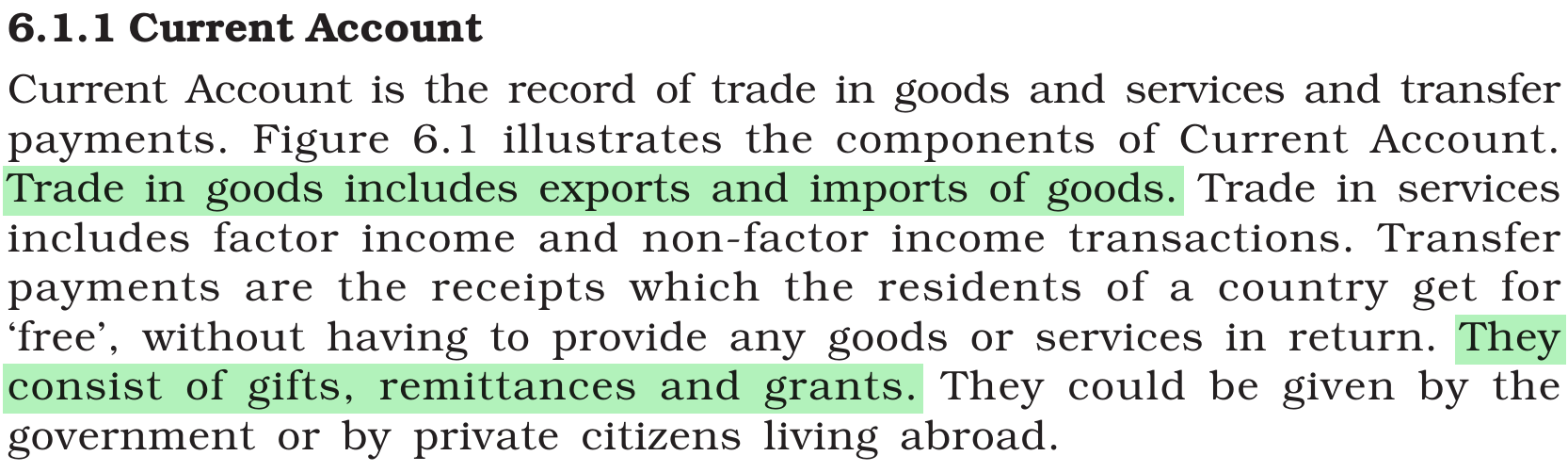
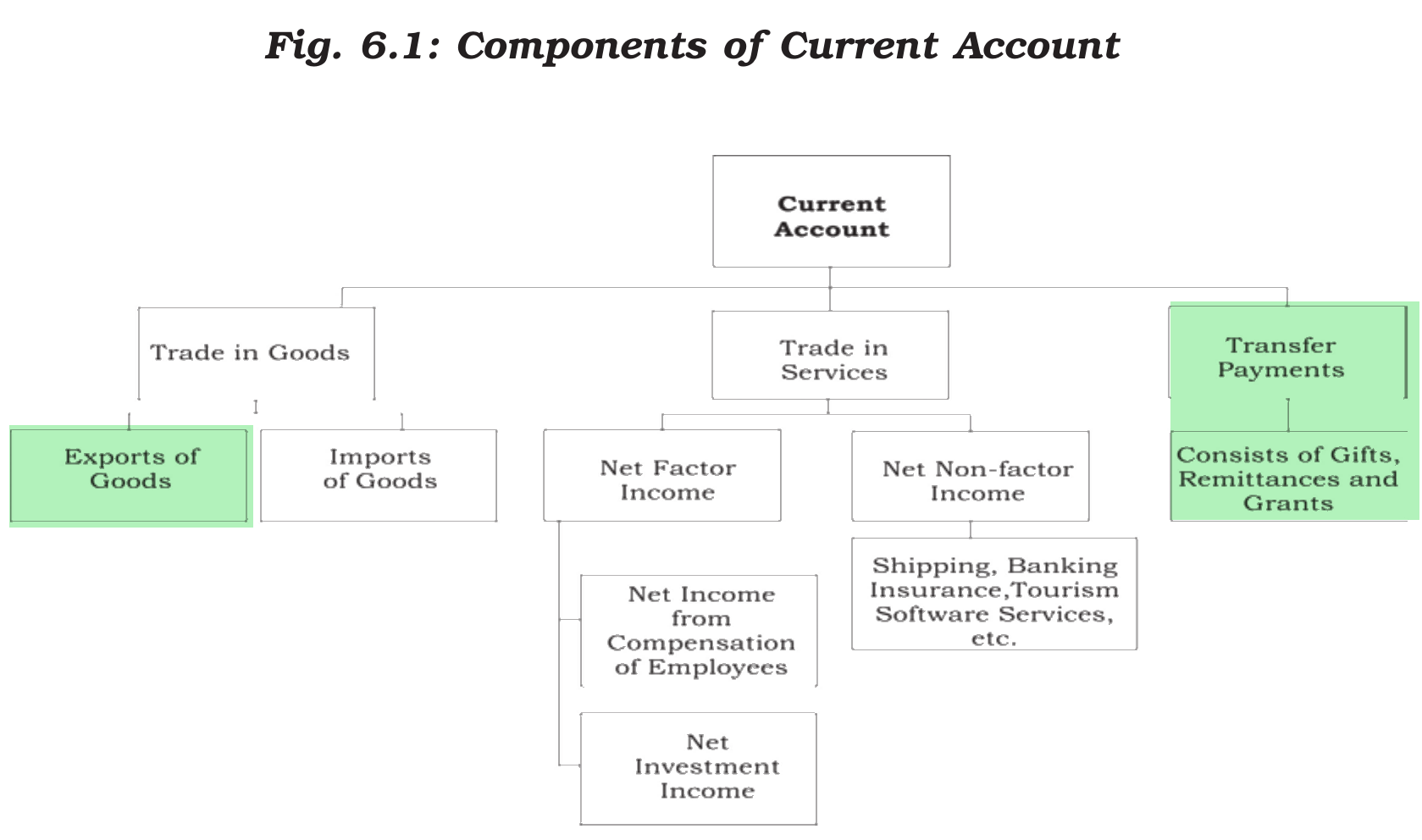
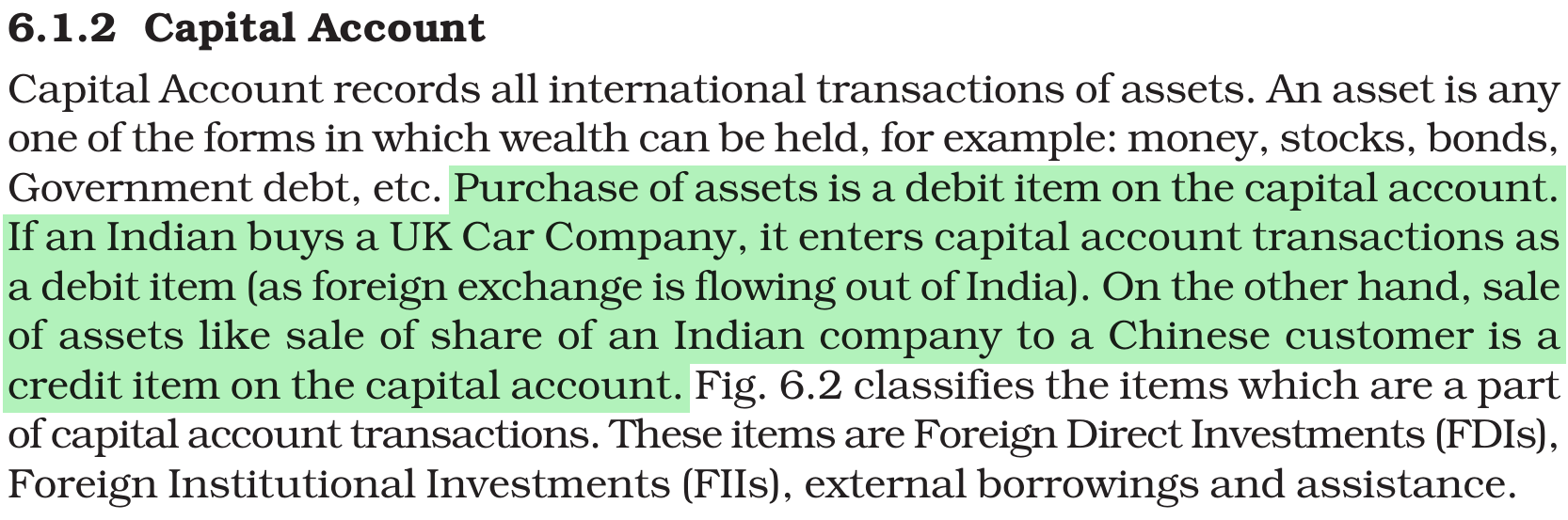
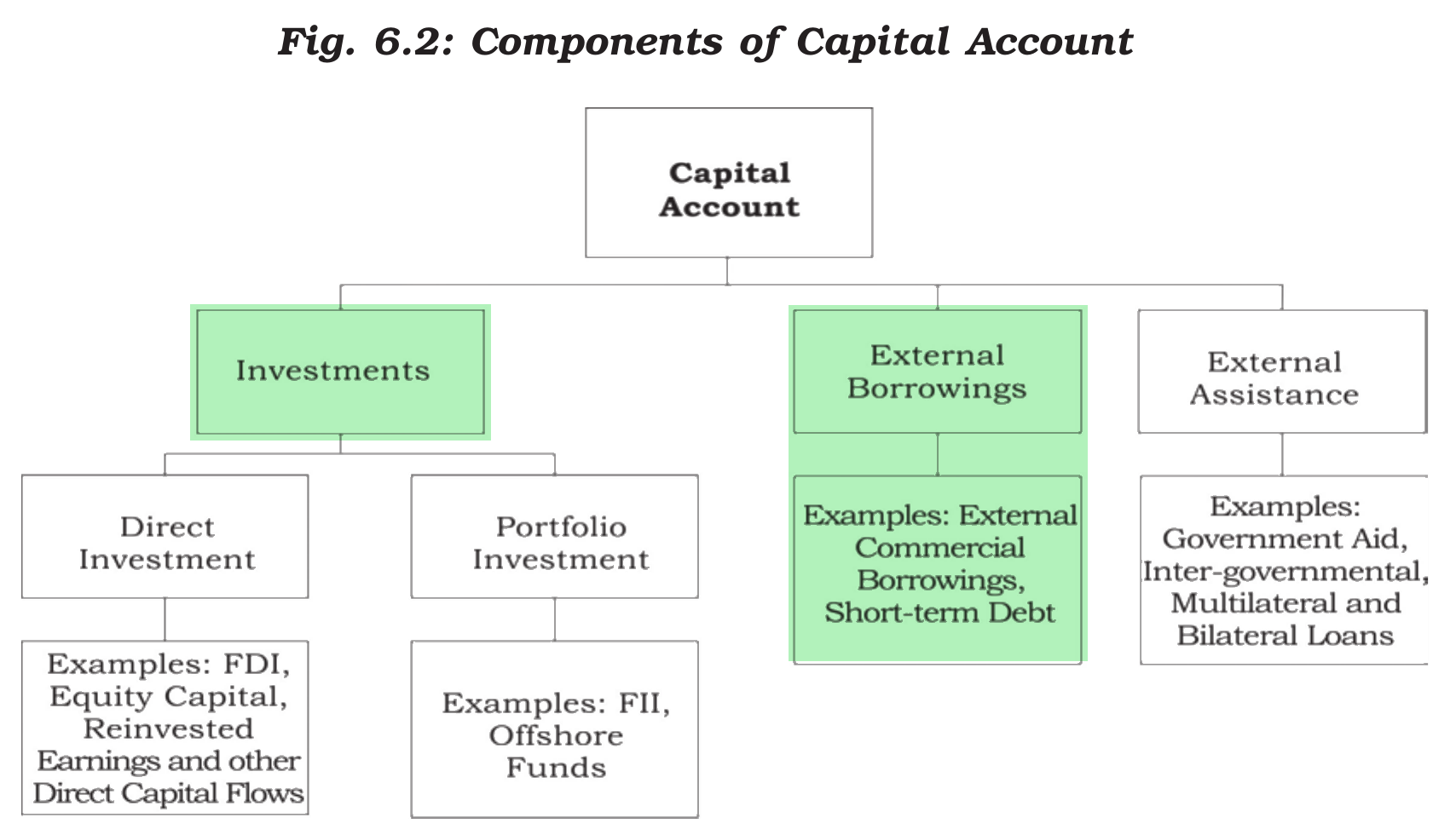
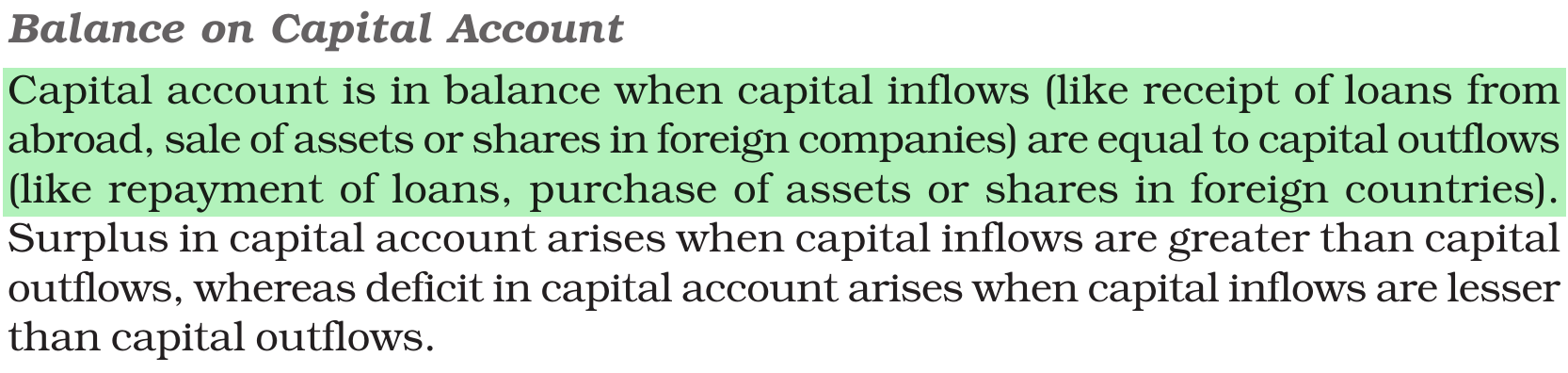
The Balance of Payments (BOP) records a country’s dealings with the rest of the world. The current account holds trade in goods and services and transfer payments. The capital account holds dealings in assets and borrowings. Foreign exchange coming in is a credit, and foreign exchange going out is a debit.
| List-I | List-II | Reason |
|---|---|---|
| (A) Investments made abroad | (III) Debit side of the capital account of BOP | This is a purchase of assets abroad, and foreign exchange flows out. |
| (B) Remittances to a relative staying abroad | (II) Debit side of the current account of BOP | Remittances are transfer payments, given without anything in return. Here the money goes out. |
| (C) Borrowing from IMF | (IV) Credit side of the capital account of BOP | This is an external borrowing, and foreign exchange flows in. |
| (D) Export of cotton clothes | (I) Credit side of the current account of BOP | This is trade in goods, and an export is a credit item. |
NCERT (2026-27): Introductory Macroeconomics — Chapter 6: Open Economy Macroeconomics
|