Domestic income is the sum of factor incomes accruing to.
Answer & explanation
Correct answer: option 2
The correct answer is Option (2) → Residents and non-residents
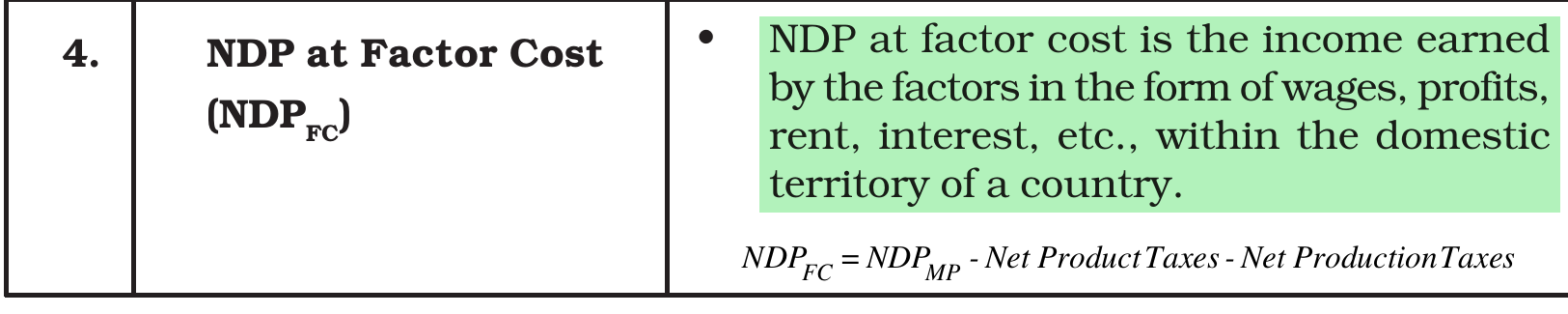
Domestic income is the income that factors of production earn within the domestic territory of a country, as wages, profits, rent and interest. It goes by where the income is earned, so it counts the national residents and the non-residents alike.
Option (1) Residents — Incorrect. Residents are the people who normally live in the country. They are only a part, and this leaves out the non-residents who also earn income within the country.
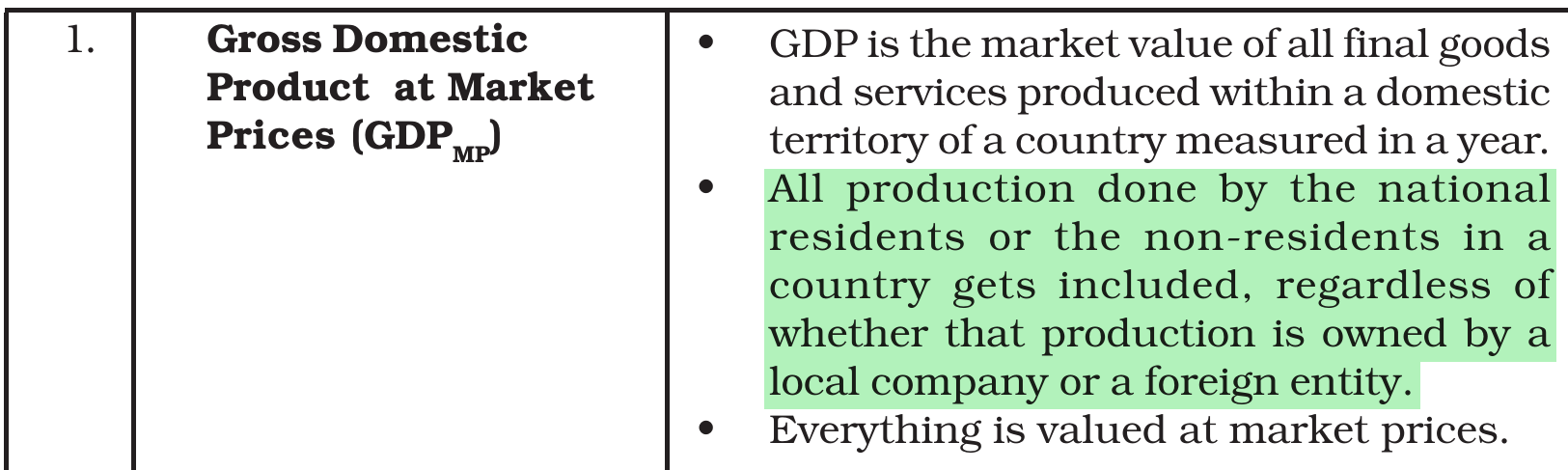
Option (2) Residents and non-residents — Correct. All production done by residents or non-residents in a country counts, so the income from it goes to both.
Option (3) Nationals — Incorrect. The income of a country’s own people, at home and abroad, belongs to national income. Domestic income also counts foreign factors working here, and it leaves out what nationals earn abroad.
Option (4) Economic territory — Incorrect. Economic territory means a country’s domestic territory. It is the area where this income is earned, and the question asks who receives the income.
NCERT (2026-27): “2.3 Some Macroeconomic Identities … Gross Domestic Product measures the aggregate production of final goods and services taking place within the domestic economy during a year. But the whole of it may not accrue to the citizens of the country. For example, a citizen of India working in Saudi Arabia may be earning her wage and it will be included in the Saudi Arabian GDP. But legally speaking, she is an Indian.…”
Table 2.4: Basic National Income Aggregates
Table 2.4: Basic National Income Aggregates |