The size of investment multiplier (k) depends on:
Answer & explanation
Correct answer: option 3
The correct answer is Option (3) → Marginal propensity to consume
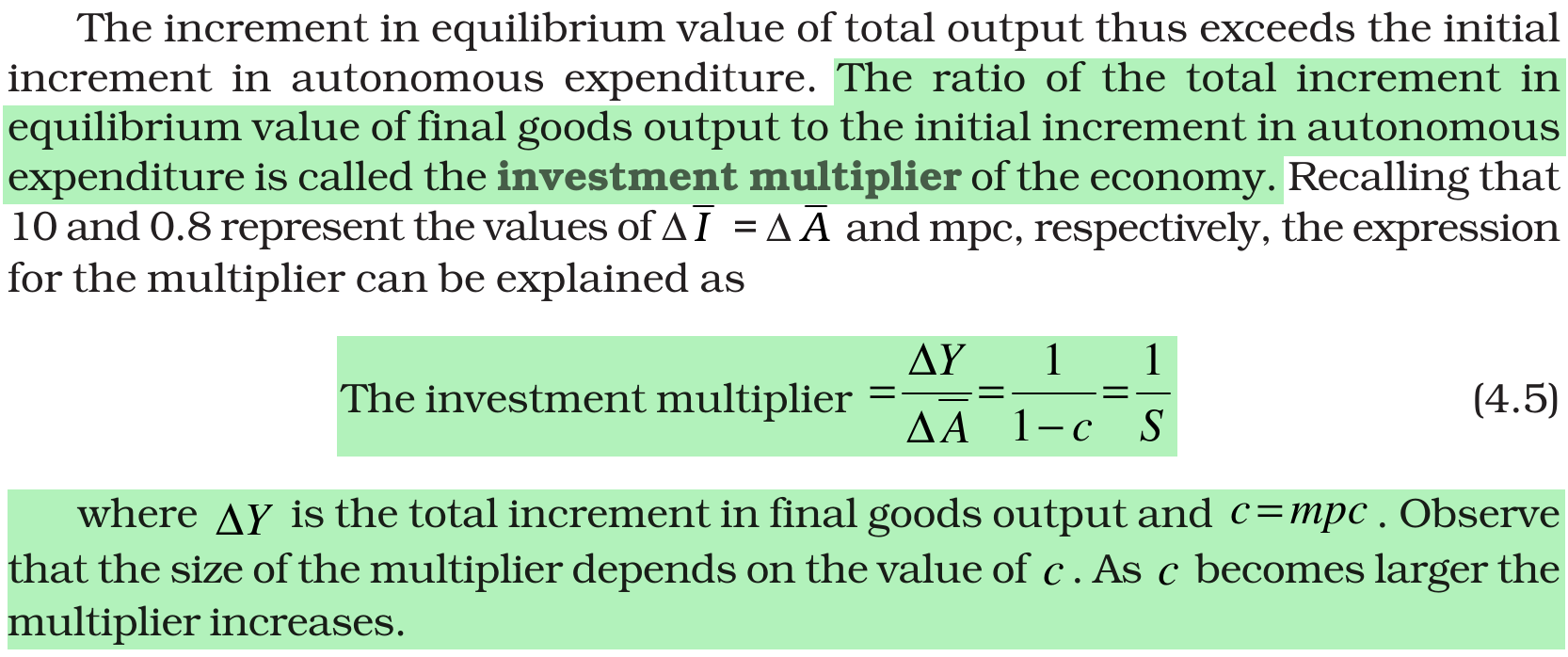
The investment multiplier (k) is the ratio of the change in income to the change in investment. Its size is set by the marginal propensity to consume (MPC). This is the part of each extra rupee of income that is consumed.
\( \displaystyle k = \frac{1}{1 - MPC} \)
A larger MPC means that more of each extra rupee is spent again, so income rises further.
Option (1) Average propensity to consume — Incorrect. This is total consumption divided by total income. The multiplier works on extra income, so the marginal value matters.
Option (2) Average propensity to save — Incorrect. This is total saving divided by total income. It does not show what happens to extra income.
Option (3) Marginal propensity to consume — Correct. The higher the MPC, the larger the multiplier.
Option (4) Autonomous consumption — Incorrect. This is consumption at zero income. A change in it moves the consumption line up or down, but the slope stays the same, so the multiplier does not change.
NCERT (2026-27): Introductory Macroeconomics — Chapter 4: Determination of Income and Employment
|