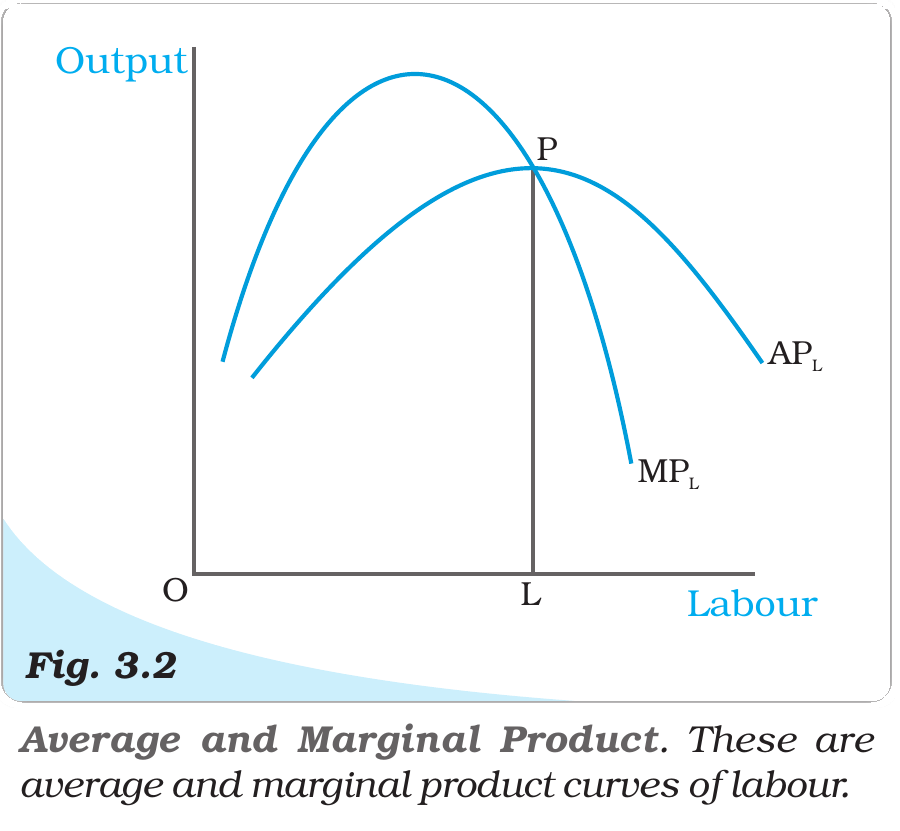
According to the law of variable proportions, the marginal product of an input initially rises and then after a certain level of employment, it starts falling. The MP curve therefore looks like:
Answer & explanation
Correct answer: option 4
The correct answer is Option (4) → Inverse 'U' Shaped.
The marginal product (MP) curve rises first and falls later, so it looks like an inverse ‘U’.
MP is the extra output from one more unit of an input. As more of the input is used with a fixed factor, the two combine better at first and MP rises. After a certain level, production gets too crowded with this input, and MP falls.
A ‘U’ shape runs the other way: it falls first and then rises, as the short run marginal cost curve does.
NCERT (2026-27): “3.4 The Law of Diminishing Marginal Product and the Law of Variable Proportions …This tendency of the MP to first increase and then fall is called the law of variable proportions or the law of diminishing marginal product. Law of variable proportions say that the marginal product of a factor input initially rises with its employment level. But after reaching a certain level of employment, it starts falling.… 3.5 Shapes of Total Product, Marginal Product and Average Product Curves …According to the law of variable proportions, the marginal product of an input initially rises and then after a certain level of employment, it starts falling. The MP curve therefore, looks like an inverse ‘U’-shaped curve as in figure 3.2.…”
|