Consider the following as facts related to environment and sustainable development issue in India.
A. The Central Pollution Control Board was set up in 1974
B. The Central Pollution Control Board has identified seven categories of industries as significantly polluting
C. The Brundtland Commission has given emphasis on protection of present generation from pollution
D. India is leading an international body called International Solar Alliance (ISA)
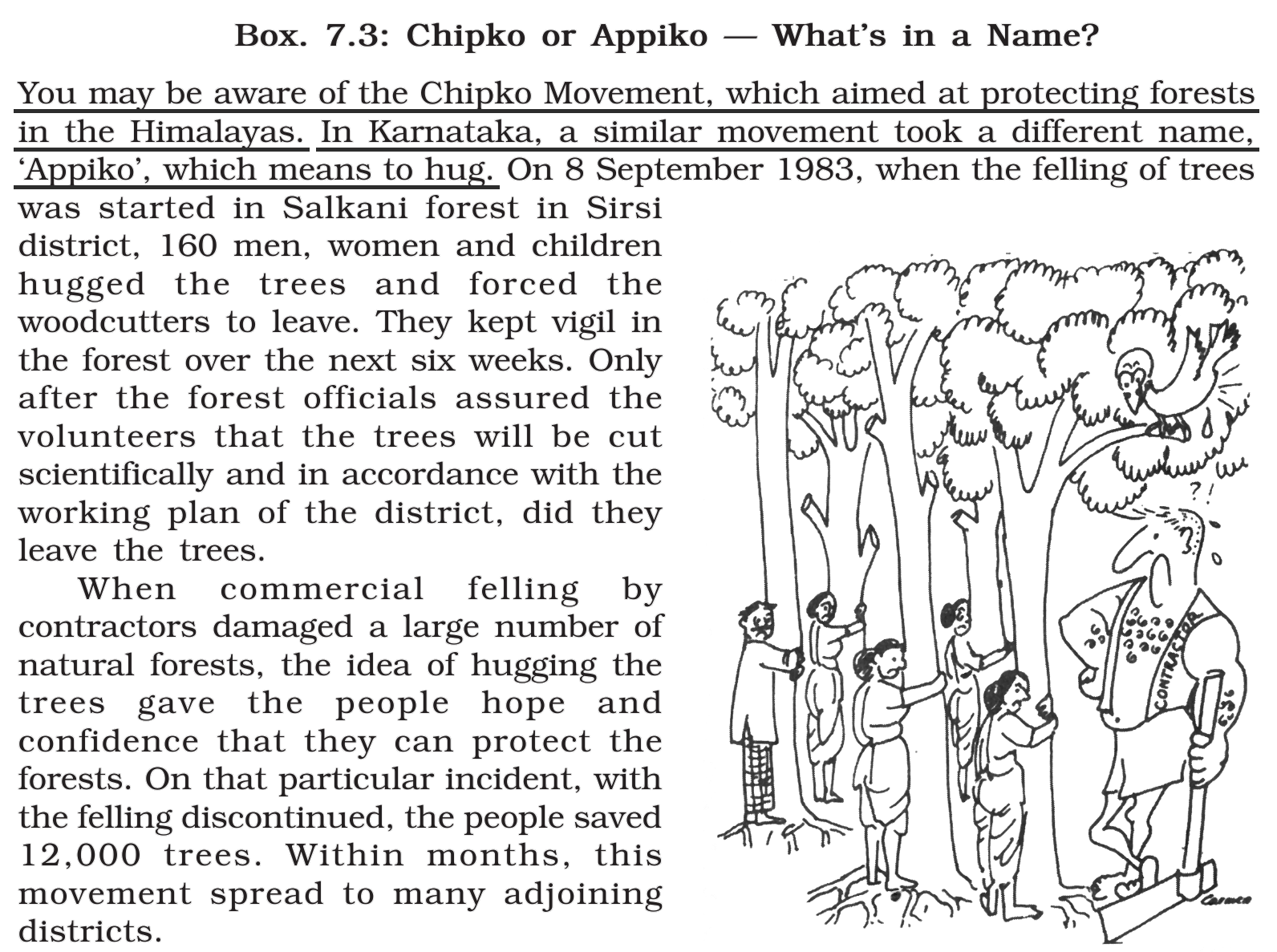
E. The aim of Chipko Movement was protecting forest in Karnataka
Choose the correct answer from the options given below:
Answer & explanation
Correct answer: option 3
The correct answer is Option (3) → A and D only
(A) The Central Pollution Control Board was set up in 1974 — True. The government set up the CPCB in 1974 to deal with water and air pollution.
(B) The Central Pollution Control Board has identified seven categories of industries as significantly polluting — False. The CPCB has identified seventeen categories of large and medium industries as significantly polluting.
(C) The Brundtland Commission has given emphasis on protection of present generation from pollution — False. The Brundtland Commission stresses protecting the future generation. Sustainable development means meeting today’s needs without harming the ability of future generations to meet theirs.
(D) India is leading an international body called International Solar Alliance (ISA) — True. India is trying to raise power generation from solar energy and is leading the International Solar Alliance.
(E) The aim of Chipko Movement was protecting forest in Karnataka — False. The Chipko Movement aimed at protecting forests in the Himalayas. The similar movement in Karnataka was called Appiko.
NCERT (2026-27): Indian Economic Development — Chapter 7: Environment and Sustainable Development
NCERT (2026-27): “7.3 State of India’s Environment … India is one of the ten most industrialised nations of the world. But this status has brought with it unwanted and unanticipated consequences such as unplanned urbanisation, pollution and the risk of accidents. The CPCB (Central Pollution Control Board) has identified seventeen categories of industries (large and medium scale) as significantly polluting ….… 7.4 Sustainable Development … The Brundtland Commission emphasises on protecting the future generation. This is in line with the argument of the environmentalists who emphasise that we have a moral obligation to hand over the planet earth in good order to the future generation; that is, the present generation should bequeath a better environment to the future generation. At least we should leave to the next generation a stock of ‘quality of life’ assets no less than what we have inherited. 7.5 Strategies for Sustainable Development … Solar Power through Photovoltaic Cells: India is naturally endowed with a large quantity of solar energy in the form of sunlight. … Now, with the help of photovoltaic cells, solar energy can be converted into electricity. … This technique is also totally free from pollution. In recent years India is taking efforts to increase the power generation through solar. India is also leading an International body called International Solar Alliance (ISA).…” |