The correct answer is Option (3) → (A), (B) and (E) only
(A) Amortisation of goodwill — no cash flow: it is a non-cash charge written off against profit.
(B) Redemption of Debentures by Conversion — no cash flow: debentures are settled by issuing shares.
(C) Machinery purchased and payment by cash — cash outflow (investing activity).
(D) Issue of shares for cash — cash inflow (financing activity).
(E) Issue of fully paid bonus shares — no cash flow: reserves are turned into share capital; no cash is received or paid.
NCERT (2026-27 edition):
Indirect Method – “Indirect method of ascertaining cash flow from operating activities begins with the amount of net profit/loss. This is so because statement of profit and loss incorporates the effects of all operating activities of an enterprise. However, Statement of Profit and Loss is prepared on accrual basis (and not on cash basis). Moreover, it also includes certain non-operating items such as interest paid, profit/loss on sale of fixed assets, etc.) and non-cash items (such as depreciation, goodwill written-off, divident declared, etc.” NCERT (2026-27 edition):
Non-cash Transactions – “… As per AS-3, investing and financing transactions that do not require the use of cash or cash equivalents should be excluded from a cash flow statement. Examples of such transactions are – acquisition of machinery by issue of equity shares or redemption of debentures by issue of equity shares.” NCERT (2026-27 edition):
Cash Flows – “‘Cash Flows’ implies movement of cash in and out due to some non-cash items. Receipt of cash from a non-cash item is termed as cash inflow while cash payment in respect of such items as cash outflow. For example, purchase of machinery by paying cash is cash outflow while sale proceeds received from sale of machinery is cash inflow.” NCERT (2026-27 edition):
Issue of Shares at a Premium 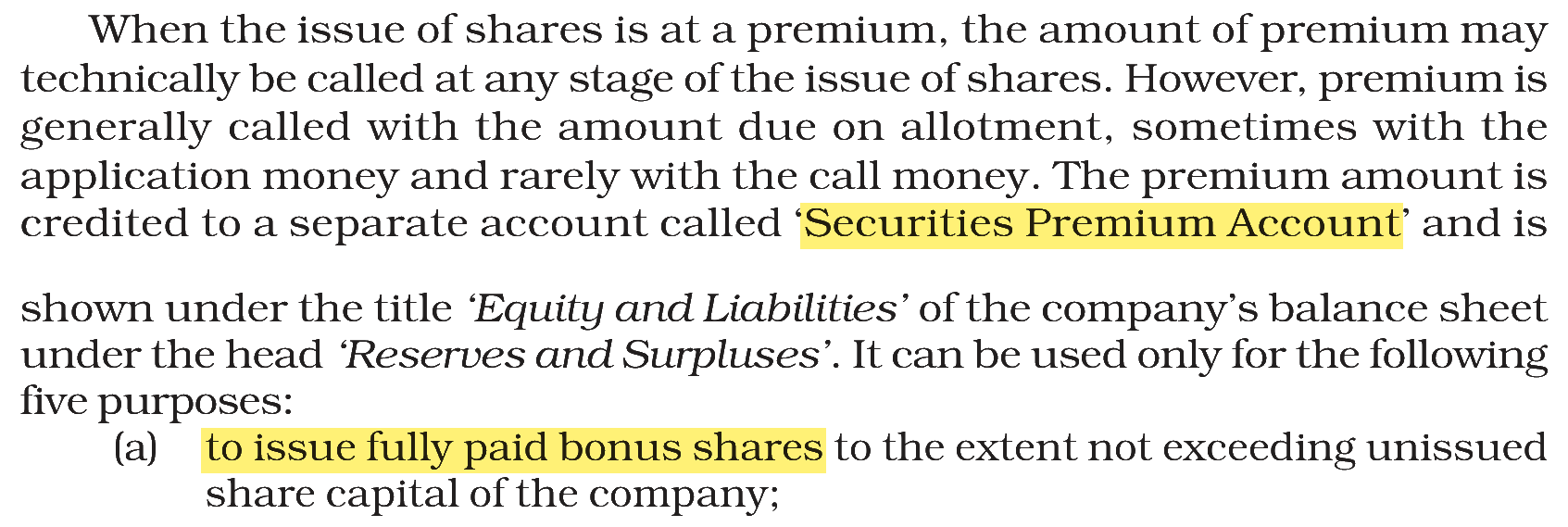
NCERT (2026-27 edition):
Cash from Financing Activities – “As the name suggests, financing activities relate to long-term funds or capital of an enterprise, e.g., cash proceeds from issue of equity shares, debentures, raising long-term bank loans, repayment of bank loan, etc.” |
