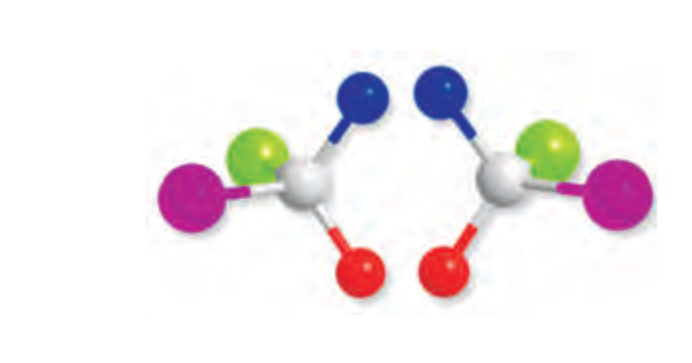
Stereoisomers which are non-superimposable mirror images are called:
Answer & explanation
Correct answer: option 1
The correct answer is Option (1) → Enantiomers
A molecule that has no plane of symmetry, such as one containing a carbon atom bonded to four different groups, is chiral: it is not superimposable on its mirror image. The two non-superimposable mirror-image forms are called enantiomers. They have identical physical properties except that they rotate plane polarised light by equal amounts in opposite directions (d and l forms), e.g. the two forms of butan-2-ol.
NCERT (2026-27 edition):
Reactions of Haloalkanes – “… The stereoisomers related to each other as non-superimposable mirror images are called enantiomers (Fig. 6.7). … Enantiomers possess identical physical properties namely, melting point, boiling point, refractive index, etc. They only differ with respect to the rotation of plane polarised light. If one of the enantiomer is dextro rotatory, the other will be laevo rotatory.”