Match List-I with List-II
| List-I Works | List-II Authors | ||
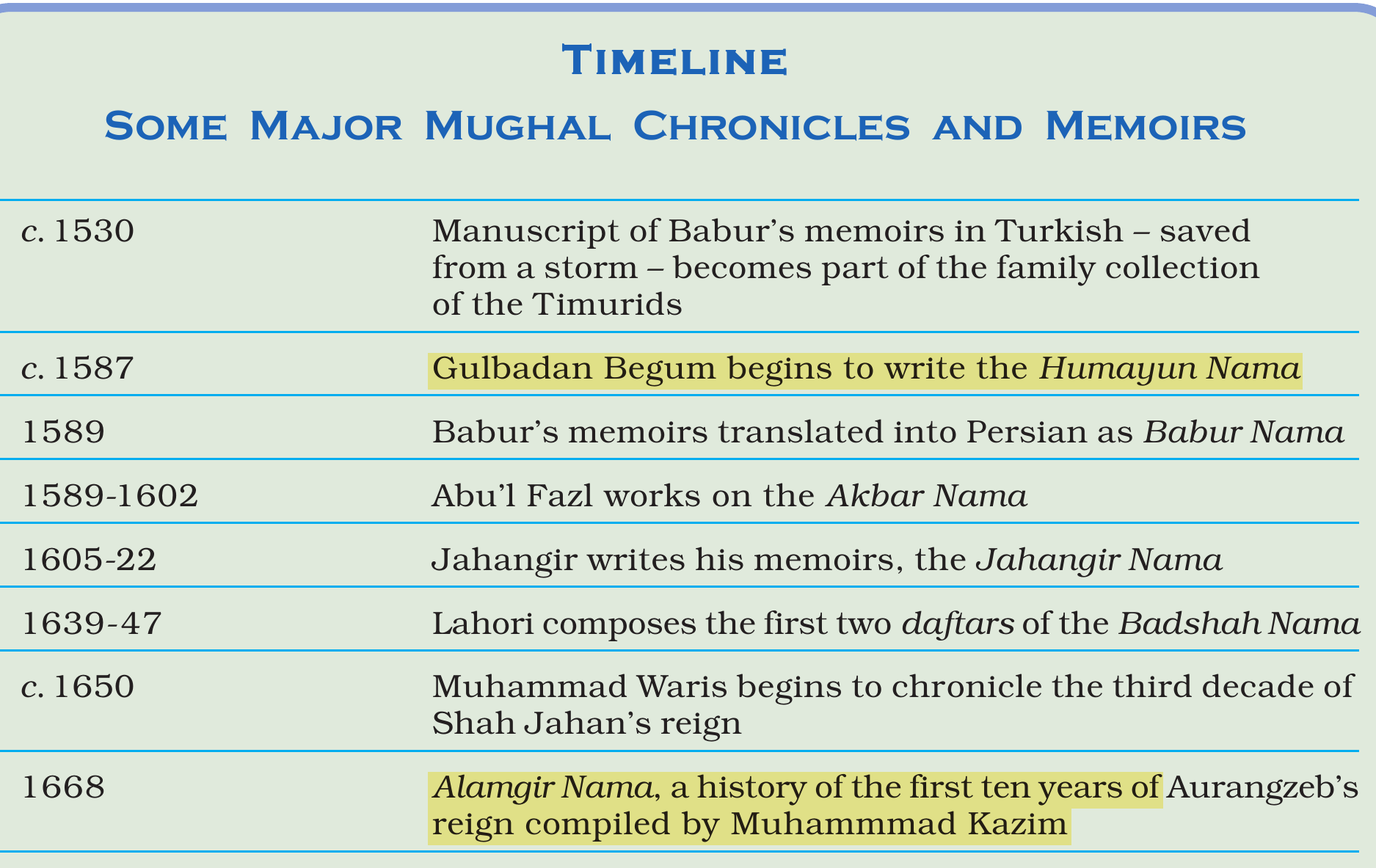
| (A) | Alamgir Nama | (I) | Chandrabhan Barahman |
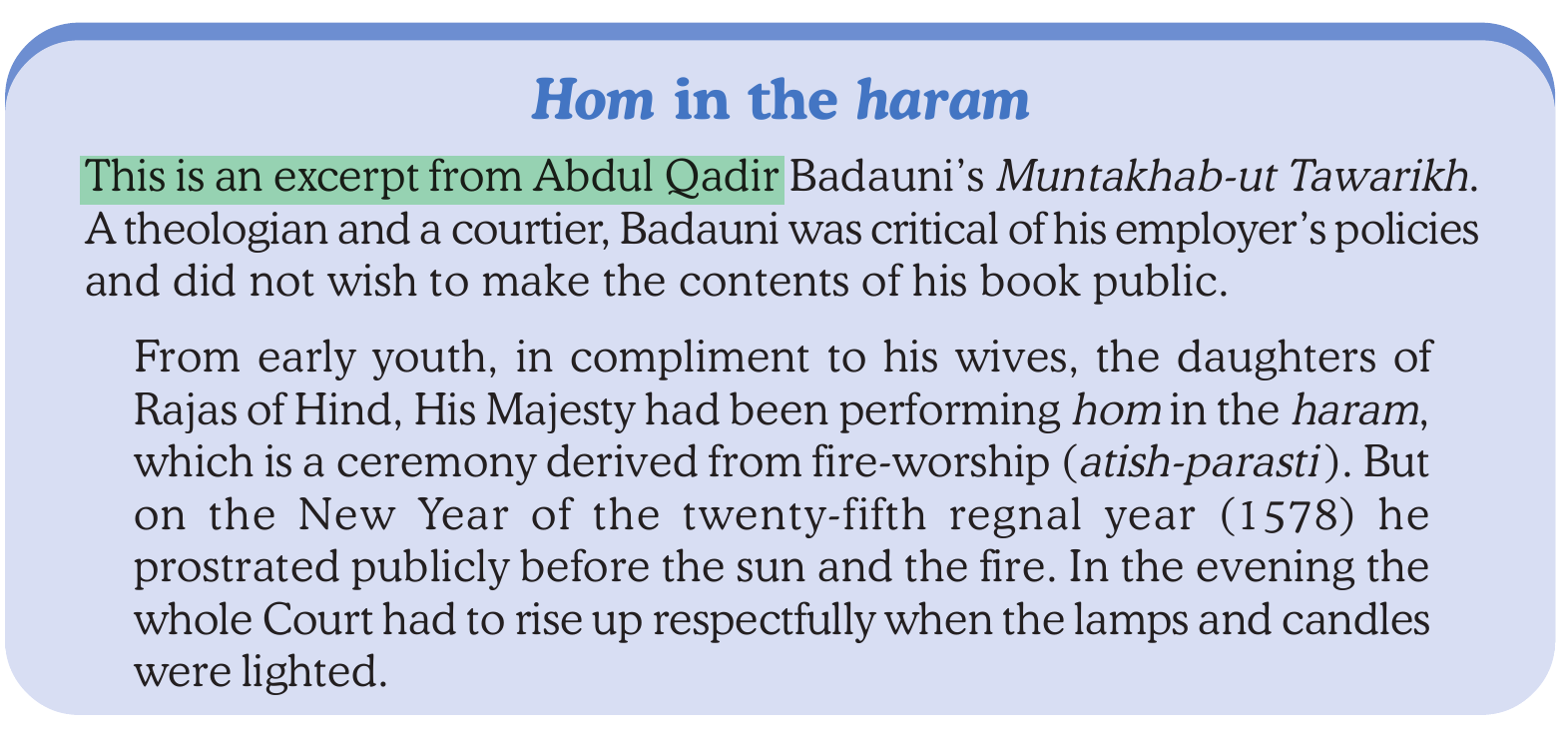
| (B) | Muntakhab-ut Tawarikh | (II) | Abdul Qadir Badauni |
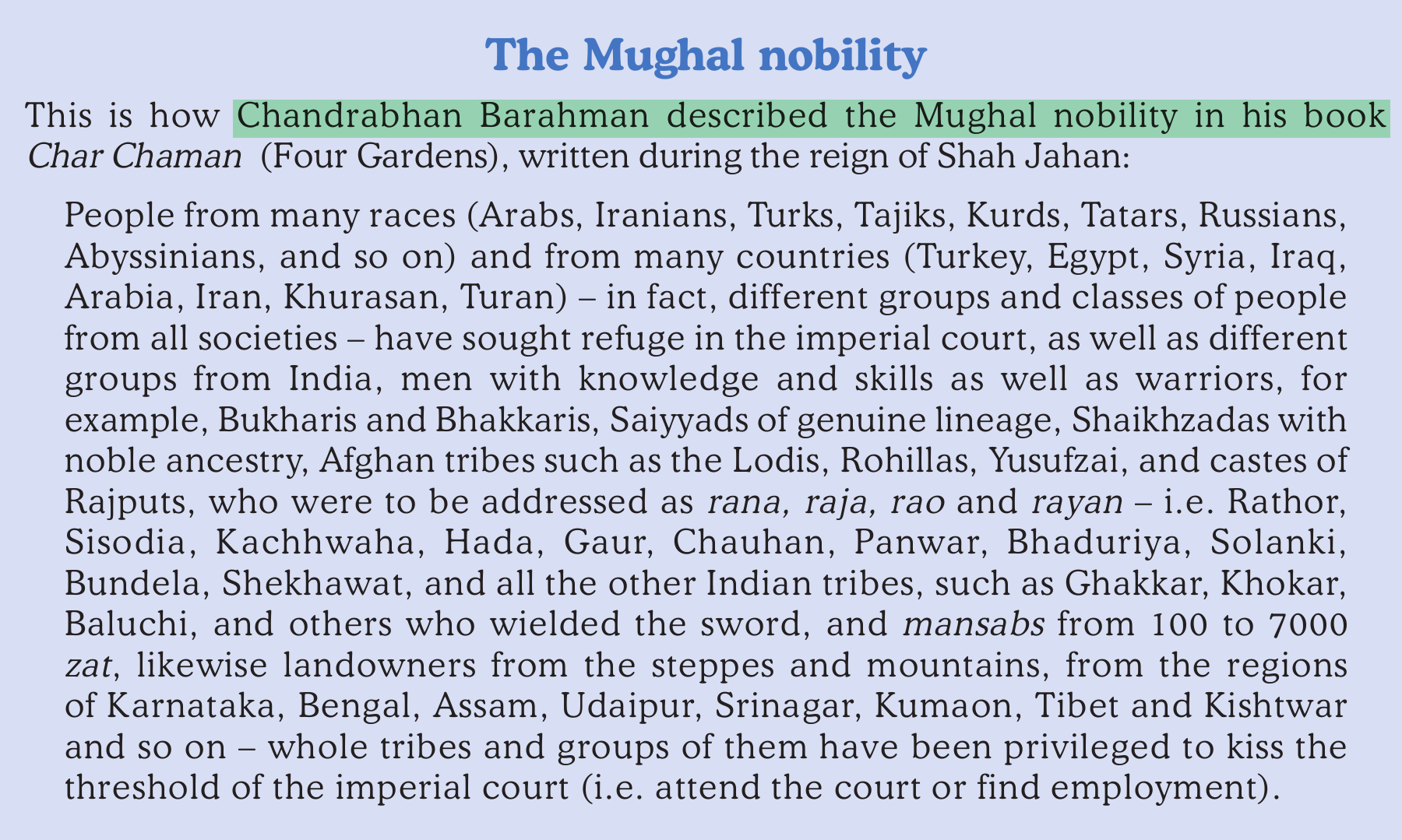
| (C) | Char Chaman | (III) | Gulbadan Begum |
| (D) | Humayun Nama | (IV) | Muhammad Kazim |
Choose the correct answer from the options given below:
Answer & explanation
Correct answer: option 3
The correct answer is Option (3) → (A)-(IV), (B)-(II), (C)-(I), (D)-(III)
(A) Alamgir Nama — this matches (IV) Muhammad Kazim. The Alamgir Nama, a history of the first ten years of Aurangzeb’s reign, was compiled by Muhammad Kazim in 1668.
(B) Muntakhab-ut Tawarikh — this matches (II) Abdul Qadir Badauni. Badauni, a theologian and courtier, was critical of Akbar’s policies and did not wish to make the contents of this book public.
(C) Char Chaman — this matches (I) Chandrabhan Barahman. In Char Chaman (Four Gardens), written during the reign of Shah Jahan, Chandrabhan Barahman described the Mughal nobility.
(D) Humayun Nama — this matches (III) Gulbadan Begum. Gulbadan, the daughter of Babur, Humayun’s sister and Akbar’s aunt, wrote the Humayun Nama, which gives a glimpse into the domestic world of the Mughals.
Note: This question is taken from the chapter ‘Kings and Chronicles’ which was there in the pre-rationalised NCERT and has been deleted from subsequent editions of NCERT, including the NCERT book (2026-27).
NCERT (Pre-rationalised): “7. The Imperial Household … An interesting book giving us a glimpse into the domestic world of the Mughals is the Humayun Nama written by Gulbadan Begum. Gulbadan was the daughter of Babur, Humayun’s sister and Akbar’s aunt. Gulbadan could write fluently in Turkish and Persian. When Akbar commissioned Abu’l Fazl to write a history of his reign, he requested his aunt to record her memoirs of earlier times under Babur and Humayun, for Abu’l Fazl to draw upon. What Gulbadan wrote was no eulogy of the Mughal emperors. Rather she described in great detail the conflicts and tensions among the princes and kings and the important mediating role elderly women of the family played in resolving some of these conflicts.”
|