Match List I with List II
| LIST-I (Concept) | LIST-II (Characteristics) | ||
| A. | Third gender | I. | Separation of races |
| B. | Apartheid | II. | Social category of persons who are neither male nor female |
| C. | Adivasis | III. | Conversion of gender status of body into opposite gender by choice |
| D. | Transgender | IV. | Indigenous population, identity struggles |
Choose the correct answer from the options given below:
Answer & explanation
Correct answer: option 1
The correct answer is Option (1) → A-II, B-I, C-IV, D-III
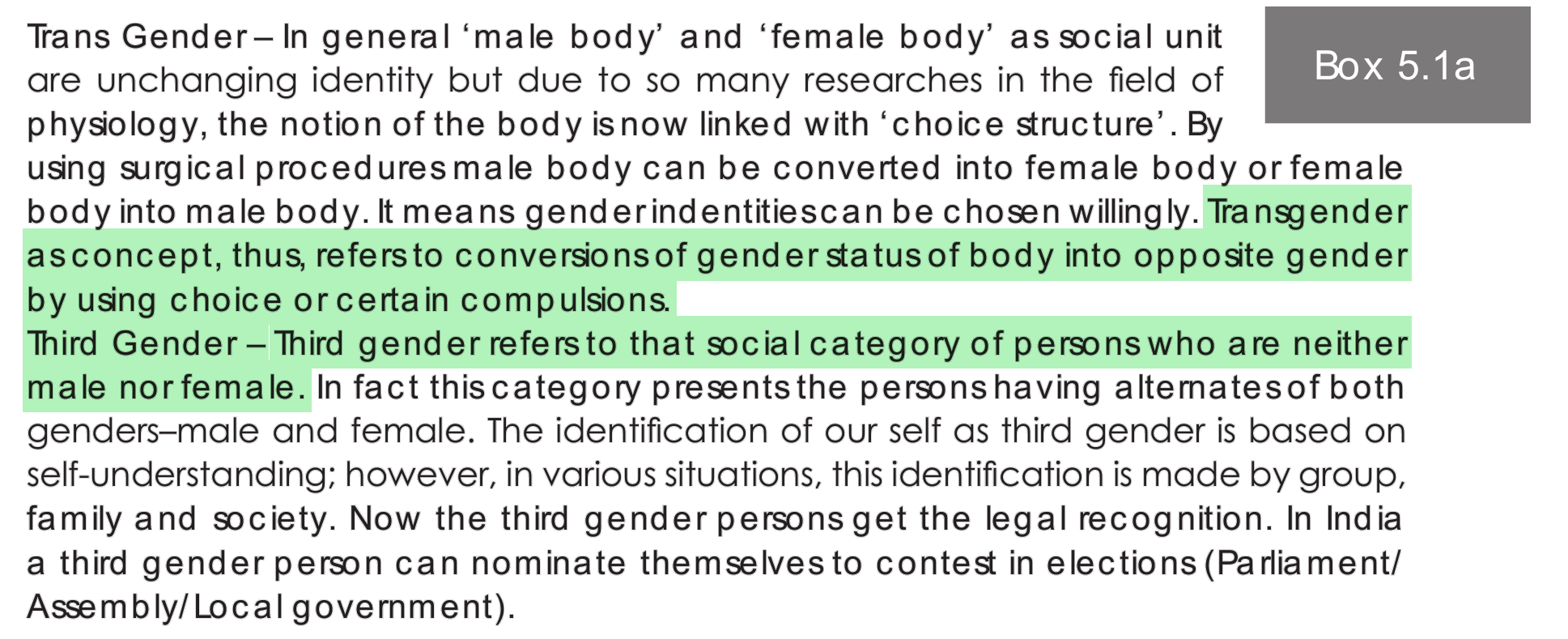
(A) Third gender — this matches (II) Social category of persons who are neither male nor female. Third gender refers to the social category of persons who are neither male nor female; in India such a person can now contest elections.
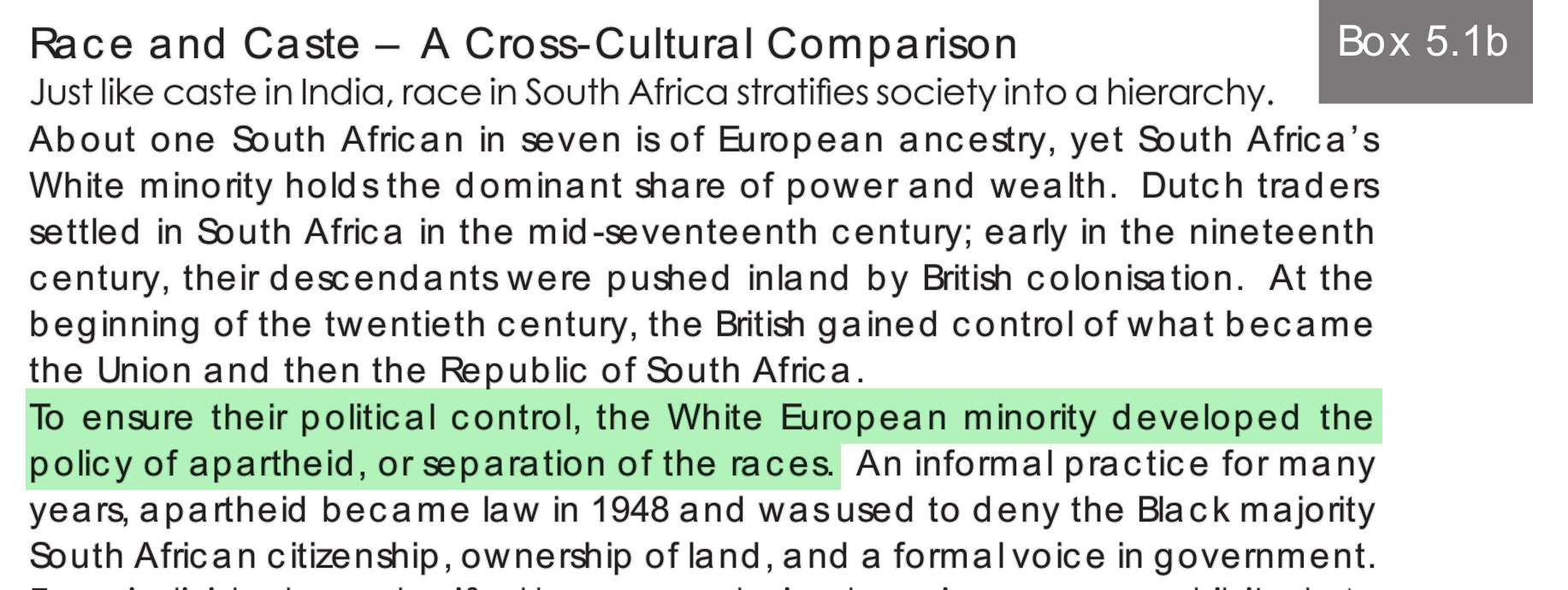
(B) Apartheid — this matches (I) Separation of races. In South Africa the White minority developed the policy of apartheid, or separation of the races, which became law in 1948 and denied the Black majority citizenship, land and a voice in government.
(C) Adivasis — this matches (IV) Indigenous population, identity struggles. The term Adivasi literally means ‘original inhabitants’. It was coined in the 1930s in the struggle against outside settlers and moneylenders and connotes the assertion of rights; being Adivasi is about shared experiences of the loss of forests and the alienation of land.
(D) Transgender — this matches (III) Conversion of gender status of body into opposite gender by choice. Transgender as a concept refers to conversions of gender status of body into opposite gender by using choice or certain compulsions.
NCERT: Indian Society — Chapter 5: Patterns of Social Inequality and Exclusion, Box 5.1a, Box 5.1b (2025-26)
|