The problem in measuring the poverty line in India is :
Answer & explanation
Correct answer: option 4
The correct answer is Option (4) → It groups all the poor together and does not differentiate between the very poor and the other poor.
The poverty line divides people into just two groups: poor and not poor. So it puts all the poor together. It does not show who is very poor and who is only a little below the line.
It also takes spending on food and a few other items as a stand-in for income. Economists question this basis as well.
Note: This question is taken from the chapter ‘Poverty’ which was there in the pre-rationalised NCERT and has been deleted from subsequent editions of NCERT, including the NCERT book (2026-27). The chapter was also not in the CUET (UG) 2026 syllabus.
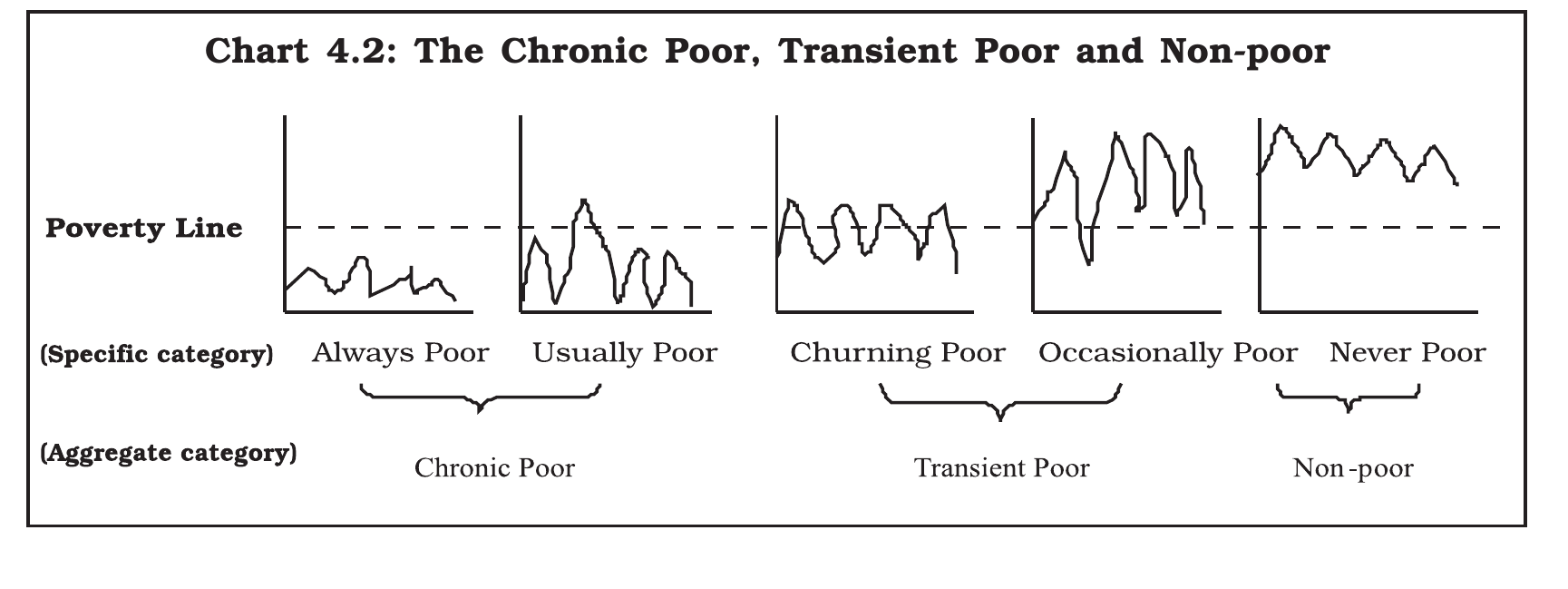
NCERT (Pre-rationalised): “The Poverty Line: Now, let us examine how to determine the poverty line. There are many ways of measuring poverty. One way is to determine it by the monetary value (per capita expenditure) of the minimum calorie intake that was estimated at 2,400 calories for a rural person and 2,100 calories for a person in the urban area. Based on this, in 2011-12, the poverty line was defined for rural areas as consumption worth Rs 816 per person a month and for urban areas it was Rs 1,000.… Economists state that a major problem with this mechanism is that it groups all the poor together and does not differentiate between the very poor and the other poor (See chart 4.2). Also this mechanism takes into account expenditure on food and a few select items as proxy for income, economists question its basis.…”
|