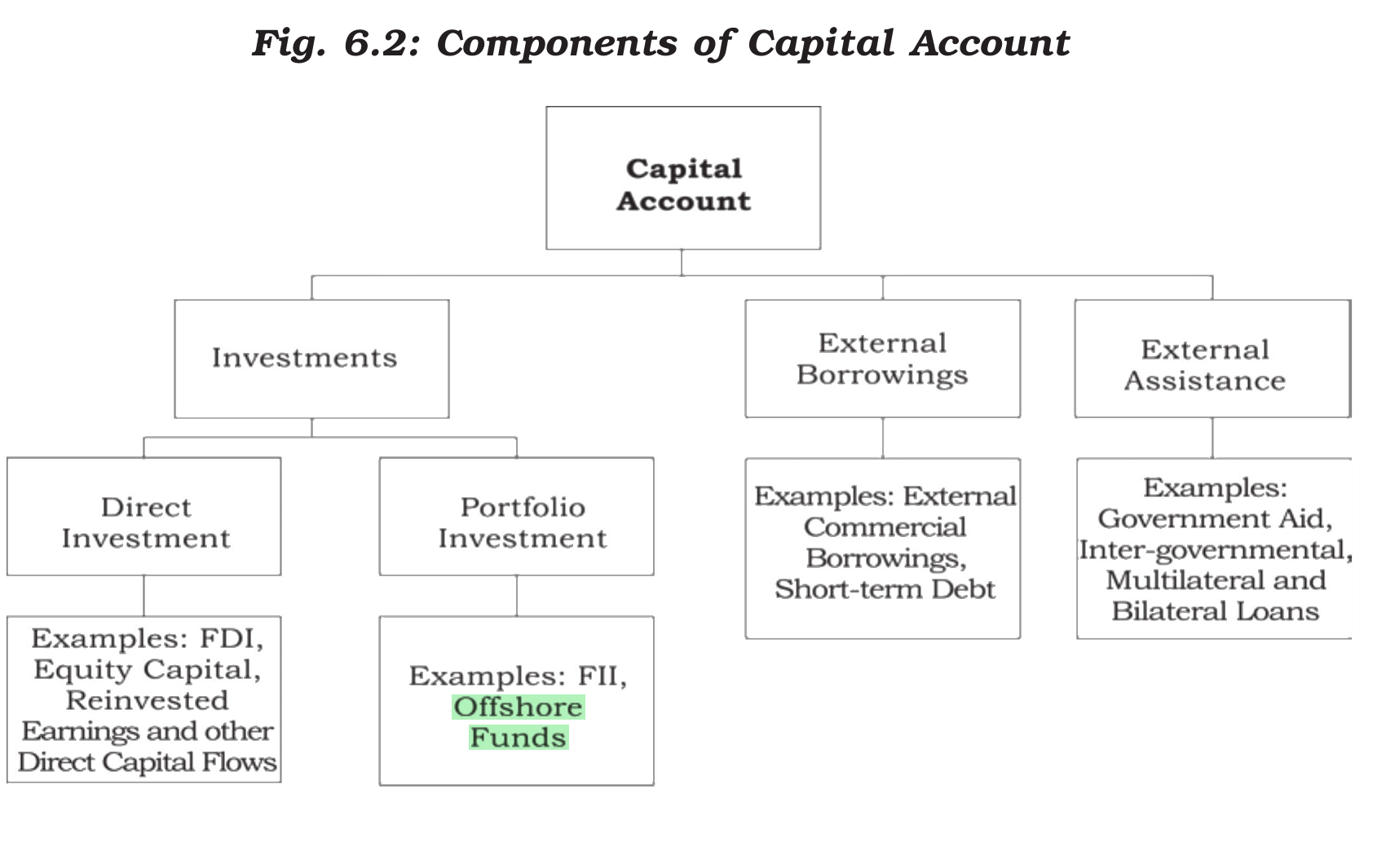
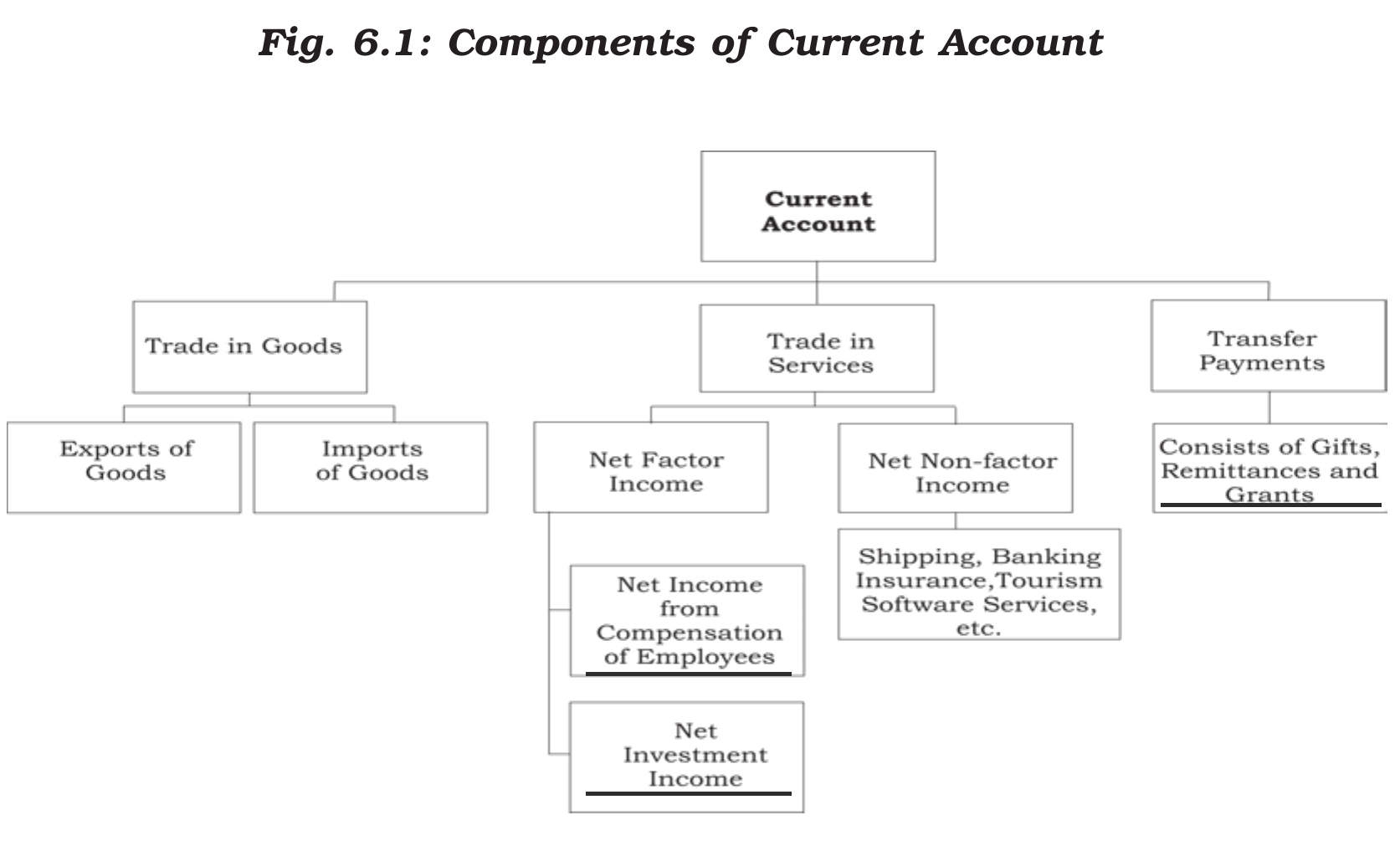
Which of the following items will be recorded in the capital account of the Balance of Payments account?
Answer & explanation
Correct answer: option 4
The correct answer is Option (4) → Offshore funds.
The capital account records all international transactions of assets, such as money, stocks, bonds and government debt. Offshore funds are money from abroad invested in such assets, so they belong here.
Option (1) Net investment income. — Incorrect. This is income earned on capital held abroad, such as interest and dividends. It is a flow of income under trade in services, which goes in the current account.
Option (2) Gifts, grants and remittances. — Incorrect. These are transfer payments, received without giving any good or service in return. They go in the current account.
Option (3) Net income from compensation of employees. — Incorrect. This is what people earn by working abroad, less what foreign workers earn here. It is factor income, which goes in the current account.
Option (4) Offshore funds. — Correct. These funds buy financial assets across borders. They are a form of portfolio investment, which is buying shares and bonds for the return on them. This is a part of the capital account.
NCERT (2026-27): “6.1.2 Capital Account Capital Account records all international transactions of assets. An asset is any one of the forms in which wealth can be held, for example: money, stocks, bonds, Government debt, etc. Purchase of assets is a debit item on the capital account. … Fig. 6.2 classifies the items which are a part of capital account transactions. These items are Foreign Direct Investments (FDIs), Foreign Institutional Investments (FIIs), external borrowings and assistance.… 6.1.1 Current Account Current Account is the record of trade in goods and services and transfer payments. Figure 6.1 illustrates the components of Current Account. Trade in goods includes exports and imports of goods. Trade in services includes factor income and non-factor income transactions. Transfer payments are the receipts which the residents of a country get for ‘free’, without having to provide any goods or services in return. They consist of gifts, remittances and grants.…”
|