Read the following case study and answer the question:
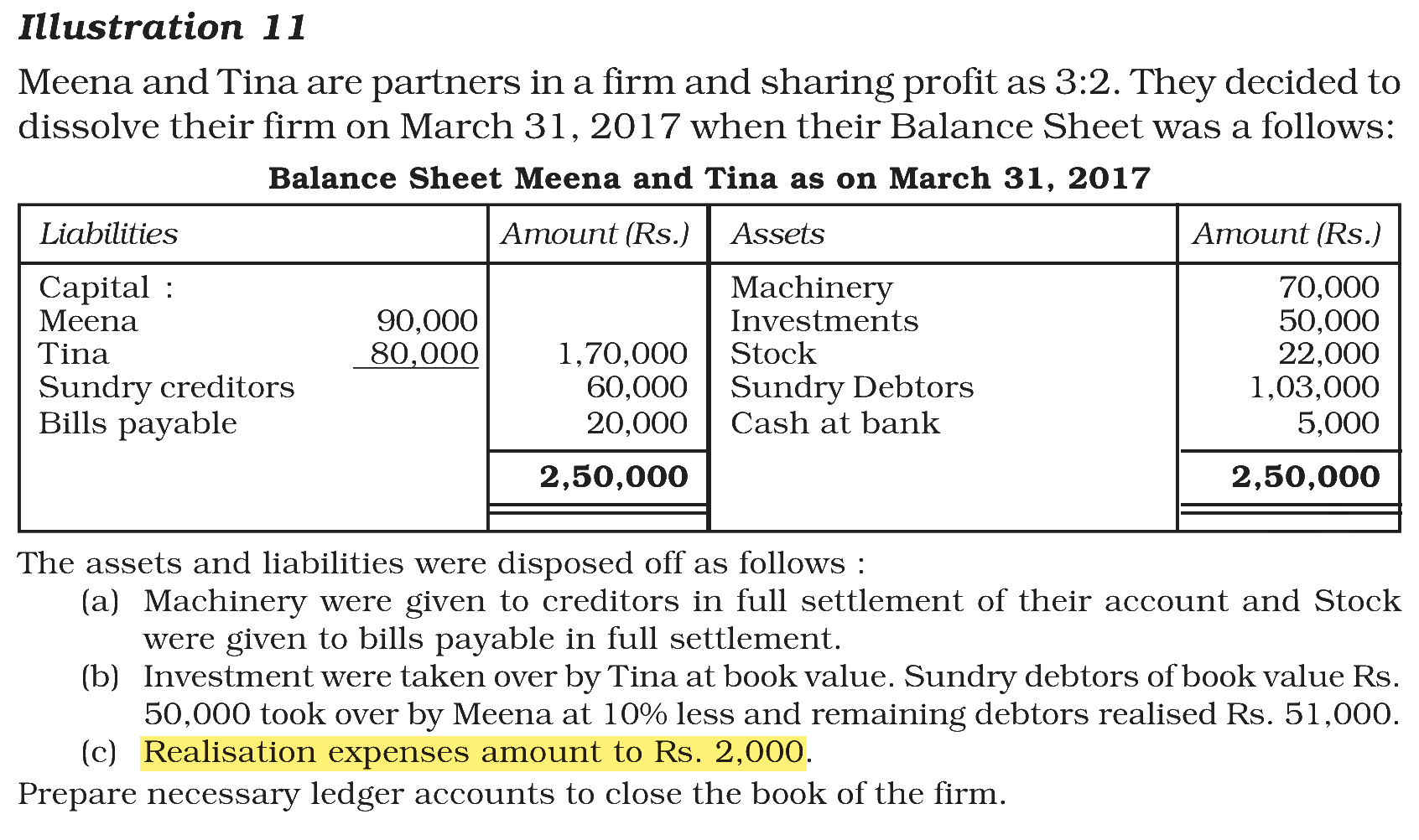
Naina and Nayantara are Partners in a firm, sharing profits in ratio 3 : 2. They decided to dissolve their firm on 31, March 2021 when their Balance-Sheet was as follows:
|
Liabilities |
Amt. (₹) |
Assets |
Amt. (₹) |
|
Capital: Naina 1,00,000 Nayantara 80,000 Creditors Bills Payable |
1,80,000 60,000 20,000 |
Machinery Investment Stock Debtors Cash at Bank |
80,000 50,000 22,000 1,03,000 5,000 |
|
|
2,60,000 |
|
2,60,000 |
The Assets and liabilities were disposed off as follows:
(a) Machinery was given to creditors in full settlement of their amount and stock was given to Bills Payable in full settlement.
(b) Investment were taken over by Nayantara at book value.
(c) Debtors of book value ₹50,000 taken over by Naina at 10% less and remaining debtors realised ₹51,000.
(d) Realisation expenses amounted to ₹5,000.
Journal entry for payment of realisation expense will be:
Answer & explanation
Correct answer: option 4
The correct answer is Option (4) → Realisation A/c Dr. 5,000 To Cash/Bank A/C. 5,000
Realisation expenses are a cost of winding up, so they are charged to the Realisation Account. The case does not say that any partner has agreed to bear them or has paid them, so they are taken as paid by the firm out of its bank balance.
Realisation A/c Dr. ₹5,000
To Bank A/c ₹5,000
A partner’s capital account would come into the entry only if that partner paid the expenses himself or had agreed to bear them.
NCERT (2026-27 edition):
NCERT (2026-27 edition):
|