Read the passage carefully and answer the questions based on the passage:
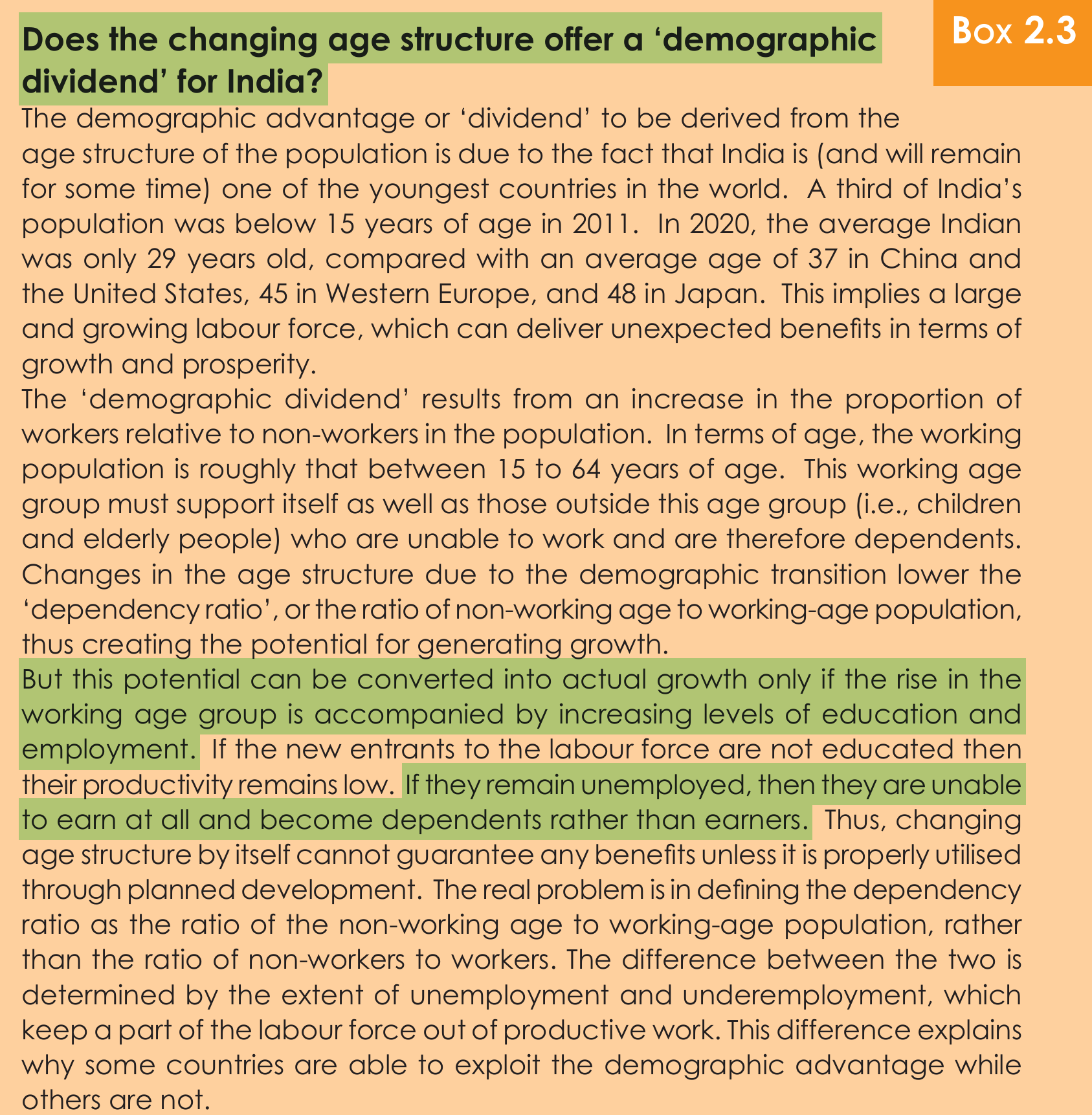
The demographic advantage or 'dividend' to be derived from the age structure of the population is due to the fact that India is (and will remain for some time) one of the youngest countries in the world. A third of India's population was below 15 years of age in 2011. In 2020, the average Indian was only 29 years old, compared with an average age of 37 in China and the United States, 45 in Western Europe, and 48 in Japan. This implies a large and growing labor force, which can deliver unexpected benefits in terms of growth and prosperity.
What can India do to convert its Demographic Dividend into actual growth?
Answer & explanation
Correct answer: option 2
The correct answer is Option (2) → Increase employment opportunities
Option (1) Control population — Incorrect. The young age structure already exists, so the dividend is already there as a potential. Fewer births in the future would not give work to the young people who are entering the labour force now; without jobs they stay dependents.
Option (2) Increase employment opportunities — Correct. The potential of the dividend can be converted into actual growth only if the rise in the working-age group is accompanied by increasing levels of education and employment. If the new entrants to the labour force remain unemployed, they cannot earn at all and become dependents rather than earners. Jobs turn the extra workers into extra earners.
NCERT: Indian Society — Chapter 2: The Demographic Structure of the Indian Society (2025-26)
|