Read the following passage and answer the question :
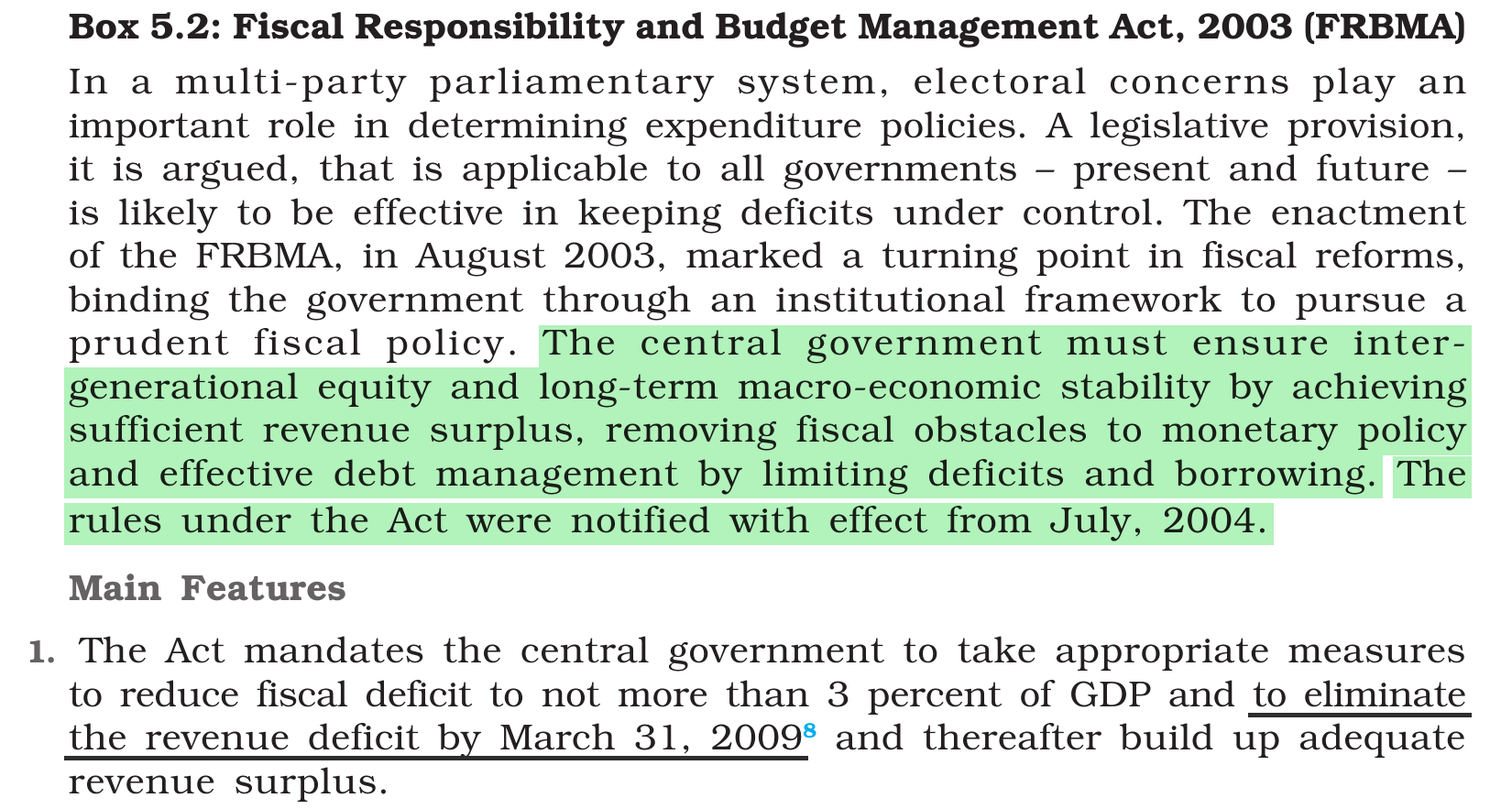
In a multiparty parliamentary system, electoral concerns play an important role in determining expenditure policies. The enactment of the FRBMA, in Aug. 2003, marked a turning point in fiscal reforms, binding the Govt. through an institutional framework to pursue a prudent fiscal policy. The act mandates the Central Govt. to take appropriate measures to reduce fiscal deficit to not more than 3 percent of GDP and to eliminate the revenue deficit by 31 March, 2009. It requires the reduction in fiscal deficit by 0.3% of GDP each year and revenue deficit by 0.5 percent. If it is not achieved through tax revenues, the necessary adjustment has to come from a reduction in expenditure. The Central Govt. must ensure inter-generational equity and long term macro-economic stability by achieving sufficient revenue surplus, removing fiscal obstacles to monetary policy and effective debt management by limiting deficits and borrowings. The rules under the act were notified with effect from July 2004.
What was the objective of the Rules under the FRBMA that were notified with effect from July 2004?
Answer & explanation
Correct answer: option 3
The correct answer is Option (3) → To remove fiscal obstacles to monetary policy and effective debt management
The rules of July 2004 were made to carry out the Act. The passage gives the aim just before it mentions these rules. The aim is removing fiscal obstacles to monetary policy and effective debt management, by limiting deficits and borrowings.
Monetary policy is how the RBI controls the money supply. In plain words, the government’s deficits and borrowing should not come in the way of this policy. They should also not get in the way of managing its debt. The date of March 2009 was for the revenue deficit. The fiscal deficit only had to come down to 3 per cent of GDP.
Note: The passage of this question is taken almost word for word from the chapter ‘Government Budget and the Economy’ of the NCERT book (Introductory Macroeconomics). It joins the paragraph on the FRBMA and the box listing the main features of the Act. Give a box the same attention as the paragraph beside it. Here the two together made up the whole passage.
NCERT (2026-27): Introductory Macroeconomics — Chapter 5: Government Budget and the Economy, Box 5.2
|