In all the three methods of calculating National Income (Expenditure Method, Income Method and Value Added Method), the National Income remains the same. The reason behind this is:
Answer & explanation
Correct answer: option 4
The correct answer is Option (4) → Circular flow of Income
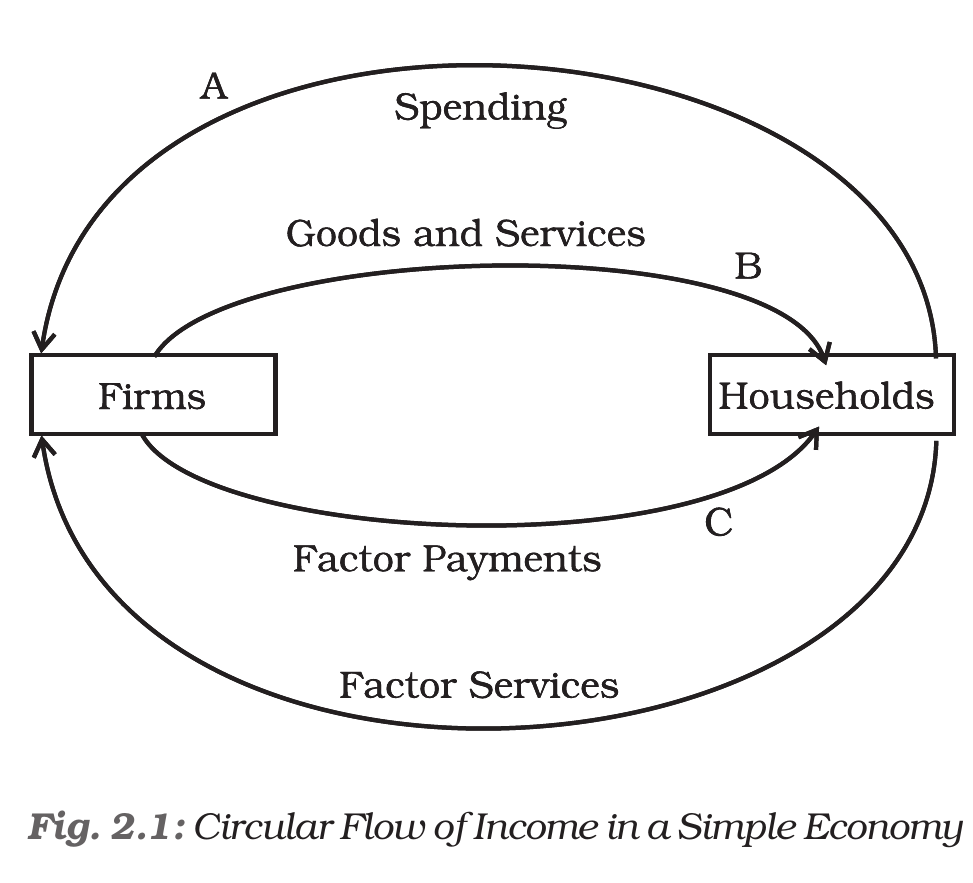
The same amount of money moves in a circle between firms and households. The three methods measure this one flow at different points, so they give the same national income.
Expenditure method: the spending that firms receive for the final goods and services they sell.
Value added (product) method: the value of the final goods and services the firms produce.
Income method: the factor payments (wages, rent, interest and profits) that firms make to households.
Firms pay households for their factor services. Households spend this income on the goods made by the firms, and the money comes back to the firms. So aggregate spending equals the aggregate income of the factors of production.
NCERT (2026-27): “2.2 Circular Flow of Income and Methods of Calculating National Income … Since the same amount of money, representing the aggregate value of goods and services, is moving in a circular way, if we want to estimate the aggregate value of goods and services produced during a year we can measure the annual value of the flows at any of the dotted lines indicated in the diagram. We can measure the uppermost flow (at point A) by measuring the aggregate value of spending that the firms receive for the final goods and services which they produce. This method will be called the expenditure method. If we measure the flow at B by measuring the aggregate value of final goods and services produced by all the firms, it will be called product method. At C, measuring the sum total of all factor payments will be called income method.… …No matter how complicated an economic system may be, the annual production of goods and services estimated through each of the three methods is the same.…”
|