Consider the following facts related to development experience of Indian Economy during 1947 to 2022.
A. Between 1950 and 1990, the proportion of GDP contributed by agriculture sector has declined
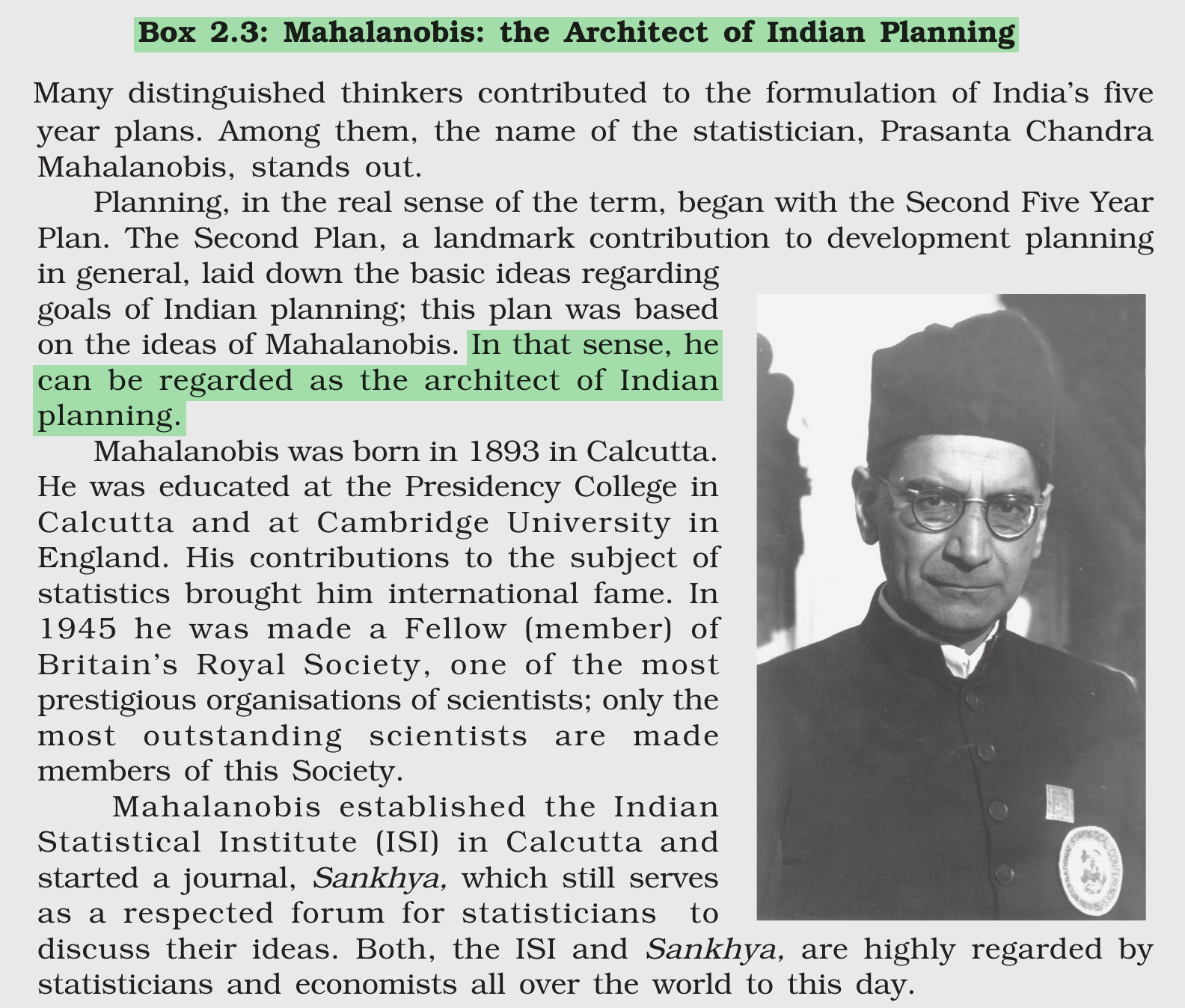
B. P.C. Mahalanobis is known as Architect of Indian Planning
C. The world Bank is also known as IFCI
D. GATT was established in 1958
E. Indian Foreign Exchange Reserves have increased since 1990-91.
Choose the correct answer from the options given below:
Answer & explanation
Correct answer: option 3
The correct answer is Option (3) → A, B and E only
The statements cover India’s planning period (1950-1990) and the years after the reforms of 1991.
A. Between 1950 and 1990, the proportion of GDP contributed by agriculture sector has declined — Correct. Agriculture gave more than half of India’s GDP in the early years. By 1990 the service sector’s share, 40.59 per cent, was larger than that of agriculture.
B. P.C. Mahalanobis is known as Architect of Indian Planning. — Correct. The statistician Prasanta Chandra Mahalanobis gave the ideas on which the Second Five Year Plan was based. For this he is called the architect of Indian planning.
C. The world Bank is also known as IFCI — Incorrect. The World Bank is the popular name of the International Bank for Reconstruction and Development (IBRD). IFCI, the Industrial Finance Corporation of India, is an Indian institution that gives long-term loans to industry.
D. GATT was established in 1958 — Incorrect. The General Agreement on Tariffs and Trade (GATT) was established in 1948, with 23 countries. The WTO replaced it in 1995.
E. Indian Foreign Exchange Reserves have increased since 1990-91. — Correct. The reserves rose from about US $6 billion in 1990-91 to about US $646 billion in 2023-24.
NCERT (2026-27): Indian Economic Development — Chapter 2: Indian Economy 1950-1990
NCERT (2026-27): “…In India, between 1950 and 1990, the proportion of GDP contributed by agriculture declined significantly but not the population depending on it (67.5 per cent in 1950 to 64.9 per cent by 1990).…” NCERT (2026-27), chapter ‘Liberalisation, Privatisation and Globalisation: An Appraisal’: “…India approached the International Bank for Reconstruction and Development (IBRD), popularly known as World Bank and the International Monetary Fund (IMF), and received $7 billion as loan to manage the crisis.… …World Trade Organisation (WTO): The WTO was founded in 1995 as the successor organisation to the General Agreement on Trade and Tariff (GATT). GATT was established in 1948 with 23 countries as the global trade organisation to administer all multilateral trade agreements by providing equal opportunities to all countries in the international market for trading purposes.… …The opening of the economy has led to a rapid increase in foreign direct investment and foreign exchange reserves.… There has been an increase in the foreign exchange reserves from about US $ 6 billion in 1990-91 to about US $ 646 billion in 2023–24. India is one of the largest foreign exchange reserve holders in the world.…” |